
Intersections: Meditations on Southeast Asia
Reeling in history through artistic gesture 3: Ain
By Kanai Miki
- SHARE


All images courtesy Blank Canvas
On system’s edge, toward living memories
There are experiences that insinuate their way into the silent interlude before words. The doors of sensation open, as if drawing us into the exhibition space; the topology of the world slips slightly, and the gravity center of our thought discreetly shifts. If only for a moment, something resonates, permeating the body. The Ain exhibition was a place that quietly summoned this sensation.
If Fragments of Tuah (Mak Teh/Five Arts Theatre) covered previously here took a critical approach to national history, the works of Ain shed light on the more modest, very personal memories absent from institutional frameworks. One reflects on the memories of a nation, while the other draws closer to those of a family, offering a gentle supporting hand.
One key to understanding the experience of an Ain exhibition lies in the artist’s origins.1 Of Malaysian heritage, born in Thailand, and raised also in Indonesia and Japan, Ain studied fine art in the Dutch seat of government The Hague. Since 2022 she has been based in Malaysia. Life and recollections across borders bring insight into self-images that do not fit the frame of nationality, and for the artist, a diasporic identity. Moving around has exposed Ain to differences in languages, institutions and cultures, potentially also redrawing her personal contours and values multiple times along the way.
Ain’s philosophical lodestone is the concept of the “man of culture” described by Aimé Césaire (1913–2008). A poet and leader of the Négritude movement,2 Césaire saw the culturati not simply as creators of works, but those responsible for restoring the suppressed and distorted spirit and culture of their peoples. Grounding herself in this ideology, and engaging with her standpoint and role as an artist in the context of coming to terms with postcolonial history, and of decolonization, Ain strives to construct her own cultural and artistic identity. It is at the point where an inner desire to create, and acute sensitivity to society, history and the arts clash and reach an equilibrium, that her works are shaped. Speaking directly with the artist at the venue, it was evident that this balance is sustained by a combination of robust intellectual curiosity, and careful distance from the subject.
Here I should like to trace the intersection of history and memory in Ain’s practice, through the exhibition “da lama dah (it’s been too long)”3 staged at the Blank Canvas4 art space on the Malaysian island of Penang.
Furniture, plates, ash—ambiguous forms for the purpose of memory
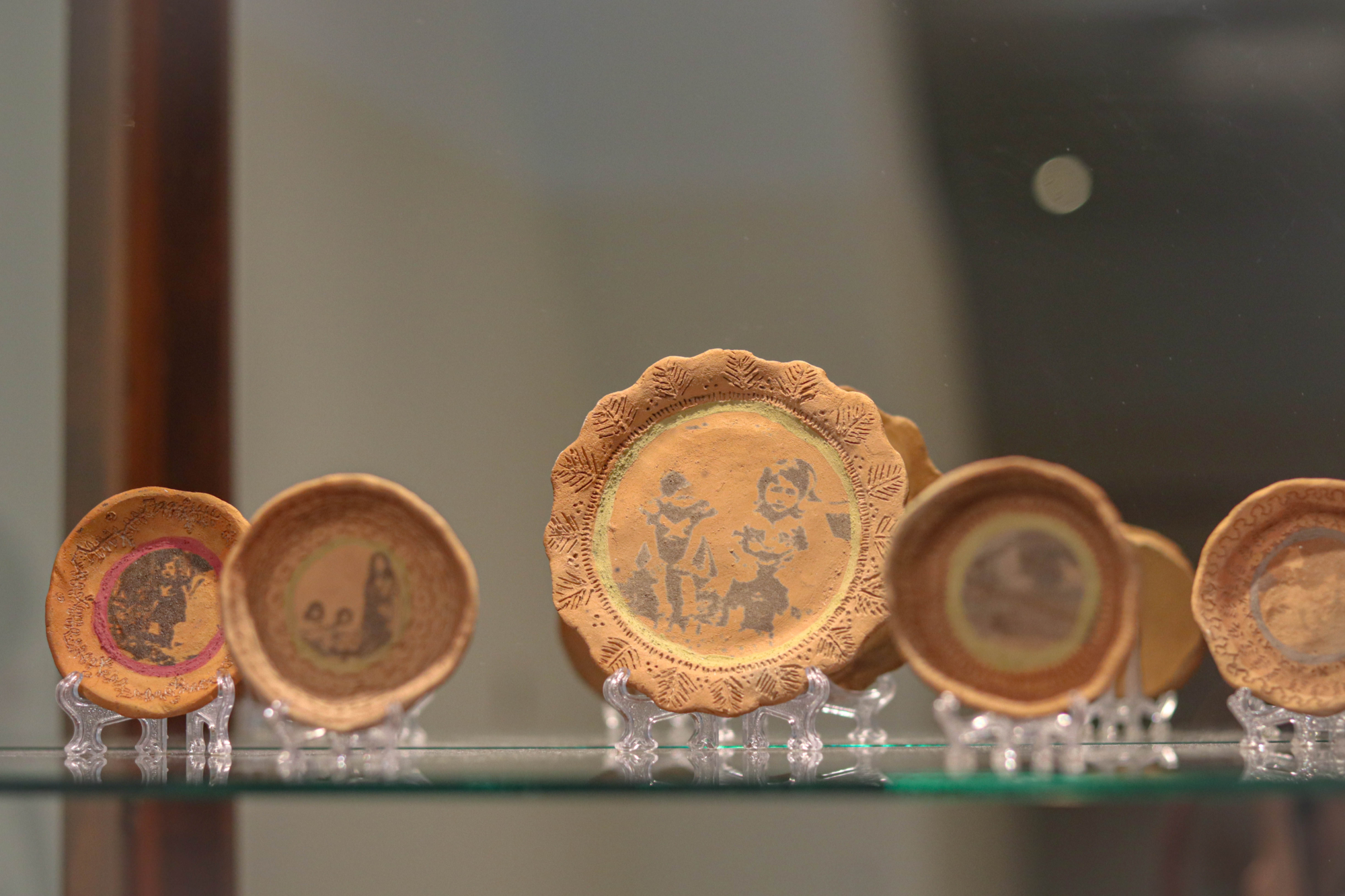
Inhabiting the space are an old wooden cabinet and table, an armchair, and carpet. In these dwell thick depositions of time, and memories as vestiges of past use. Arranged inside the cabinet are ceramic plates like those seen in souvenir shops. Resting on clear plastic stands, these tiny dishes seem to gaze out at us. The quaint sight of these little plates sets us instinctively at ease. On the plates are laser-printed photos from old albums handed down through generations of the artist’s family, but the figures are vague, and almost no identifying information is provided. This anonymity is a subtle consideration on the part of the artist, who in gifting us the intimacy of personal history, also attempts to preserve an inaccessible inner sanctum.
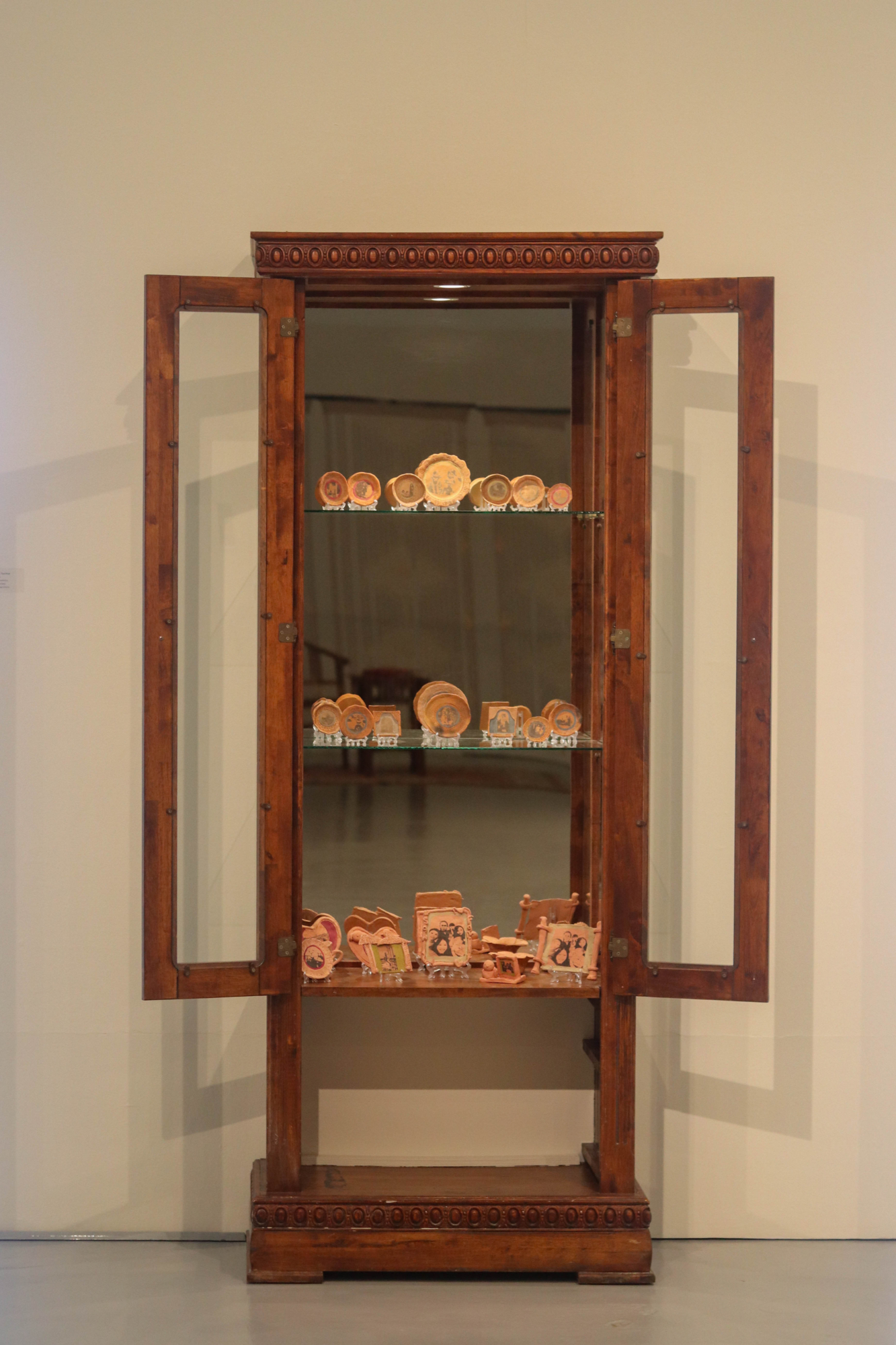
Ain, Kerabat Tak Terlihat | Unseen Kin, series of ceramics (handmade clay), 2024–25.
A pamphlet at the venue contains emails discussing production of work for the show that were exchanged by Ain and Hung Duong,5 an art writer based in Ho Chi Minh City, Vietnam. Here the artist says, “I wanted the plates to be more personal, so I used the clay that I found behind my house to make them. It feels like I’m giving these photographs, particularly the people in them, a new land (plate) to live in.”6
This comment reveals the process by which, passing through Ain’s hands, kitschy souvenir plates more usually mass-produced and universally available acquire subtle uneven patches and scratches: strong signs of handcrafting. An institutionalized item of “merchandise” is thus transformed into a vessel for unique memories. Moreover the production process, in which the artist takes clay from behind her house, and etches on it motifs inspired by the surrounding plants and buildings, hints at her personal mobility, and a haptic connection to the land on which she now stands.
A group of compact paintings made using ash produced in the firing process are arranged in a manner that leaves plenty of blank space in the space, and is distinguished by a subtle warping of the paper supports. The fragility of the ash and vestiges of the artist’s handiwork have the converse effect of generating a powerful presence that suggests a deliberate choice to eschew conventional framing and display formats.
Taking her cue from a grandmother’s stories, Ain has hitherto depicted people and scenes based on fragments of memory rendered hazier by old age. Regarding the works in ash she says, “When I created them, my purpose was not to immortalise these memories, but rather to temporarily materialise them, long enough to come to terms with them as they dissolve.”7 These words offer a view of memories not as archives set in stone, but more variable beasts, that oscillate between generation and extinction. Ash as a material gives substance to the uncertainty of memory and fluctuating nature of time. By witnessing the moment when fragile, elusive material overlaps with unreliable memory, perhaps we can expand our understanding from the preservation of memory, to an acceptance of change.
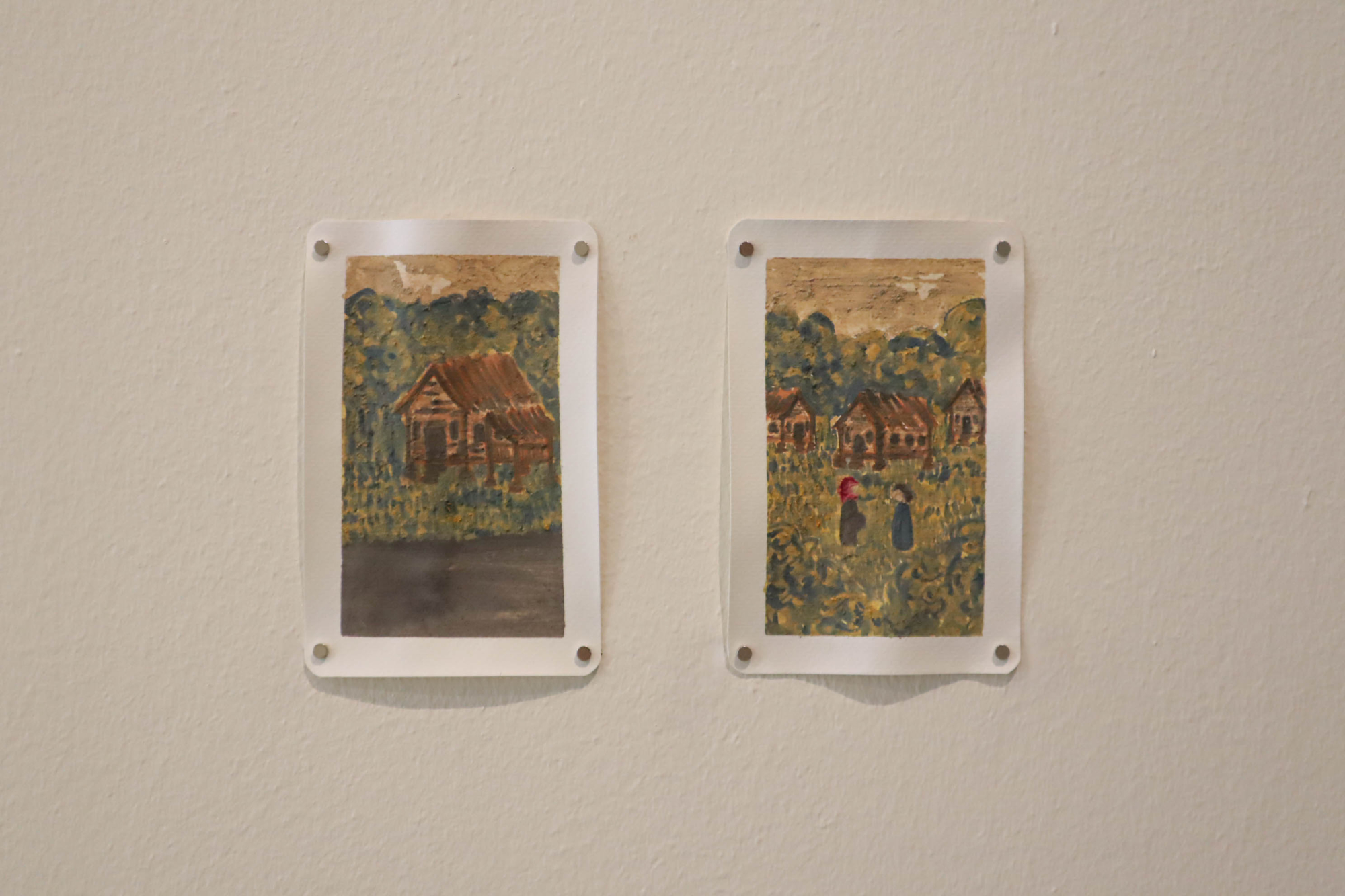
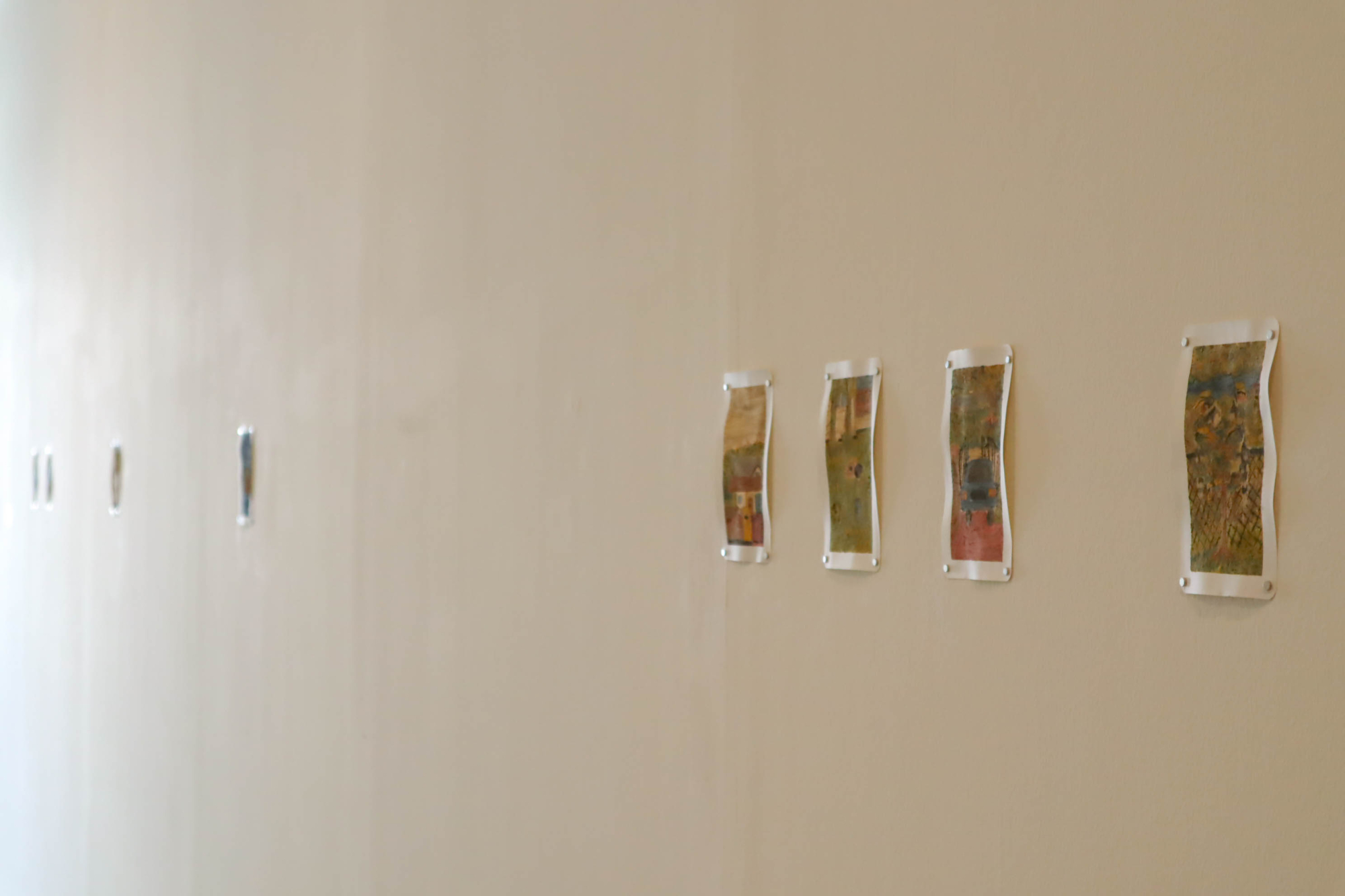
Ain, Kisah Kedua Kali (Tale of the Second Time), 2024–25.
Album—Memories revived by touch
Further to the back of the gallery, as if pairing with the cabinet, is a small room partitioned by a bead curtain, in which is placed an album. Sitting in the chair and opening the album evokes a feeling of being invited to someone’s home, and tracing their memories in solitary fashion. On the pages small portraits in ash are presented without modification, while the original source material includes photographs that narrowly escaped a flood ten-plus years ago. The very action of turning the pages carefully so as not to damage the fragile images in ash, provokes a palpable physical tension. In a delicate relationship of trust forged with the artist, the viewer becomes involved in the reconstruction of memory.
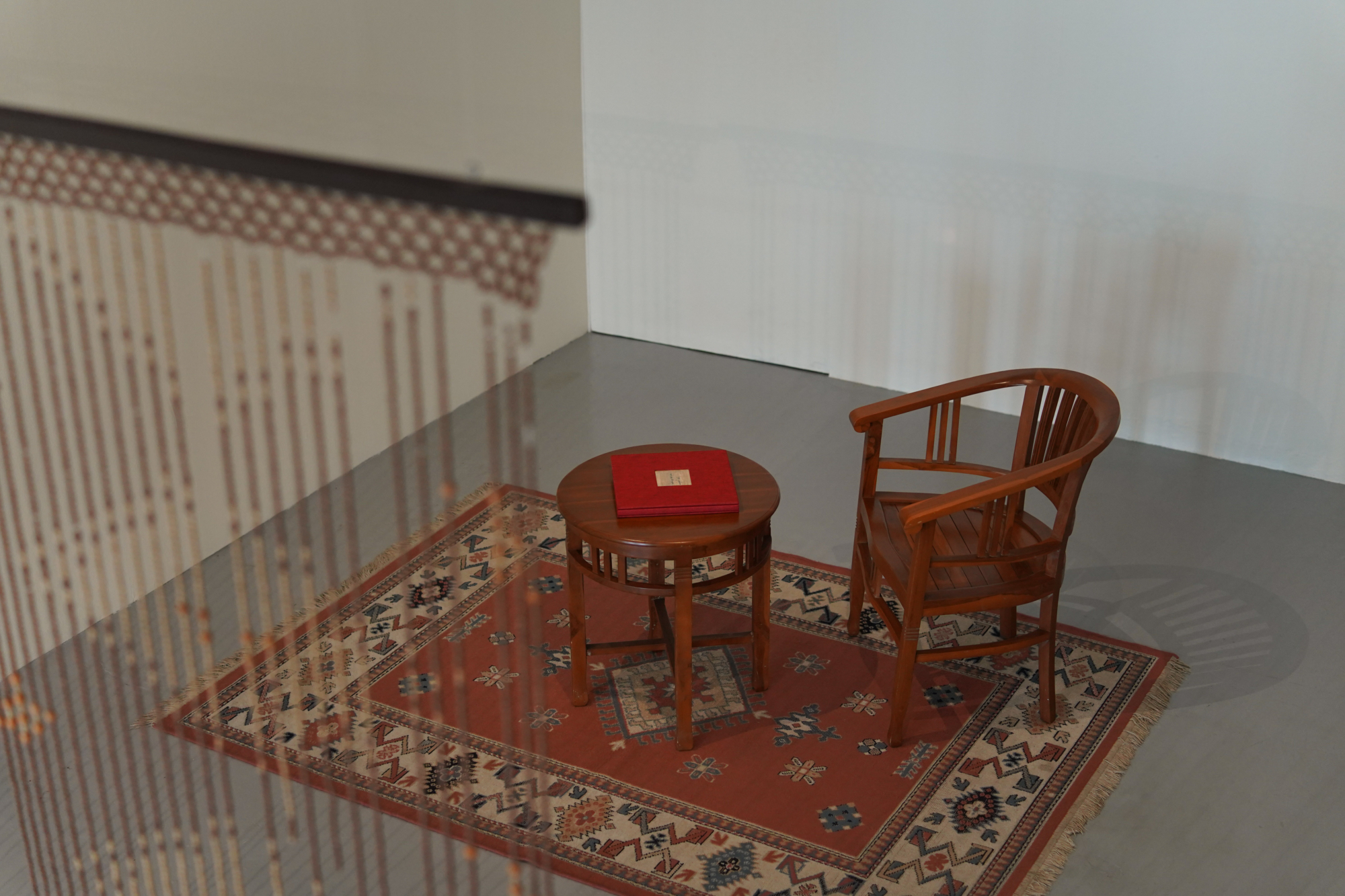
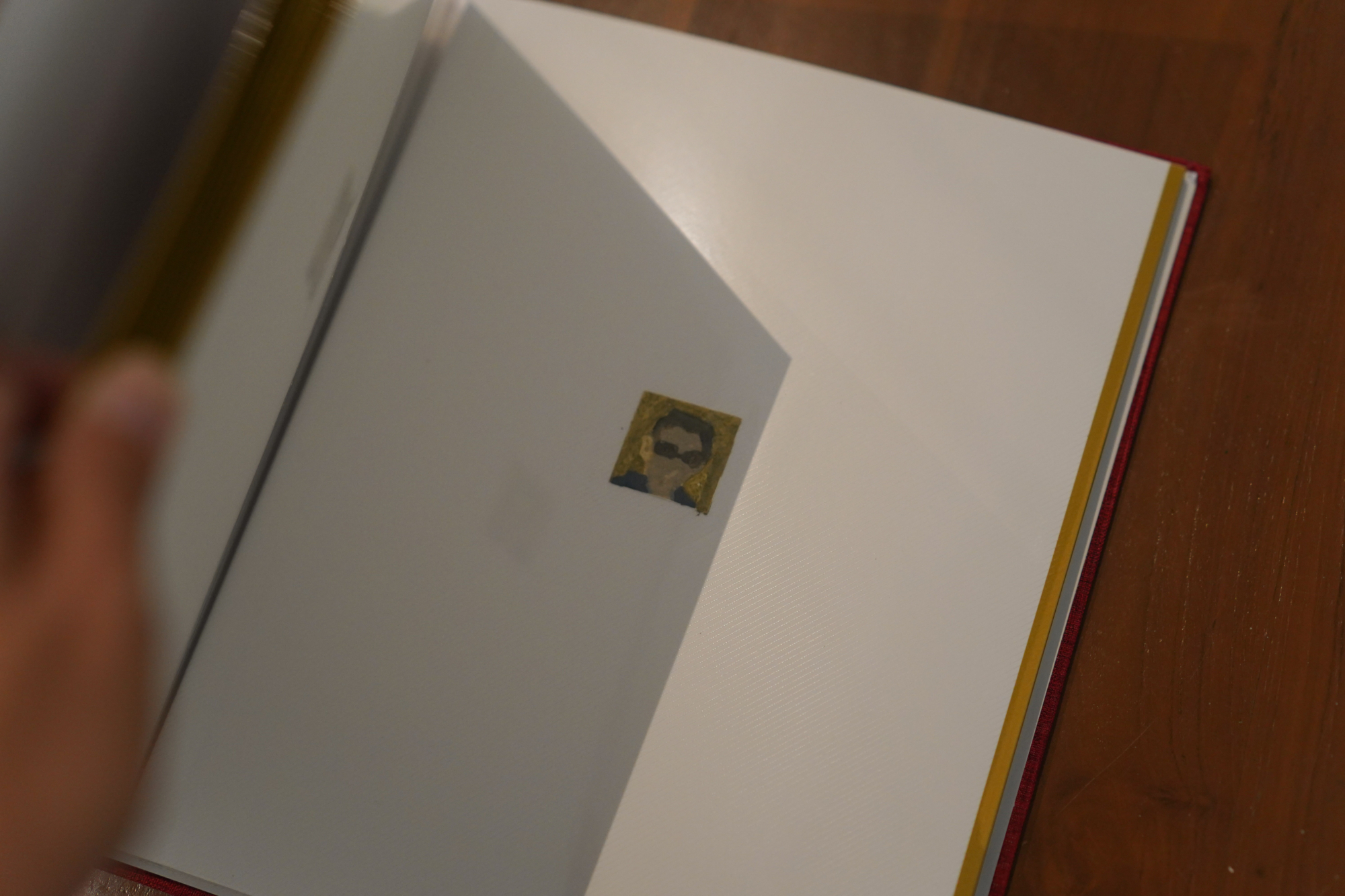
Ain, Unfamiliar Pages, Album of Ash Painting), 2024–25.
During the colonial era, the British government in what was then Malaya assembled a Eurocentric version of the country’s society and history, through such means as administrative documents and the education system. The social structure was organized according to the logic of the rulers, with everyday activities and the experiences of families and communities thrust outside of the system. A similar state of affairs prevailed under the Japanese occupation from 1941 to 1945. Records that persisted as oral history or personal papers have faded over time.
For Ain, born in 2000, the colonial period is already a past learned as history. For her grandmother’s generation, on the other hand, the close of the colonial years and ensuing transition period were the day-to-day reality of their lives. Between the artist’s contemporary sense of life, and the historical time that marks her grandmother’s body, lies a gap that is difficult to fill.
Ain’s works are born out of engagement with this temporal divide or disconnect between generations. Scooping up individual and community memories fallen through the crevices of colonial compilation, through familiar materials such as crockery and album she reels in fragmented memories passed down the generations, in the process breathing life back into a realm of everyday life slumbering outside the historical narrative.
Manifesting through the medium of this exhibition are moments when an alternative current of time appears unobtrusively outside of institutionalized history, by the connecting of personal memory to material practice. The materials of clay, ash and paper link Ain’s transnational experiences and the land on which she now stands, offering up memory not as fixed image, but something that trembles when touched, and over time takes on a different form.
Touching the album, the viewer handles it carefully as they track its memories. In the caution of that gesture, family history and community experience exist not as a distant past, but things to be re-engaged with here and now. Understanding comes at a corporeal level, that memories are not objects of preservation, but relationships tenuously preserved in remoteness from and consideration for others.
Ain’s works give a touch of time and space to vestiges whose eventual disappearance is presumed. This is not so much an attempt to rewrite history, as the act of opening up a place for experiences consigned to the margins of history to live and breathe for a short time. The viewer bears witness to that brief interlude, and perhaps even after they have left, can retain the gesture and sensation of giving a hand to memory.
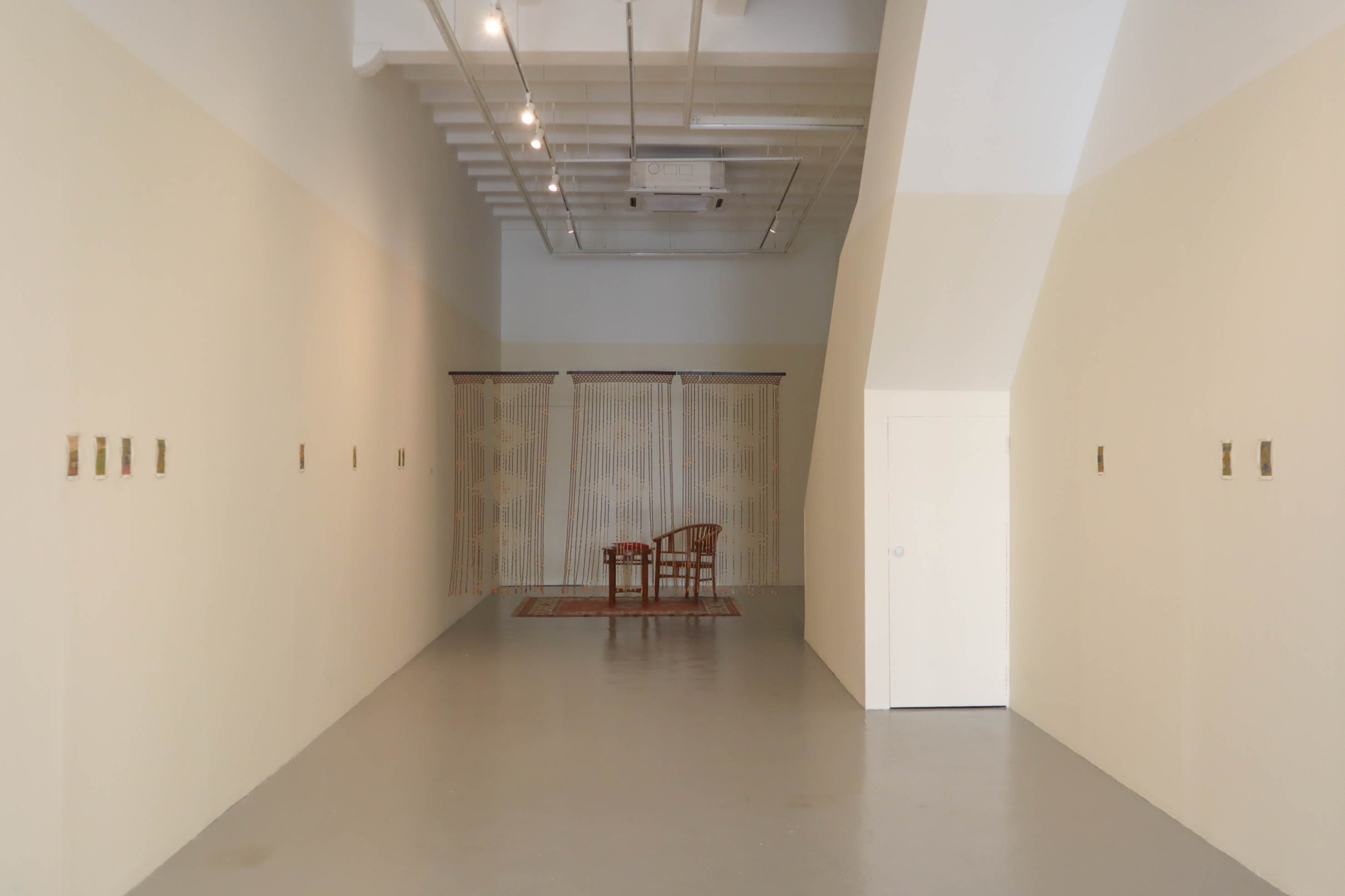
Installation view of Ain’s solo exhibition “da lama dah (it’s been too long)” at Blank Canvas.
1. Ain
2. A movement for cultural and political liberation formed/conceptualized in the 1930s mainly in Paris, by intellectuals from the French Antilles and Francophone Africa. Emerging originally from a reclaiming of the derogatory nègre meaning black, the ideology of Négritude takes “blackness” as an historical and cultural experience and reinterprets it affirmatively. It is simultaneously a catchphrase that encourages self-awareness as a black person, and word encompassing an entire ethos and cultural practice.
Aimé Césaire was critical of French colonial policies of assimilation, and championed the idea of Négritude in order to re-examine black existence and dignity that had been denied. The shift in consciousness and inner experiences on his journey to this ideology culminated in the book Cahier d’un retour au pays natal, known by various titles in English, including as Notebook of a Return to My Native Land and Journal of a Homecoming. (Editor’s note)
3. Blank Canvas
4. da lama dah (it’s been too long), Blank Canvas
5. Hung Duong
6. “Through Ash and Soil: an email exchange between Ain and Hung Duong about crafting home and molding memories,” 12.
Email Exchange Ain Hung Duong, p12
7. “Through Ash and Soil,” 15.
(All accessed December 29, 2025)
About the series
“Intersections: Meditations on Southeast Asia” is a series by Malaysia-based arts and culture researcher Kanai Miki, in which she unpacks the art of Southeast Asia from multiple perspectives, including those of history, regional characteristics, and solidarity among peoples, contemplating the relationship between Southeast Asia today and art, including from a Japanese perspective.
Kanai Miki
A researcher of arts and culture, Kanai documents and analyzes artistic and cultural phenomena first hand as a journalist, and links this practical knowhow to her studies. Following an MA in 20th-century art history at Goldsmiths College, University of London, she spent around two decades based in Berlin, covering the art scene closely in over 20 European countries. Two years of this period were spent as a Japanese Agency for Cultural Affairs Program of Overseas Study for Upcoming Artists grantee (art criticism). Kanai has written for a number of Japanese art magazines including Bijutsu Techo, Geijutsu Shincho and ART iT, and also for cultural magazines such as Seikatsu Kosatsu and Studio Voice. She has introduced the European art scene and European artists to Japan through the writing and editing of books, websites, and exhibition catalogues, and as an exhibition coordinator. Currently based in Malaysia, in addition to research and writing she also helps to organize exhibitions and workshops. Member of the German branch of the International Association of Art Critics (AICA).