Differences: Shedding light on other cartographies in Korea
002 Exhibitions in Seoul that shift away from “Korea = Seoul”
By Konno Yuki
- SHARE


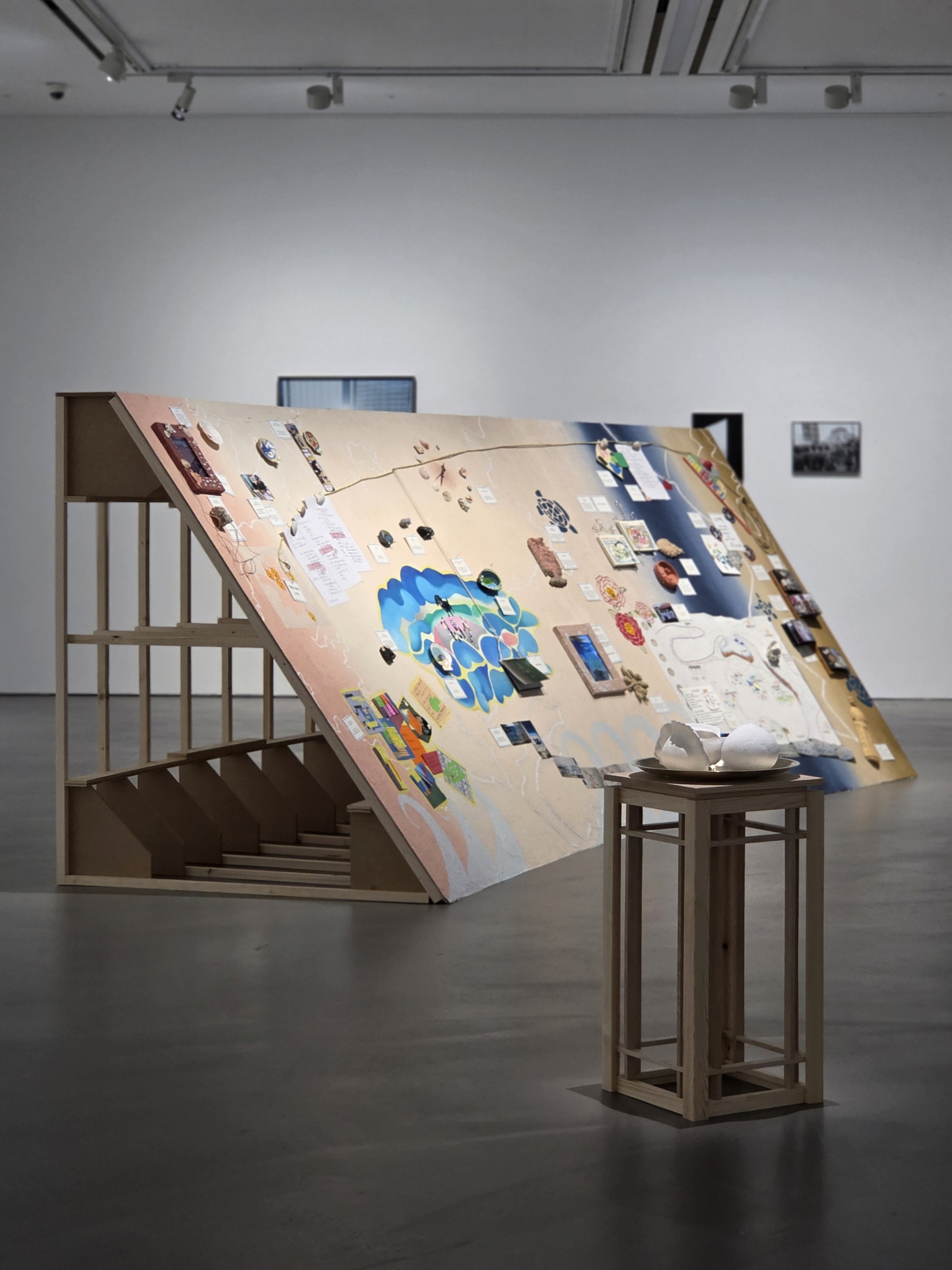
Photo: Park Yujun (Park Sehee)
The previous article touched on concerns that arise when Seoul is equated with South Korea as a whole. While it is true that the place with the greatest concentration of art schools, art museums, and even independent spaces, will inevitably come to characterize a country’s art scene, to assume an absence of artists or art-related individuals outside the capital would be incorrect. So what do these people outside Seoul get up to, and how removed from what happens in the Seoul-centered art world is what they do in their worlds? In showcasing Korea’s provincial art scene for this series, I shall begin by mentioning some developments observed in Seoul in 2025. The three examples described here offer food for thought as we rethink the Korean capital’s domination of the nation’s art scene. Setting aside how mindful they may be of the “Korea = Seoul” equation, they do bring some different perspectives to that equation. Here we look, through their respective endeavors, at the interaction of curator, artist, and local residents (Team Hansan); the concept of an exchange-informed exhibition that imagines and connects a different Korea and Japan (Patchwork!); and lastly, the relationship between production activity by emerging artists and display of that work (Mockcamp). In all three examples, process takes precedence over outcome.
Team Hansan
Team Hansan is a collective consisting of curator Kim Jinju and four artists (Jeong Haseullin, Jo Wheekyung, Hong Jayoung, Yang Yeonhee).1 “Hansan” refers to one of the islands of the county of Tongyeong south of Busan, and is home to Kim’s father. Team Hansan took on a mural project2 that was also a request of her father’s, and their production of the mural while on the island was documented as work, exhibition and archive material, and presented as part of “The Green Ray” at the Doosan Gallery.3 The Mural Quilted by Pearl Thread (2025)4 in this exhibition was a collaboration between artists and curator. Having received the mural proposal from her father, rather than unilaterally pushing her own agenda, or bringing her own acquaintances on board, Kim Jinju gave her father the right to choose the artists by adopting an open-call format. Hopeful participants had to demonstrate their enthusiasm for the project, and their ideas for it, with those who particularly caught the attention of Kim’s father making the final cut. The chosen artists then traveled to the region where they mingled and engaged in dialog with local residents while working on the project. Among the various processes involved in the mural painting, this exchange of views as it progressed was presented in The Mural Quilted by Pearl Thread as photographs, voice recordings, handwritten notes, and a project road map. Visitors to “The Green Ray” were able to trace the artists’ experiences by viewing the work. How did the team come together, how did they travel to the site, what did they experience, how did they complete the job? The Mural Quilted by Pearl Thread also traced the trial and error of engaging with the challenges of reconfiguring the intimacy of parent and child, and the camaraderie between local people and those from elsewhere, and between artists, and the processes, into an exhibit and conveying it all to the audience. The role of the curator here was thus not simply to give the artists instructions. Nor were the artists, for their part, simply there to earn some cash away from home. Team Hansan does not treat regional culture as “quirky local color,” and is not in the business of paternalistic schemes to “activate” the provinces in the manner of the Hokkaido Development Commission in 19th-century Japan. One could say that Team Hansan engaged as equals with people of a different community, with different roles and standpoints, in an attempt to loosely dismantle the power structures of art as an institution.
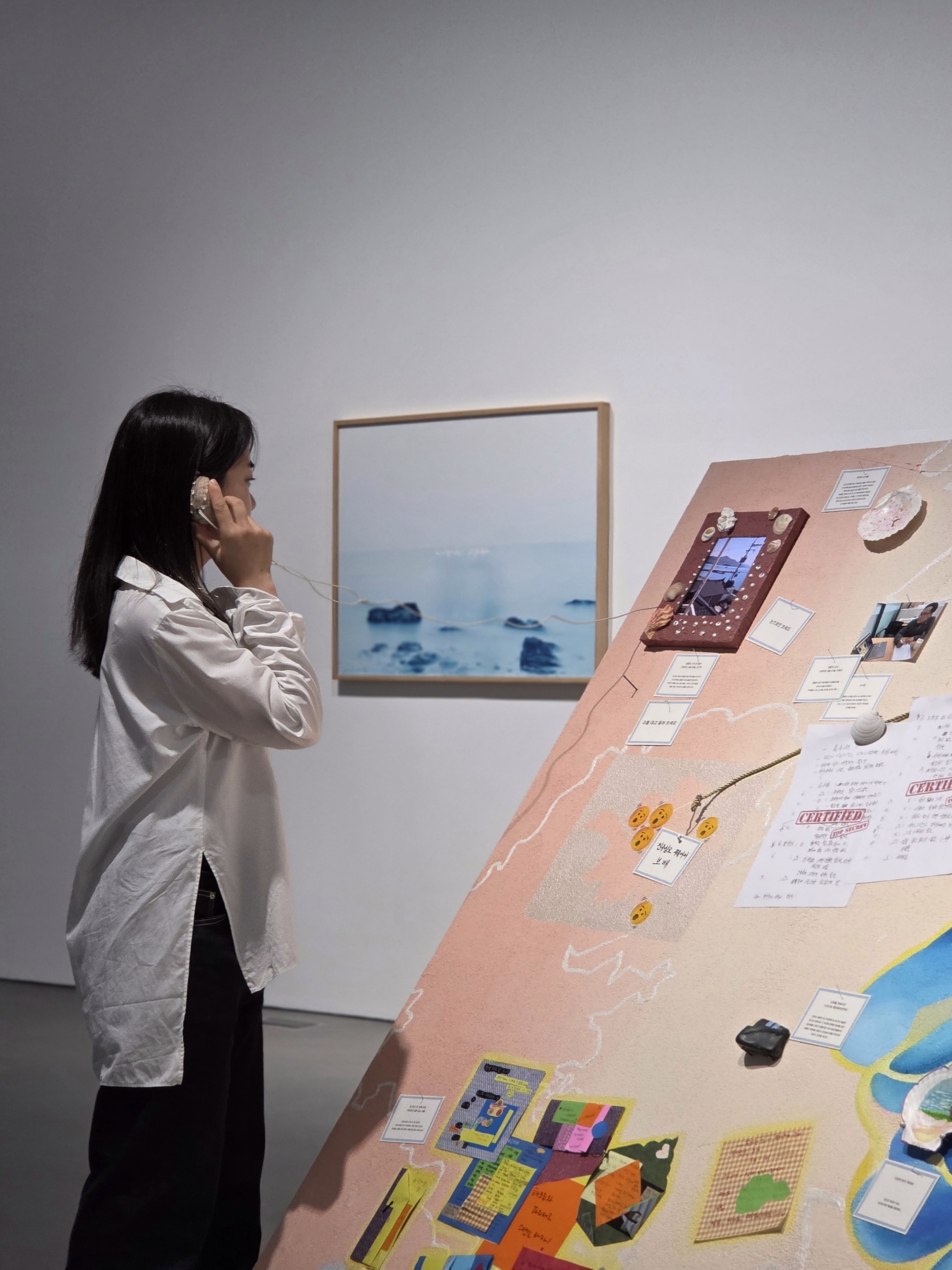
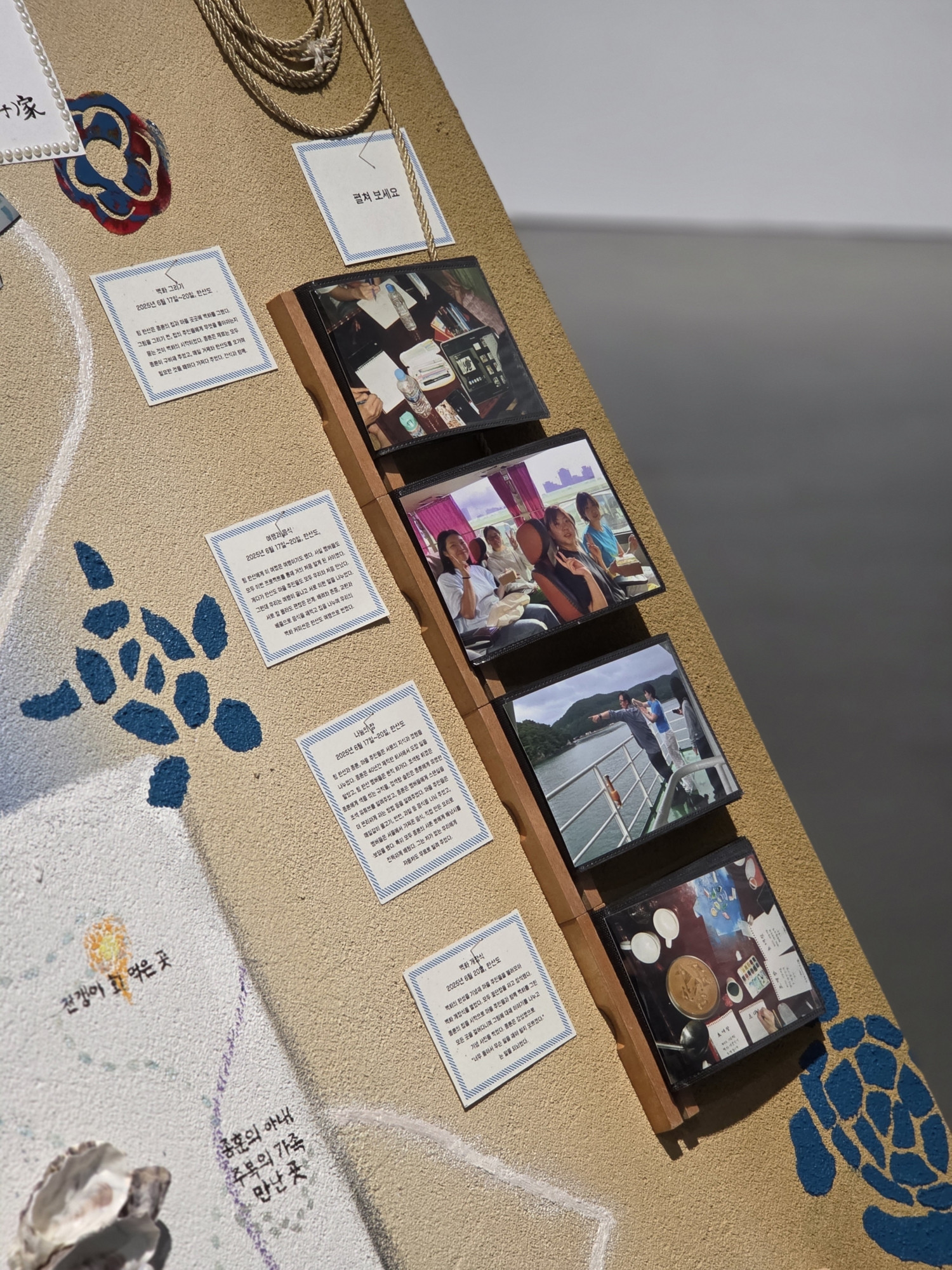
The Mural Quilted by Pearl Thread (2025) (details).
Photos: Park Yujun (Park Sehee)
Patchwork!
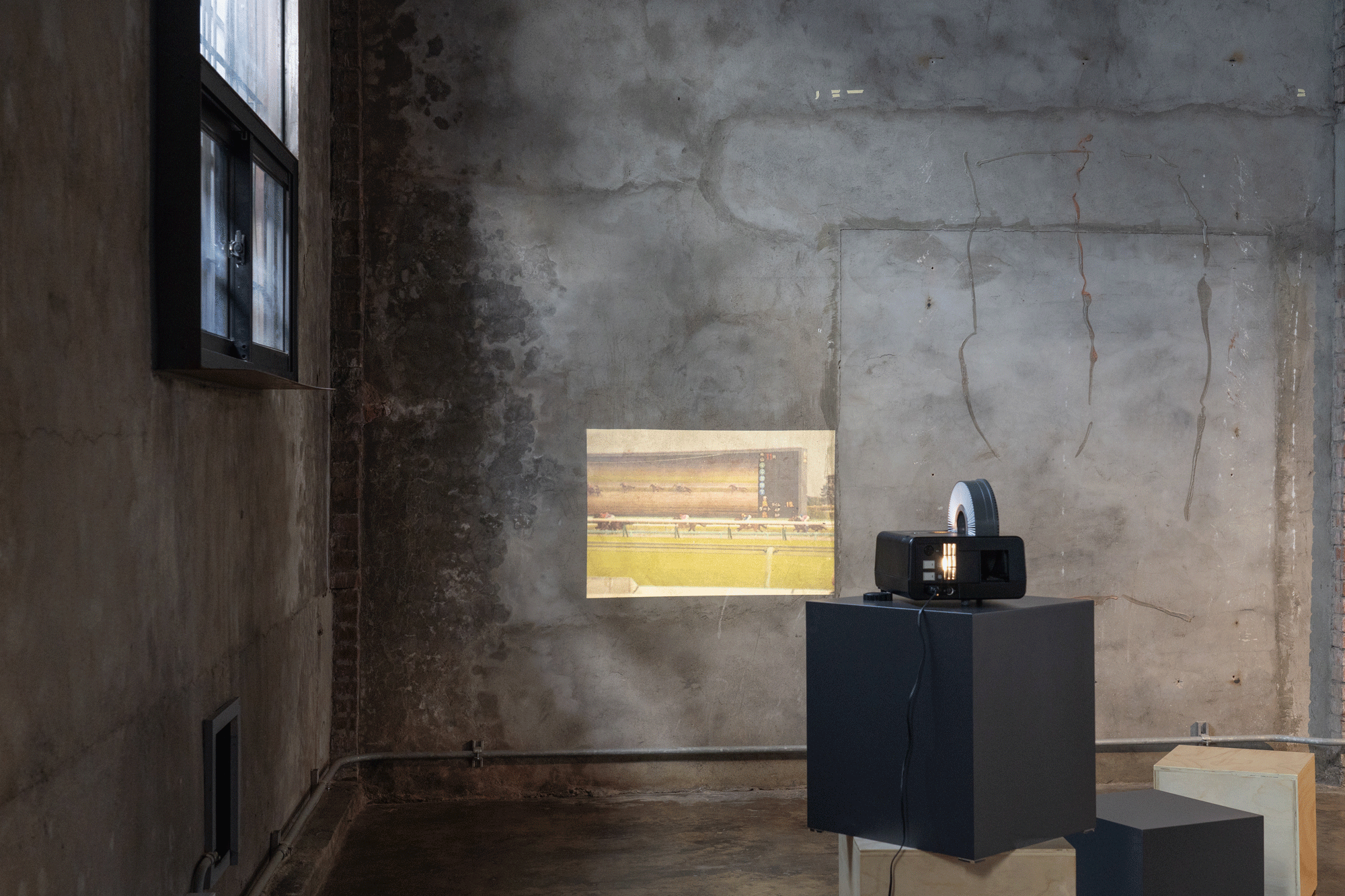
“Patchwork!” was a special exhibition organized by curator Shin Jaemin. Featuring four video artists from Korea and Japan, it was staged Shin’s independent space The WilloW. The works on video were subtitled in both Japanese and Korean, with a mix of footage shot in the two countries adding to the difficulty in identifying which one the artist was from. 2025 saw a smattering of events in the art world to mark 60 years of normalized relations between Korea and Japan.5 Rather than settling on the standard exchange-informed exhibition format, “Patchwork!” tried to find a new home within the repeated communication and disconnect that occurs between the two languages in the works. Park Sunho presented the new Super 8 video The Attuned recorded at the Osaka Expo in 2025. Her palpable nostalgia for the feel of the older camera reflects the gaze of the generation that experienced the Osaka Expo of 1970, or heard about it from others. Yet it can also come across as a twisted admiration for Japan with its valorizing of things old; a love letter from a place (Korea/Seoul) of bewildering change. The WilloW is situated in an old-style marketplace, but close by there is also a massive shopping complex, and the surrounding area is becoming increasingly gentrified. Buildings and infrastructure remain from the era of Japanese rule, and exhibiting artist Sato Tomoko carried out extensive research on the ground in Japan and Korea, tracing movement and migration within the endeavors of horses and humans, from archival material and these colonial buildings. Practising Encounters—I Go and Meet a Horse: The WilloW Edition (2025) sets out her findings on the early years of racecourses in Korea, and the careers of Korean jockeys in Japan.
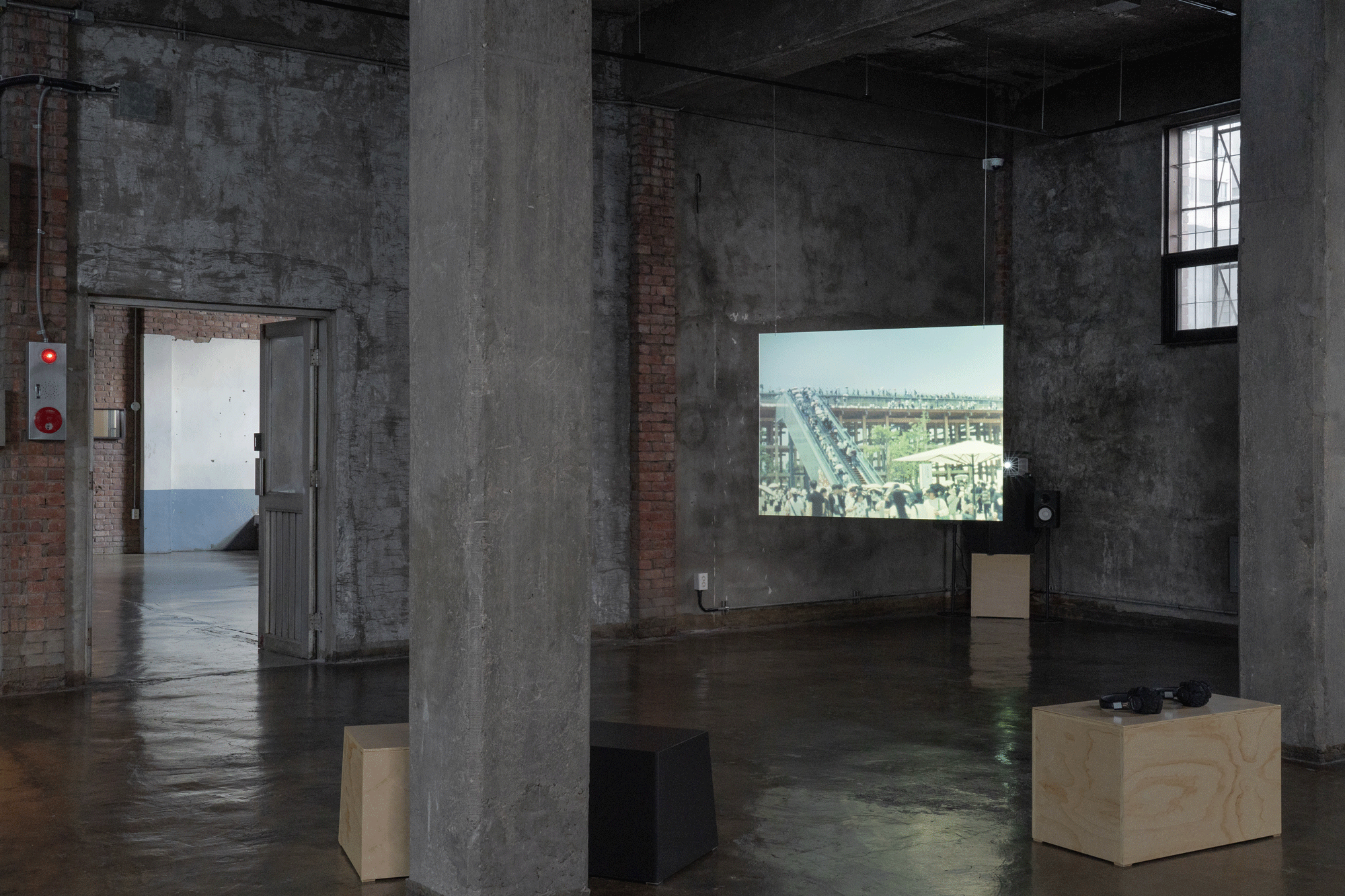
Above: Park Sunho, The Attuned (2025)
Below: Sato Tomoko, Practising Encounters—I Go and Meet a Horse: The WilloW Edition (2025)
Installation views in “Patchwork!”
Photos: Minji Yi, courtesyThe WilloW.
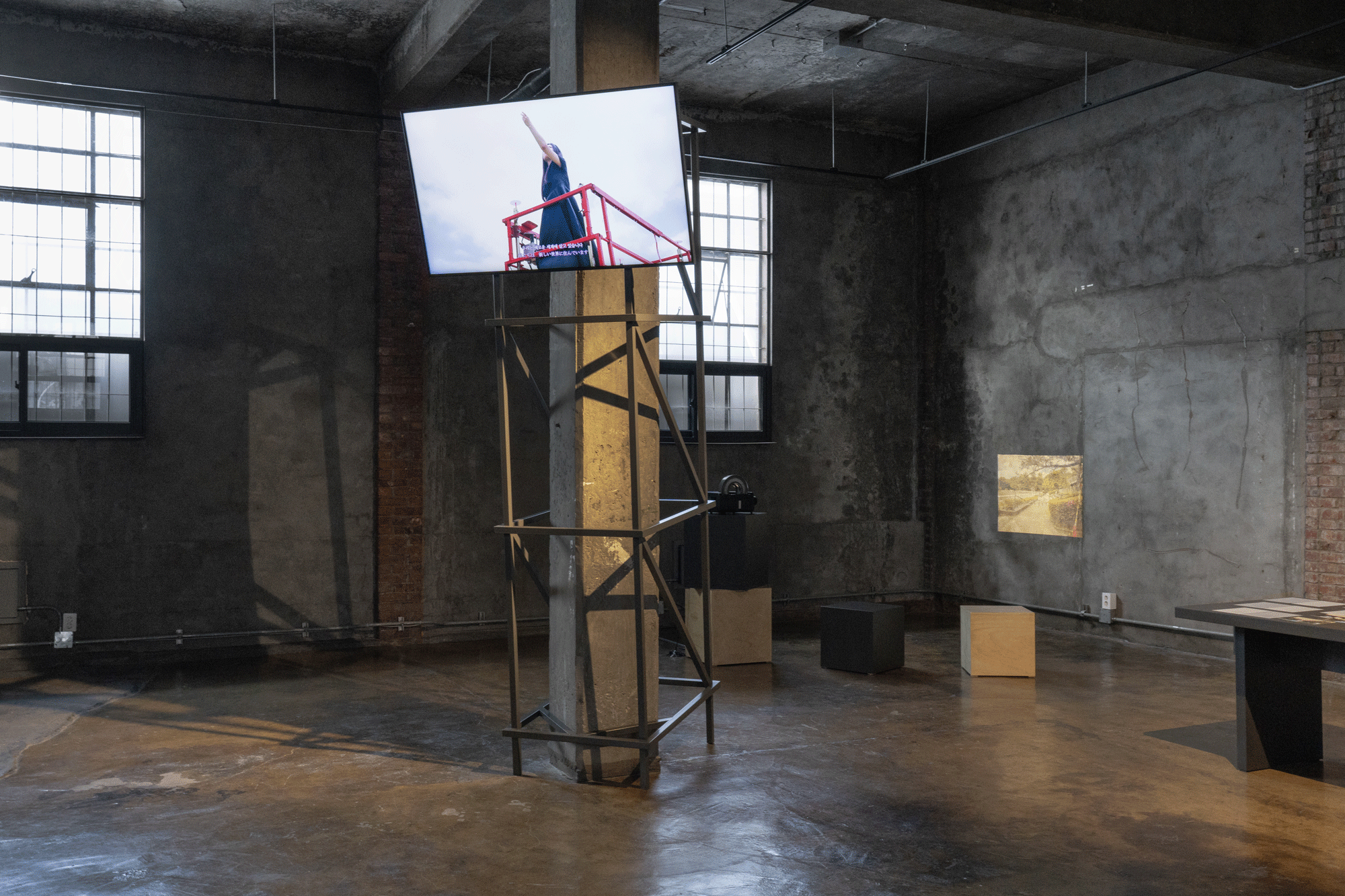
While the works of Sato Tomoko and Park Sunho shuttle back and forth between the past and present of Korea/Japan – Japan/Korea, those of Aoyagi Natsumi and Imzizi, in linguistic terms, are marked by more of a drifting. In both the former’s Language for our Relation: A Demonstration (2025) and latter’s Out-Skirt (2025), at first glance the composition of the work suggests the existence of a story, but over time narrative and dialog reveal different nuances. When an error of sorts occurs, in the form of a breakdown in verbal communication even between work and spectator, these works interpose Japan’s past in the “Korea = Seoul” equation, and also show how delays can occur in the “exchange” such as “communication” and “dialog” that language tries to achieve. This manifests in the exhibits as a “patchwork” approach that continually, if unreliably, endeavors to engage in dialog, rather than become an exchange exhibition in name only.6
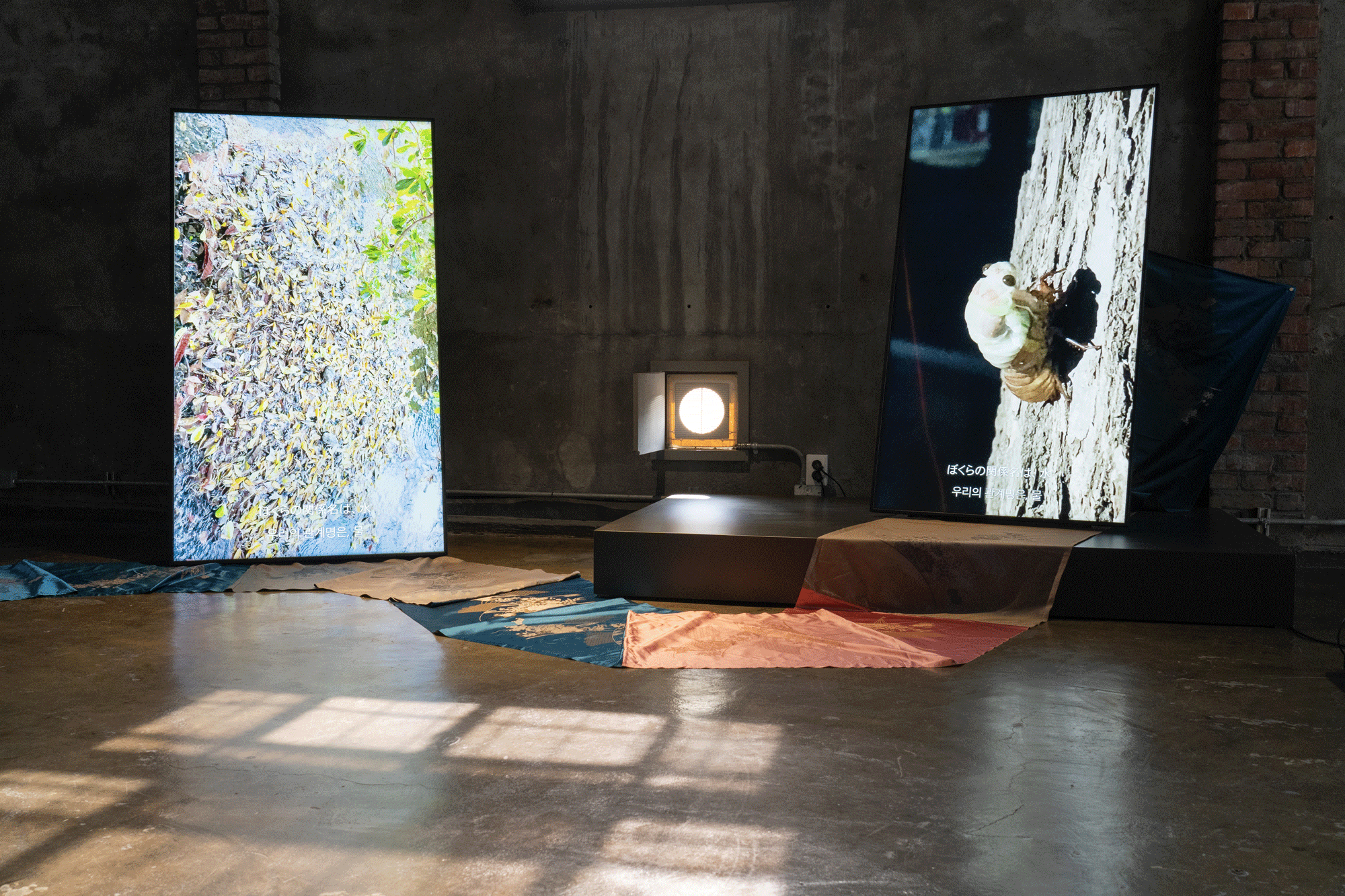
Above: Aoyagi Natsumi, Language for our Relation: A Demonstration (2025)
Below: Imzizi, Out-Skirt (2025)
Installation views in “Patchwork!”
Photos: Minji Yi, courtesyThe WilloW.
Mockcamp
With seventy percent of South Korea consisting of mountains, the country has some rather rugged terrain. Traveling by public bus, especially the small buses known as “maeul” or village buses, frequently seems to entail accelerating up some precipitous slope. Mockcamp too is located in a residential area unobtrusively occupying the summit of such a slope. Emerging artists come to this place a short distance from central Seoul to undertake production for seven days in a boot-camp format, announcing the completion of said works and timing of their unveiling in guerilla fashion. As its name suggests, Mockcamp functions not so much as a gallery or art space as a “base” equipped with a production studio and venue to present completed works. Practitioners can apply to stay for a week or two, and in 2025 a total of twelve “teams” chose to use this as a training ground for experimenting with different ways of making and showing art. Most participants are young, and happily converse and update each other on their individuall progress. During exhibitions they simulate ways of displaying their work, positioning it in different places and orientations. Some only show for a few days, others take an entirely practical approach, focusing solely on working and exchanging views with others, with no intention of presenting work publically. What does one need to launch a proper career as an artist? Most exhibition venues are not on top of steep hills, but within walking distance of a railway station. An alternative scene dominated by younger artists flourished in the 2010s,7 but since the Covid pandemic has been squeezed out by the burgeoning power of commercial galleries. Once the leading practitioners from that alternative scene sold out to museums and galleries as emerging or mid-career artists, the next generation were cut adrift without the opportunity to learn from them.8 And while funding to support young artists is available from sources such as the Seoul municipal authorities and Arts Council Korea,9 such opportunities are limited. Artist Park Juyeon, who manages Mockcamp, says he started this program while engaging with his own practice. While having places to hold exhibitions and present works is important, mixing and exchanging views with other artists comes first when it comes to sustaining art practice in the long term.
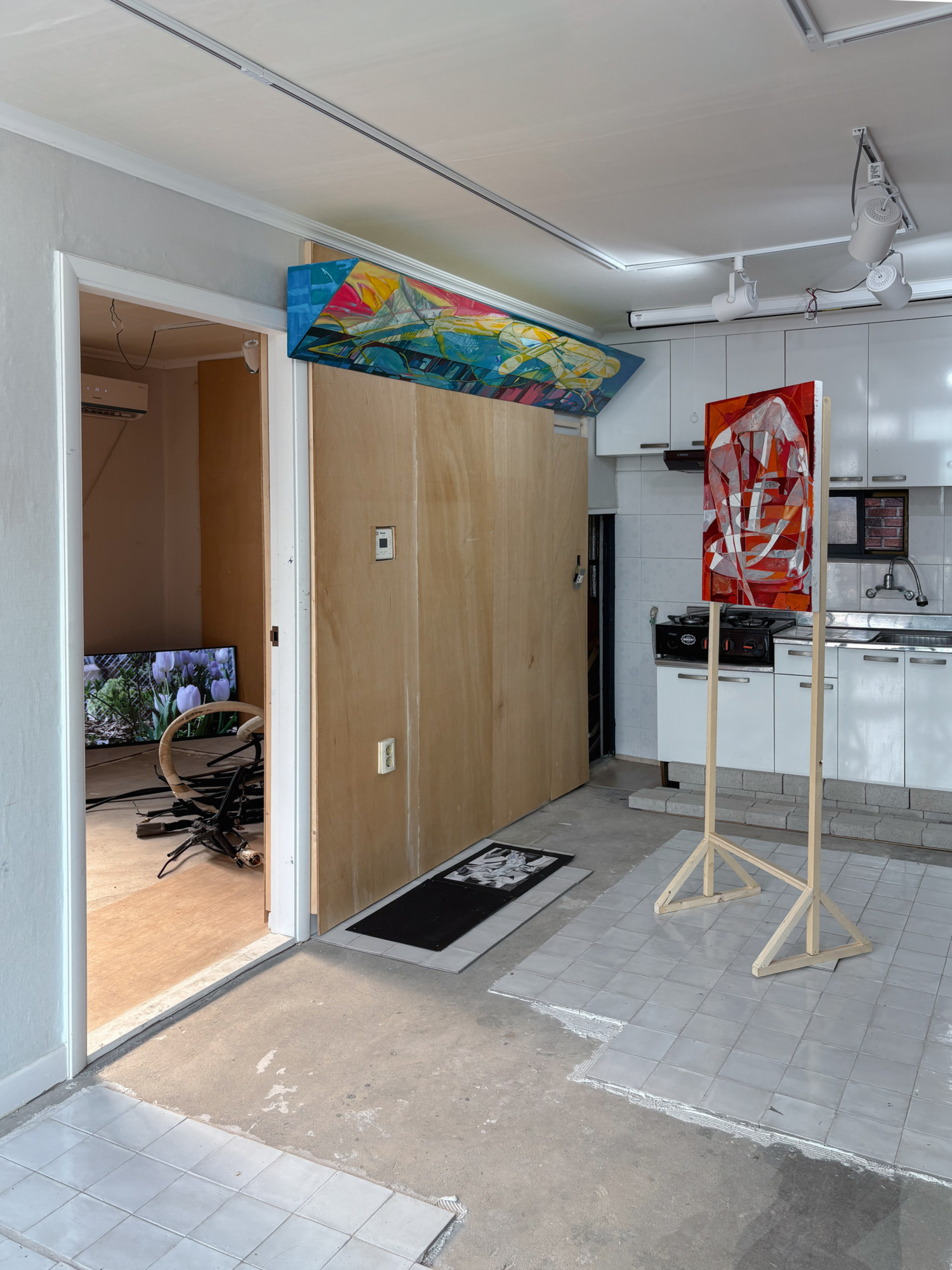
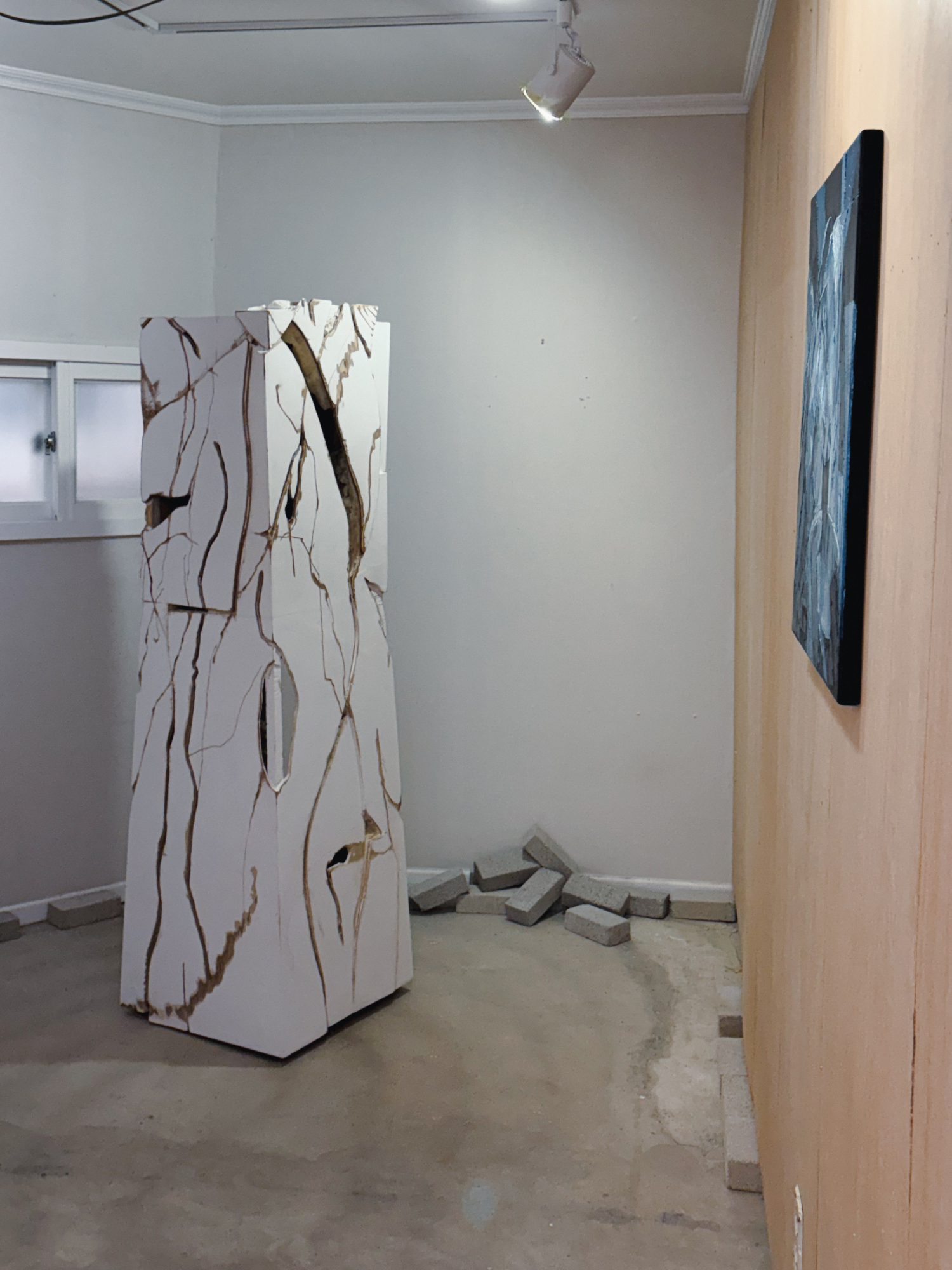
Views of Mockcamp session 1 public exhibition. Photos courtesy Mockcamp.
Artists participating in Mockcamp may not yet be entirely immersed in the “Seoul = Korea” paradigm, yet they do indeed continue to make work and pursue careers in the capital. Team Hansan’s approach to engaging with the provinces involves making connections via an intricate web of relationships, avoiding a unilateral, Seoul-centric gaze, or exoticizing areas outside the capital. In “Patchwork!” the concepts of language and nation were continually challenged as they bounced around the works. Much that does not equate Seoul with Korea can be found not only in comparisons with provincial art scenes, but in the capital itself. Yet at the same time other parts of the country do have their own geopolitical ways of interacting that can reverberate across works and exhibitions like the persistent throb of a bassline. The next instalment featuring art spaces and exhibitions in Incheon, will introduce art nurtured alongside sea and reclaimed land.
1. Of the four, all painters, one is referred to as an observer.
2. In South Korea, mural projects in which pictures are painted on walls and fences are a popular tool in urban or regional revitalization. Individuals who have studied art often take on these mural projects as one-off commissions, as part of artist “temping” initiatives.
3. “The Green Ray” was put together by three curators each presenting their own section following the DOOSAN Curator Workshop. Kim Jinju undertook her curating for this exhibition within a framework of “Waves Leave Time Behind,” inviting Team Hansan plus three artists (Kim Jeonggak, Baek Yunsuk, Cha Sla) to take part.
4. There is a saying in Korean, “Even if you have three sacks of pearls, they are only a treasure if you string them together” (Japanese equivalent is “A gem does not shine without polishing”). The title of the work is likely a play on this saying, the curator’s name (Kim Jinju) and the word for pearl–also jinju.
5. Including “Time Traveling through Korea: Encountering People from Different Times” (Tokyo National Museum), and “Art Between Japan and Korea Since 1945” (Yokohama Museum of Art). “Time Traveling” featured traditional Korean crafts, Buddhist images etc., while the Yokohama exhibition traced the history of the two nations from the 20th century onward, and presented work by living and deceased artists.
6. The text “A place for joined-up stories, the start of the next sentence” written by curator Shin Jaemin for the exhibition also touches on the possibilities of patchwork. Unlike the usual approach to writing an introductory text for an exhibition, Shin began with a poetic first paragraph:
“You are sitting on the remains. Or maybe you are the remains. Demolition had already begun a long time ago… On this earth there is a hiding place for stories that have been joined together. Spun from threads, they then exist there as points. A point is a finishing punctuation mark, and also the start of the next sentence.”
7. In particular, the mid-2010s trend dubbed sinsaeng gonggan meaning “new spaces” saw artists finding venues for their production efforts and activities in locations such as rooms in shopping districts, and the fifth floor of a mixed-use building, and experimenting with interacting with spectators, young people in the art world etc. via social media and map apps.
8. However among artists who took up teaching posts at art schools, some have likely discussed their personal experiences with students, as precedents. Sungkyunkwan University, alma mater of operator Park Juyeon, and also physically close to Mockcamp, also has a number of young teaching staff who are working artists.
9. For 2026 the Seoul Foundation for Arts and Culture accepted 121 and 26 applications respectively in the visual and multidisciplinary (activities including performances etc.) arts categories of its “Support for Arts and Creativity” (from the SFAC website [Korean language] ). This equates to ten projects a month debuting in Seoul. Other initiatives include support for youth in the arts (exhibitions) (20 grantees) (from the SFAC website [Korean language] ), and the various support programs of the Arts Council Korea. Even if selected for a grant or program, there are numerous requirements that add up to a heavy burden on the individual artist, such as the compilation of planning documents, and the appointment of curators, critics, designers etc, and the need to settle all expenses within the financial year. Other challenges include the soaring cost of renting exhibition venues, and restrictions that prohibit the sale of works.
(All websites cited above last accessed March 19, 2026)About the series
“Differences: Shedding light on other cartographies in Korea” is a series by Japan- and Korea-based art critic Konno Yuki. By deliberately shifting perspective from Seoul as center of Korean arts and culture, to take a fresh look at other parts of the country, the series aims to draw a line between alternative activities and art discussed in local contexts, in an attempt to redraw the contours of the Korean art scene.
Konno Yuki
Art critic active mainly in South Korea. Planner of “After 10.12” (Audio Visual Pavilion, 2018), “Kankokuga to Toyoga to” (gallery TOWED, FINCH ARTS, Jungganjijeom II, 2022) and other exhibitions. South Korean correspondent for the Padograph portal (https://padograph.com/ja)showcasing art exhibitions and event information from Japan and South Korea. Runner-up in the Gravity Effect 2019 art criticism competition.