
Out of Kyoto
003 Why the teamLab obsession with “art”?
By Ozaki Tetsuya
- SHARE


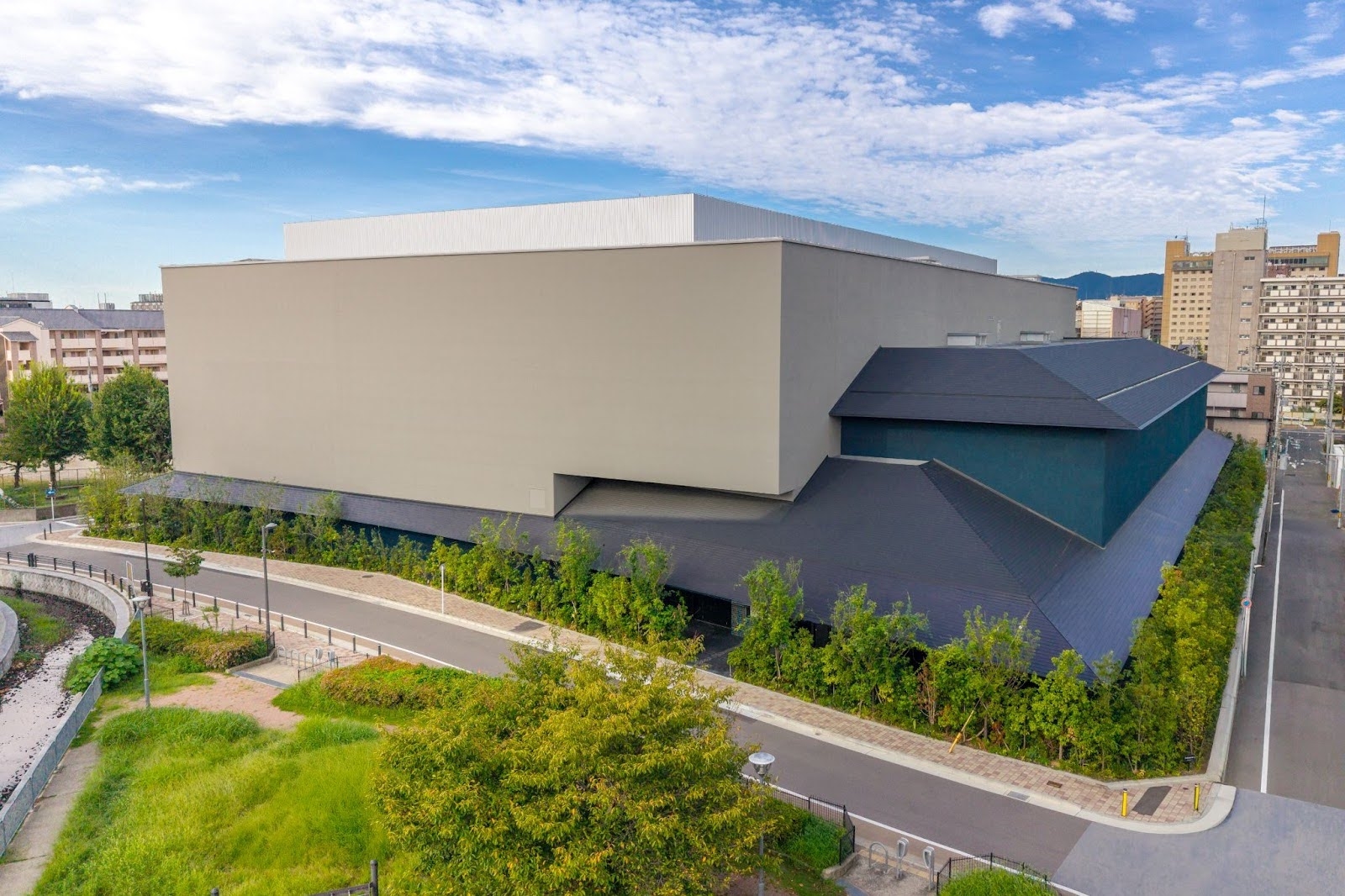
© teamLab
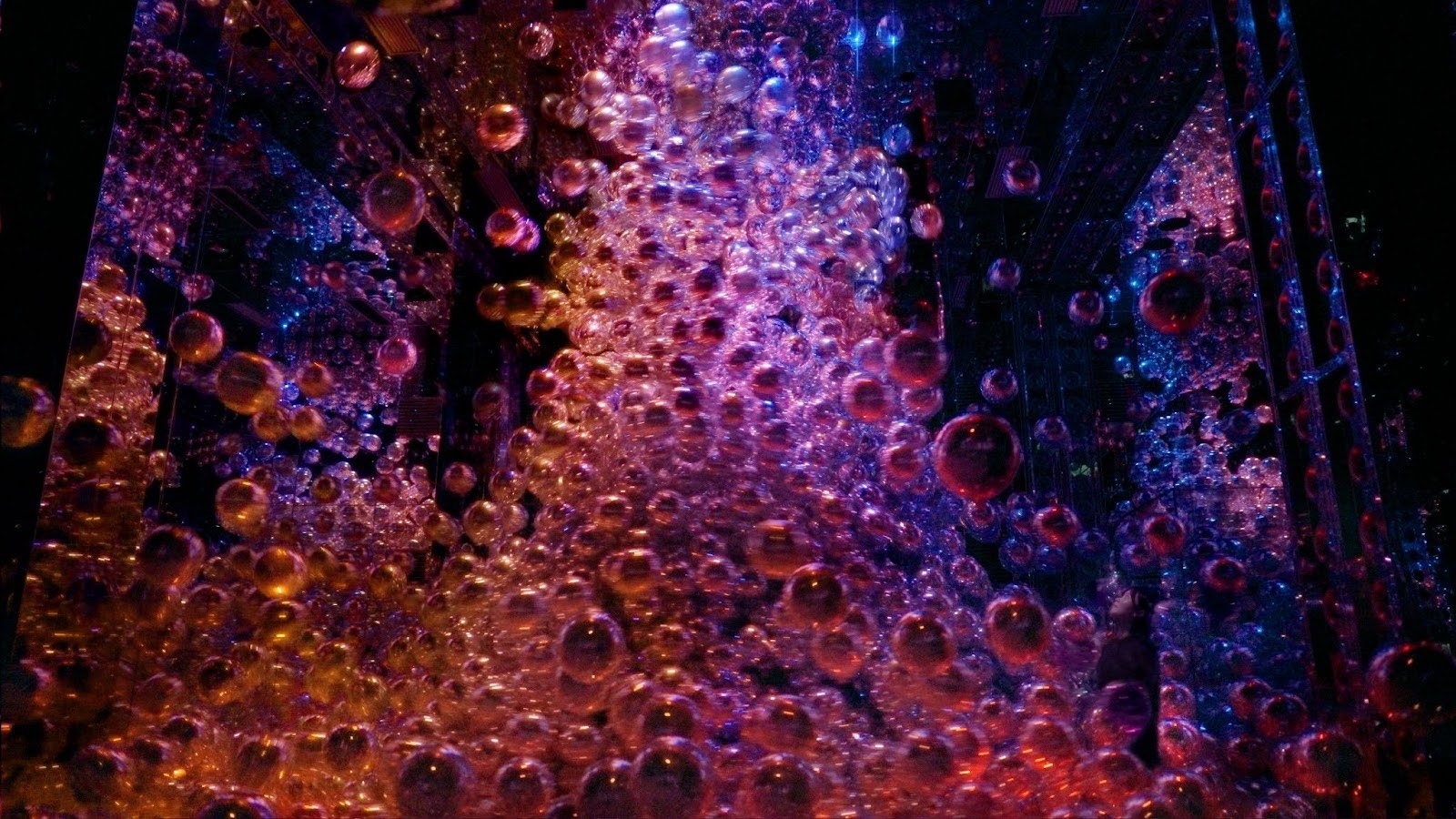
teamLab, Morphing Continuum, 2025–, installation. Sound: Hideaki Takahashi
© teamLab, courtesy Pace Gallery
Critic Thu-Huong Ha has described teamLab exhibitions as “an art amusement park or playground,” declaring them merely a short-lived sugar rush for visitors: “You scurry away with your technicolor selfies without sustaining any prolonged emotional or critical relationship with the work, and there’s really no reason to come back a second time.”4 Discussing Crows are Chased and the Chasing Crows are Destined to be Chased as Well, Division in Perspective (2013–),5 critic Ben Davis likewise notes, “Bathing you in bombastically heroic videogame-style music and dazzling images of magical birds transforming into flowers, this work is spectacular but not exactly deep. So, even at its most grown-up, teamLab-style art might be thought of as of a piece with other cultural phenomena of the moment, such as the cinema’s obsession with the superhero blockbuster, with its flashy special effects and broad-brush themes.”6
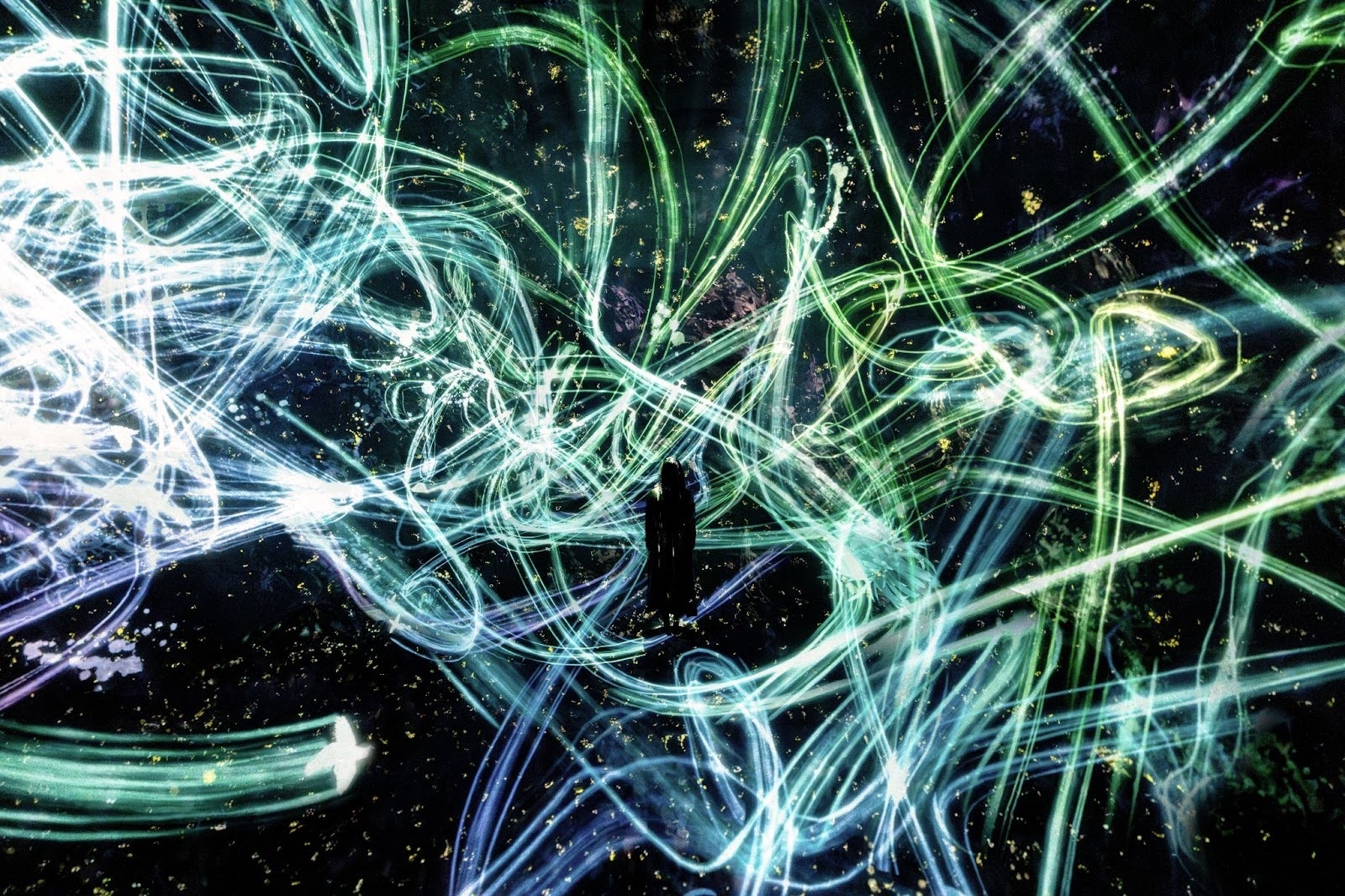
teamLab, Crows are Chased and the Chasing Crows are Destined to be Chased as Well, 2025, from the series “Crows are Chased and the Chasing Crows are Destined to be Chased as Well,” 2013–, interactive installation. Sound: Hideaki Takahashi
© teamLab, courtesy Pace Gallery
When questioned on the art-or-not debate, CEO Inoko Toshiyuki replied, “Say humanity has decided these [teamLab works] are art. If so, that’s great…. If not … then for want of a better expression, that would be simply teamLab. Which if it were so, would be even better.”7 However as mentioned above, these guys call themselves artists. They deem TBK to be a museum, and the attractions therein, works of art.
I suppose Marcel Duchamp did speak of “a kind of pictorial nominalism.”8 And as Donald Judd said, “If someone says [their] work is art, it is art.”9 Yet these are definitions arrived at by a process of elimination, due to the difficulty of discerning art from non-art.
Curator Nanjo Fumio10 has listed six characteristics of teamLab. These are 1) Constant, extensive use of digital technologies, 2) Works frequently immersive and interactive, 3) Humans and nature as a common theme, 4) Adoption of “borderless” as a concept in both content and production method, 5) Constant change and development, and 6) Underlying questions around life and death.11 Regarding 2), in a conversation between Nanjo and Inoko, Nanjo spoke admiringly of this quality, noting, “Who did immersive in Japan? teamLab.”12
In their discussion of “immersive” art the pair cited figures such as Pierre Huyghe and Gregor Schneider. There seemed to be some confusion there with Kurt Schwitters’ Merzbau, or the total installations of Ilya Kabokov, but that aside, 1) above is virtually the very definition of media art, and the interactivity mentioned in 2) is another common feature of media art. As for immersive, in Japan precedents can be seen in the work of artists such as Fujihata Masaki and Mikami Seiko. 3) through 6) are not unusual in any area of contemporary artistic expression.
Meanwhile, there have been whispers of possible plagiarism by teamLab, sparked by similarities to earlier works by Kimchi and Chips, Kusama Yayoi, Nawa Kohei and others. The works that combine light sources and mirrors, or use silicon oil, certainly fall into this category. But any debate regarding whether or not these are knockoffs is largely futile,13 so let us here attempt a different analysis, using the example of Massless Amorphous Sculpture (2020).14
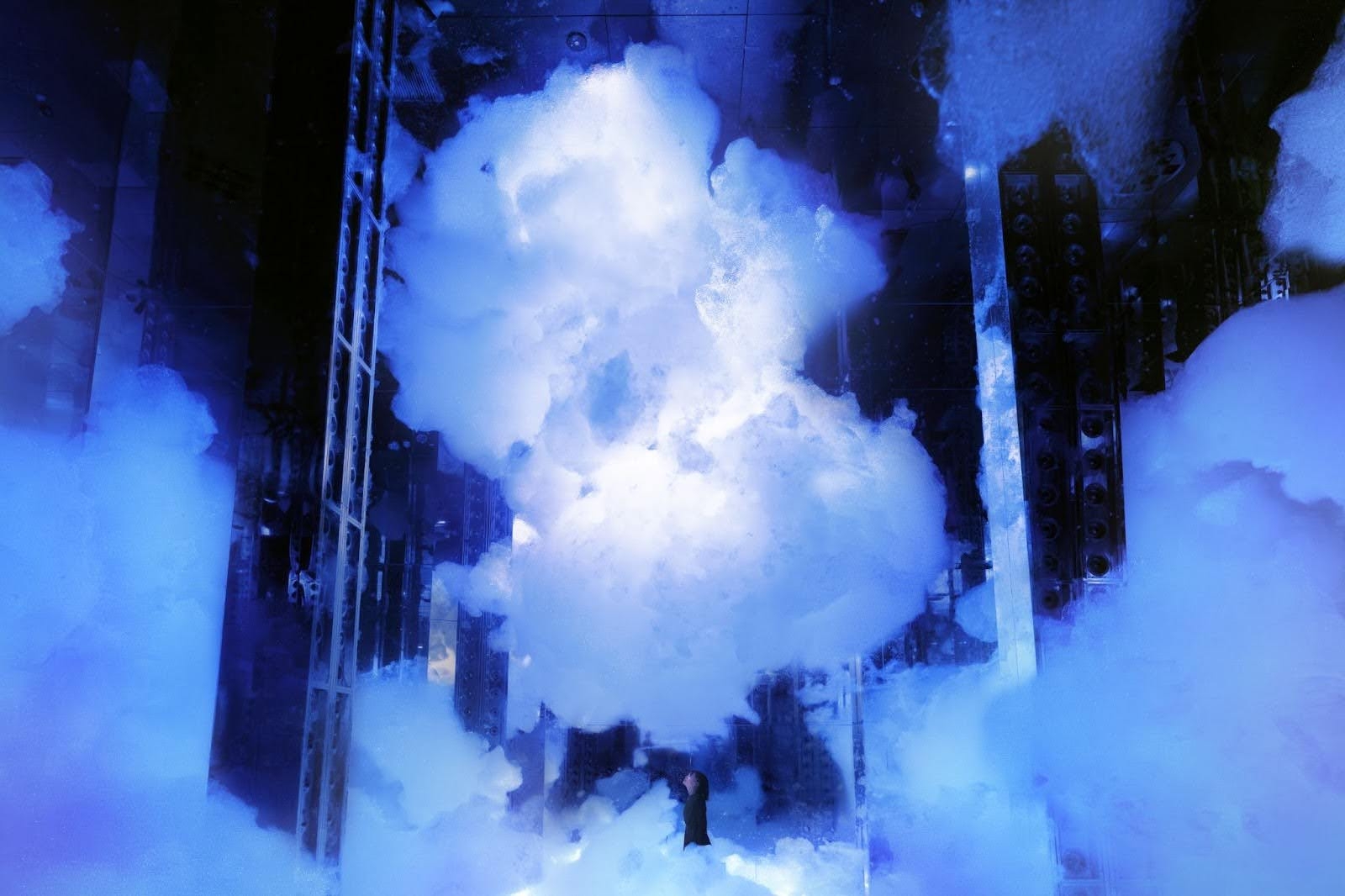
teamLab, Massless Amorphous Sculpture, 2020–, installation. Sound: Hideaki Takahashi
© teamLab, courtesy Pace Gallery
Massless Amorphous Sculpture is very similar to Nawa Kohei’s FOAM (2013–).16 Both consist of water, air, and detergent (surfactant). The continuously-generated FOAM however does not float in the air, but spreads across the floor in lava-like fashion, swelling and undulating in the exhibition space.
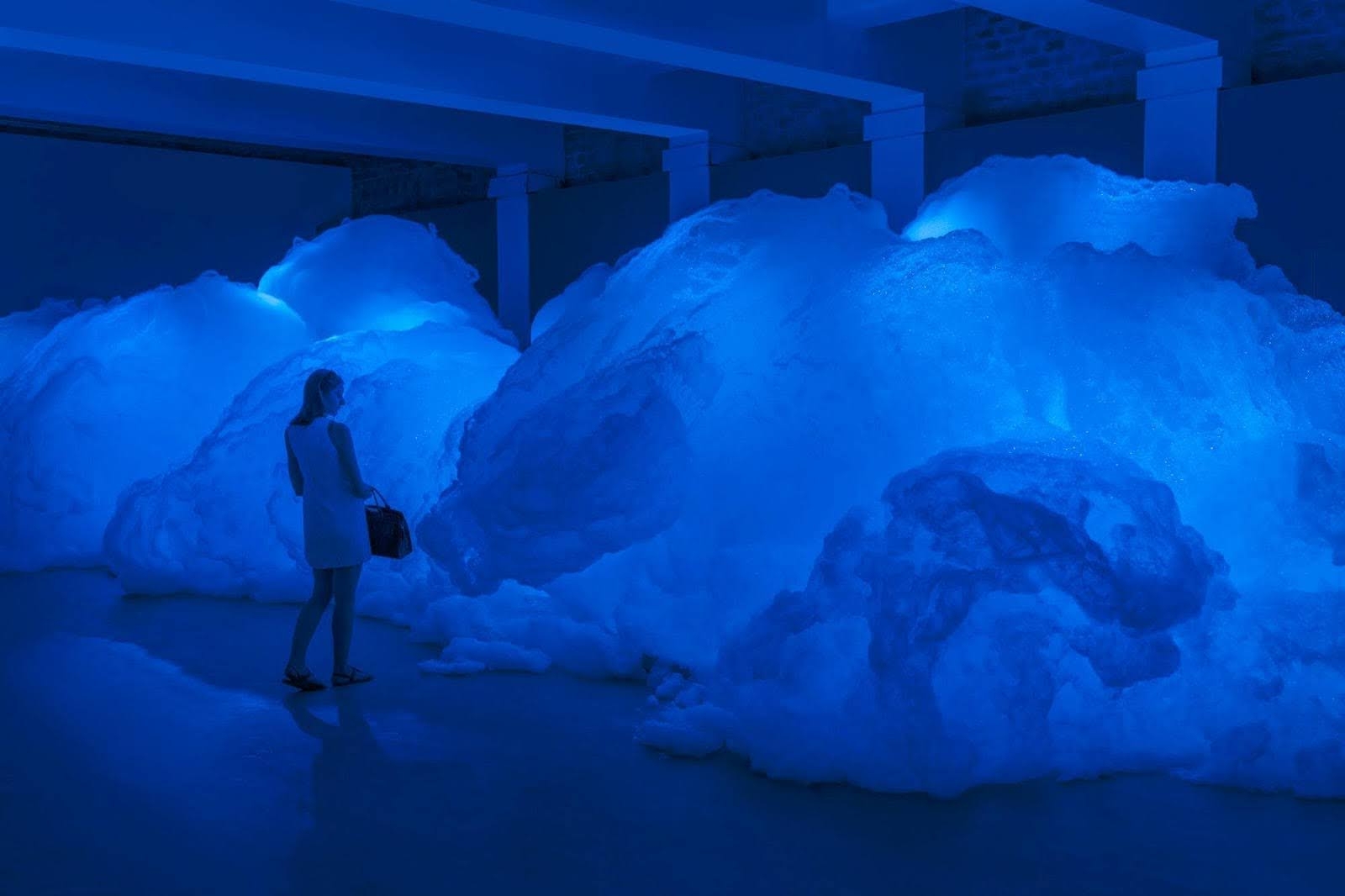
Nawa Kohei, FOAM, 2018
Installation view at “FUKAMI ‒ une plongée dans l’esthetique japonaise,” Hôtel Salomon de Rothschild, Paris, 2018.
Photo: Omote Nobutada, courtesy of Hôtel Salomon de Rothschild
Similar foam was also used before either of the above two works, in Soapéra (2009–)17 and Soapéra, an installation (2014–),18 collaborations between choreographer Mathilde Monnier and artist Dominique Figarella. Here the foam remains on stage throughout, a vital element of the set serving alongside the performers as a visualization of gravity—a fundamental precondition of dance.
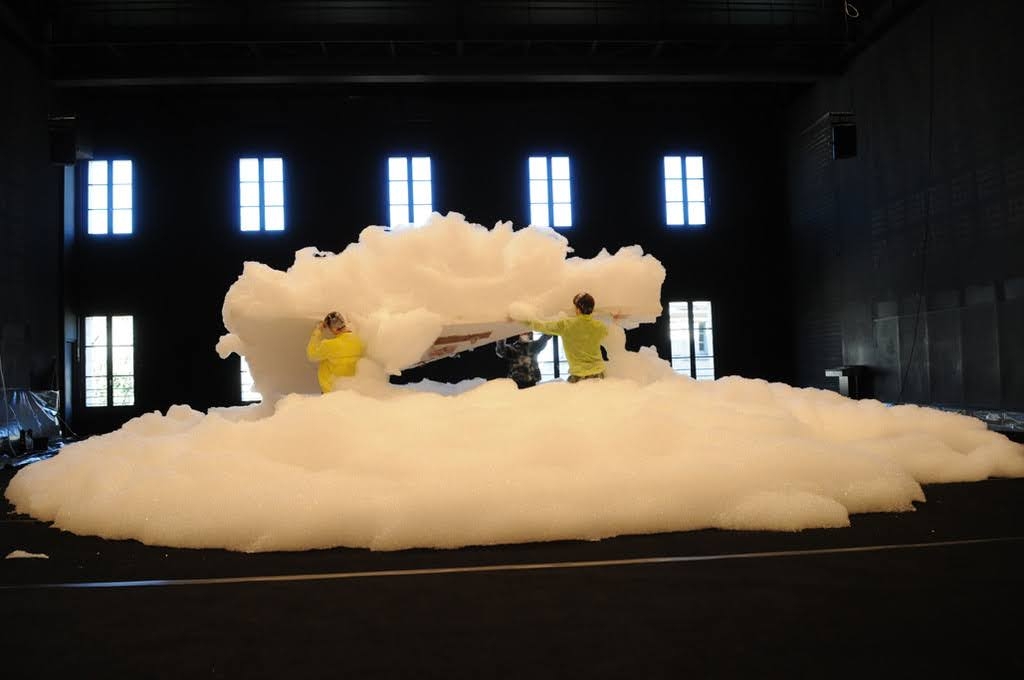
Mathilde Monnier & Dominique Figarella, Soapéra, 2009-
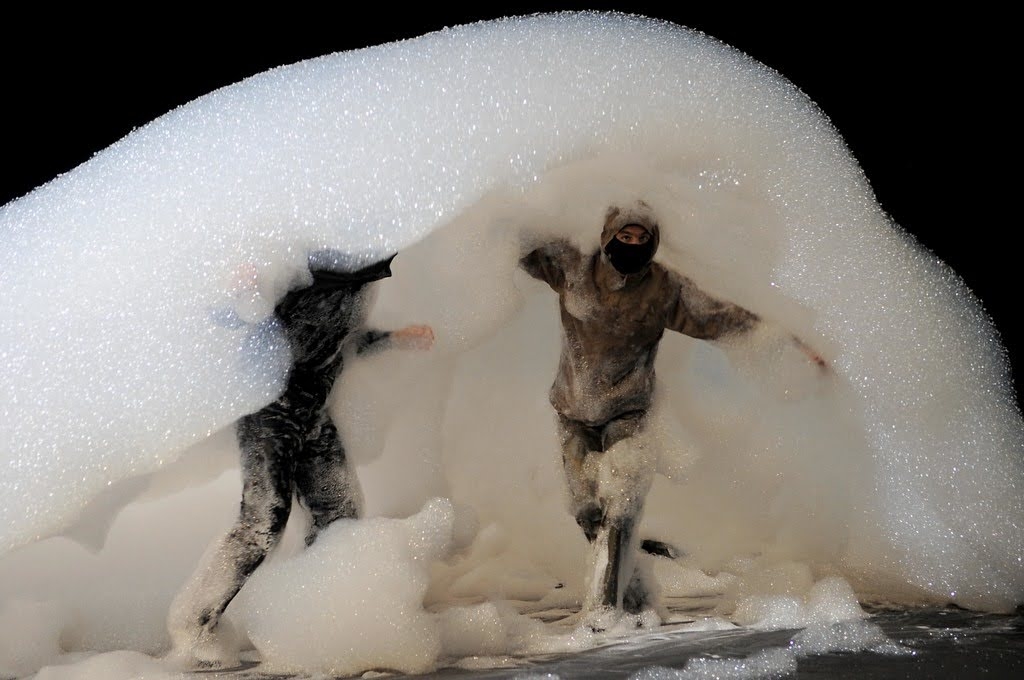
Mathilde Monnier & Dominique Figarella, Soapéra, an installation, 2009-
Inoko’s comment on Flowers and People, Cannot be Controlled but Live Together (2014–),19 that “If you design works like this well, I suspect the relationship between ‘self and others’ in the same space can feel positive,”20 and critic Uno Tsunehiro’s perception that “more and more teamLab works lately involve interaction between viewer and work, viewer and viewer, and breaking down boundaries,”21 do bring to mind relational art. Except that in the works of teamLab, concept is largely absent, and layers too are very few. There is no comparison between these works and the giant slides of Carsten Höller, for example, or Rirkrit Tiravanija’s live performances.
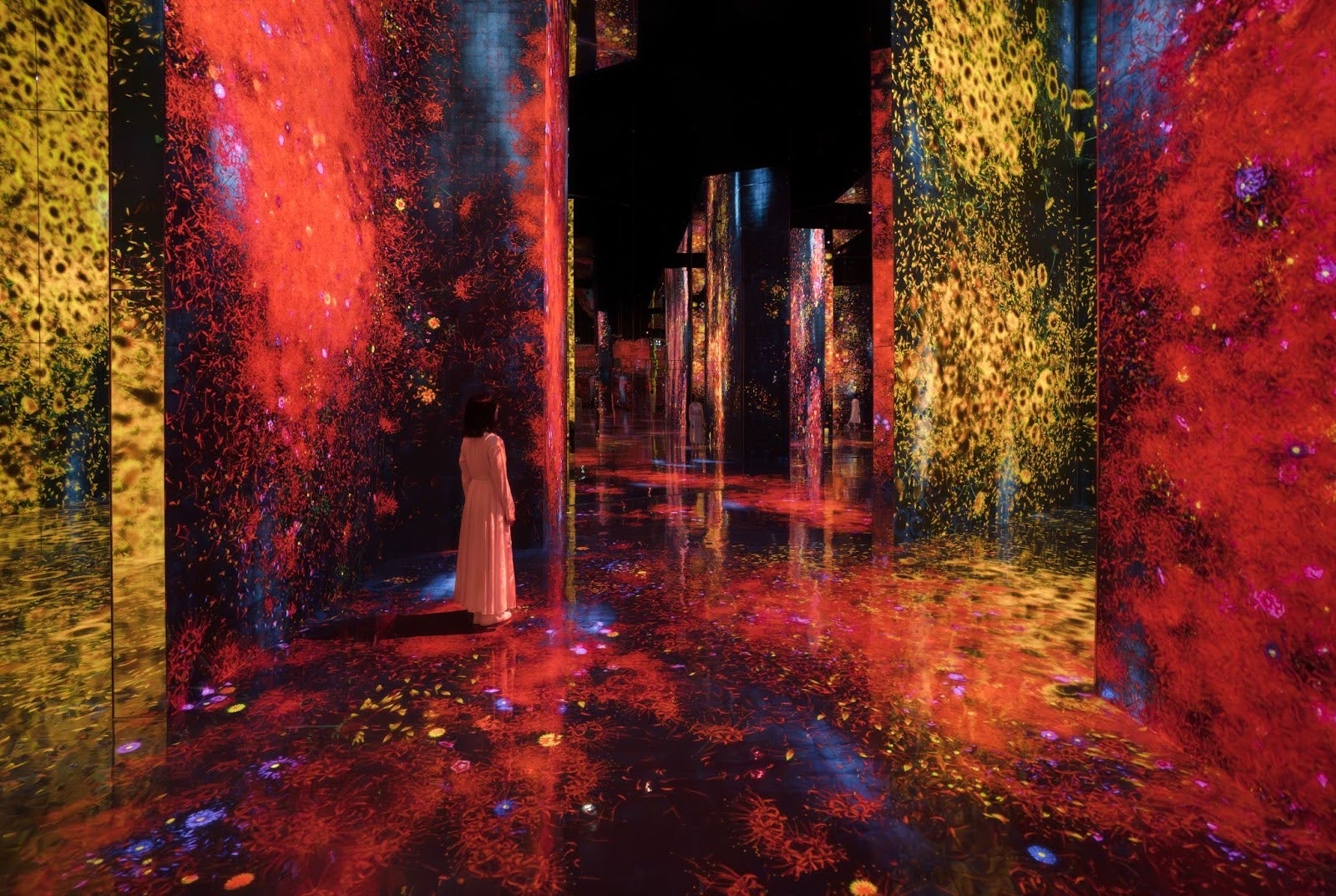
teamLab, Flowers and People, Cannot be Controlled but Live Together, 2014–, interactive installation, endless. Sound: Hideaki Takahashi
© teamLab, courtesy Pace Gallery
1. teamLab, “teamLab: Kyoto.”
2. teamLab, Morphing Continuum.
3. teamLab, “teamLab: Kyoto.”, Art work
4. Thu-Huong Ha quoted in Zachary Small, “TeamLab, Art’s Greatest Sugar Rush, Is Building an Empire,” New York Times, December 7, 2024
5. To be accurate, Crows are Chased and the Chasing Crows are Destined to be Chased as Well, Division in Perspective—Light in Dark (2014), from the same series.
6. Ben Davis, “How teamLab’s Post-Art Installations Cracked the Silicon Valley Code,” Artnet News, May 26, 2016
Inoko Toshiyuki actually appreciated this review, claiming, “I was honored that such a big-name critic […] wrote a long review, and the exhibition was generally praised!” (Inoko Toshiyuki and Uno Tsunehiro, Jinrui o mae ni susumetai: Chīmurabo to kyōkai no nai sekai [Moving humanity forward: teamLab and a borderless world] (Planets/Dai ni-ji wakusei kaihatsu iinkai, 2019), 56.
7. “Inoko Toshiyuki × Narita Yūsuke: How do these two geniuses interpret teamLab Borderless?,” YouTube, Yoakemae Players, February 19, 2024, 10’19–
8. Marcel Duchamp, “À l’Infinitif,” in Salt Seller: The Essential Writings of Marcel Duchamp, ed. Michel Sanouillet and Paul Matisse (Oxford University Press, 1973), 78.
9. “Statement”(1966), in Donald Judd Complete Writings 1959–1975 (The Press of the Nova Scotia College of Art and Design, co-published by New York University Press, 1975/2005), 190.
10. Nanjo invited teamLab to participate in the “Universe and Art” exhibition (2016–17), which he organized while director of the Mori Art Museum, and served as exhibition advisor for “teamLab: Existence in Perception—Engyoji Temple” (2023) at Engyoji Temple in Himeji, and “teamLab: Existence is an Infinite Continuity” (2023–24) at the Himeji City Museum of Art. Poet and critic Tatehata Akira believes “Nanjo shows a good understanding of teamLab.” “Interview: Gendai bijutsu/bijutsukanron no ryōiki kara Chīmurabo o yomu” [Interview: Reading teamLab from the perspective of contemporary art and museum theory], in teamLab: At the Now of Eternity, ed. Nanjo Fumio (Seigensha, 2019) 106.
11. Nanjo Fumio, “Chīmurabo no hatten to mirai” [teamLab’s development and future] , in teamLab: Existance in an Infinite Continuity exh. cat. (Kinmokuseisha, 2024), 94–95.
12. “Talk: Inoko Toshiyuki x Nanjo Fumio,” in teamLab: Existence in an Infinite Continuity , 26.
13. Regarding other artists’ allegations of plagiarism, see Ozaki Tetsuya, “Doubts about the handover ceremony at the closing ceremony of the Rio Olympics,” REALKYOTO, September 29, 2016.
14. teamLab, Massless Amorphous Sculpture.
15. Same as above.
16. Nawa Kohei, FOAM.
17. Mathilde Monnier, Soapéra.
18. Mathilde Monnier, Soapéra, an Installation.
19. teamLab, Flowers and People, Cannot be Controlled but Live Together.
20. teamLab, Jinrui o mae ni susumetai, 10.
21. teamLab, Jinrui, 106.
22. In Japan, this would include people such as Doi Manzo, creator of the Flying Tower and Endo Yoshikazu, the inventor of the “Jidō kikai” [coin-operated machine]. For details, see Hashizume Shinya, Nihon no yūenchi [Japanese amusement parks] , (Kodansha, 2000).
(All accessed December 21, 2025)
About the series
In “Out of Kyoto” writer and art producer Ozaki Tetsuya covers topical issues in the arts and wider culture, exploring the state of artistic expression today, from an historically-informed perspective.
Ozaki Tetsuya
Writer/arts producer. Launched the online culture magazine REALTOKYO in 2000, and the contemporary art magazine ART iT in 2003. General producer of the performing arts program for Aichi Triennale 2013. Served from September 2012 through December 2020 as publisher and editor-in-chief of the online culture magazine REALKYOTO, and from February 2021 through March 2025 as editor-in-chief of REALKYOTO FORUM. Editor and author of the photo books One Hundred Years of Idiocy and its sequel One Hundred Years of Lunacy >911>311; author of Gendai āto to wa nani ka (What is contemporary art?) and Gendai āto o korosanai tame ni (So as to not kill contemporary art). Awarded the Chevalier of the Order of Arts and Letters by the French Government in 2019.