
What Lies in the Multiplicity of the Art Ecosystem?
A Report on ICA Kyoto | International Symposium 2025 — Part 2
By Watanabe Ayumi
- SHARE


All photos: Haruka Oka
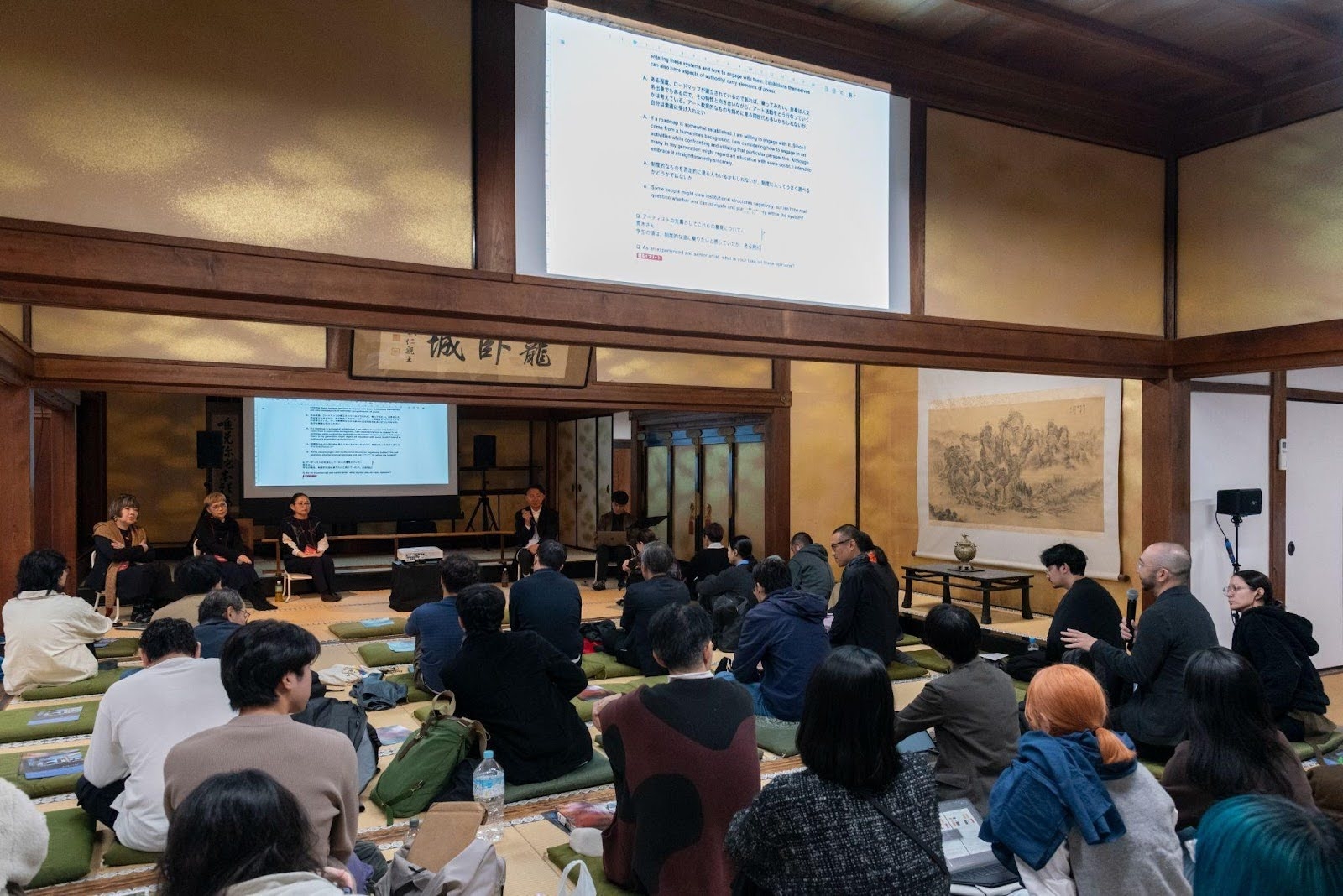
Session 3: How can art museums participate in today’s art ecosystems?
Session 3 was moderated by the Director of ICA Kyoto, Kataoka Mami, to examine case studies operating within the public sector from museums in Shiga, Hiroshima, and South Korea. The two main topics of this session were to identify the responsibilities and challenges of public museums in relation to their local art scenes and to think about strategies and perspectives to meaningfully engage with international networks.Hosaka Kenjiro (Director, Shiga Museum of Art [Shiga])
The Museum of Modern Art, Shiga (hereafter “MoMAS”) in Otsu City opened in 1984, originally known as the Shiga Prefectural Museum of Modern Art. The museum adopted its current name after a major renovation in 2021.
Characterizing Shiga’s art scene is surprisingly difficult because of the many ways it overlaps with Kyoto’s scene, both geographically and in terms of the cultural and personal networks within the Kansai region. Director Hosaka stated that, while recognizing these factors, the museum prioritizes focusing on its local communities without inflating its locality.
Hosaka explained that the background to this idea came from a series of past programs at MoMAS that had focused on the Shiga art scene. One of these was “Shiga Annual,” a group exhibition held thirteen times from 1986 to 1999. Interestingly, the series did not focus solely on the Shiga art scene despite its name. Instead, they ended up as thematic exhibitions reflecting the interest and expertise of their rotation of curators and never turned into a regular platform for introducing local artists. This was followed by the series “Contemporary Artists from Shiga” in 2002 that had a clearer premise to introduce accomplished contemporary artists with ties to Shiga through solo exhibitions regardless of genre and to promote them nationally. However, the series concluded after just three installments. This may be in part to its inherent weak framing of “contemporary artists from Shiga.” Artists are often reluctant to be labeled as a region-specific “local artist,” and the framework of “contemporary artists from Shiga” may have simply lacked enough appeal to draw audiences.
The museum is currently working on two new programs while reflecting upon these past outcomes. The first program includes solo exhibitions by Kansai-based emerging artists; its current inaugural edition, Sasaoka Yuriko’s Paradise Dungeon, opened in January 2026. While other museums in Kansai already organize solo exhibitions by younger artists, MoMAS offers artists the chance to create large-scale exhibitions that utilize all 900 square meters of its main galleries. The second program is ASK (Art Spot in Kohoku), which was created as a part of regional revitalization efforts in the Kohoku area of Shiga Prefecture. Similarly structured as a series of solo exhibitions, its first edition featured the artist duo Kyunchome in Kyunchome: A Lullaby for One Million Years. ASK hopes to feature artists with ties to the museum, such as those whose works have been acquired, rather than limiting the exhibition to local artists, just as the museum chose Kyunchome’s work for this inaugural exhibition. Incidentally, although MoMAS’s annual acquisition budget is a modest sum at around 2.5 million yen, it has been expanding its collection in recent years through donations as well.
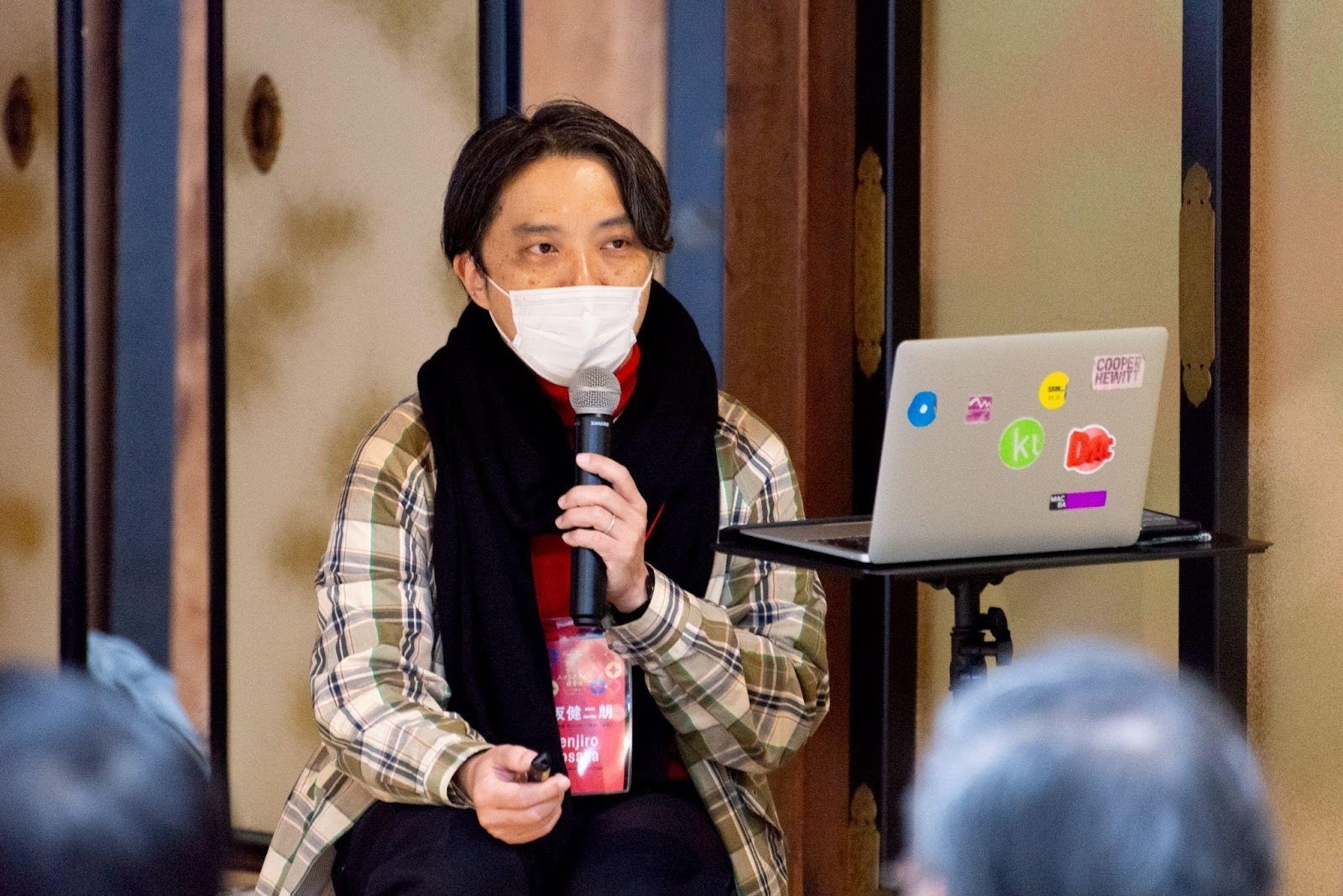
Hosaka Kenjiro (Director, Shiga Museum of Art [Shiga])
Matsuoka Takeshi (Curator, Hiroshima City Museum of Contemporary Art [Hiroshima])
The Hiroshima City Museum of Contemporary Art (hereafter “Hiroshima MOCA”) opened in 1989 as Japan’s first public museum exclusively devoted to contemporary art. Reflecting Hiroshima’s vision of becoming an international city of peace and culture, the museum featured contemporary art from Japan and abroad with a focus on postwar art. It has also historically kept its distance from the local art scene in Hiroshima. This is symbolized in the museum lacking a community gallery or rental space, a common feature in most public museums, or in the fact that their policy on collecting works lacked references to artists with regional ties. Many of these factors have contributed to the wide gap between the institution and its local artists.
Beyond the walls of the museum, Hiroshima hosts a thriving local art scene with its own distinct culture and network informed by its regional history. 1 A major turning point after 1990 was the founding of Hiroshima City University, which included a Faculty of Arts (established in 1994). Around 2000, university alumni began to exhibit their work in the city and form connections with each other; in the 2010s, artist-run spaces by alumni such as Kuroda Daisuke also began to emerge. Hiroshima City University, an institution in the public sector with a different role than an art museum, helped create a community, art scene, and art ecosystem unique to Hiroshima.
What ultimately brought the museum and the local art scene’s separate paths together was the former’s renovation and extended closure from late 2020 to March 2023. At the core of this initiative, the museum collaborated with key members of the local art scene in active outreach programs. Although the project was initiated because the museum itself was unavailable, as a result, it was the first time since its opening that the institution played an active part in Hiroshima’s art ecosystem.
Since reopening in 2023, the museum has been experimenting with ways to merge these past connections with their regular programming. For example, in the exhibition Between Memories and Objects: Monuments, Museums, Archives (2025) that commemorated the 80th anniversary of the atomic bombing, the museum resumed research and exhibition preparations with artists they had collaborated with during the closure. Other examples include how the museum continues to use the desks and chairs in its building from the outreach activities and organizing a series that invites former collaborators to the museum as guest artists.
Hiroshima MOCA’s challenge now is situating these individual, sporadic activities within a broader context. Matsuoka suggested that one possibility lies in reexamining the museum’s current programs through the lens of the area’s local history, as it could contextualize individual practices beyond the regional and reframe their meaning across various timelines.
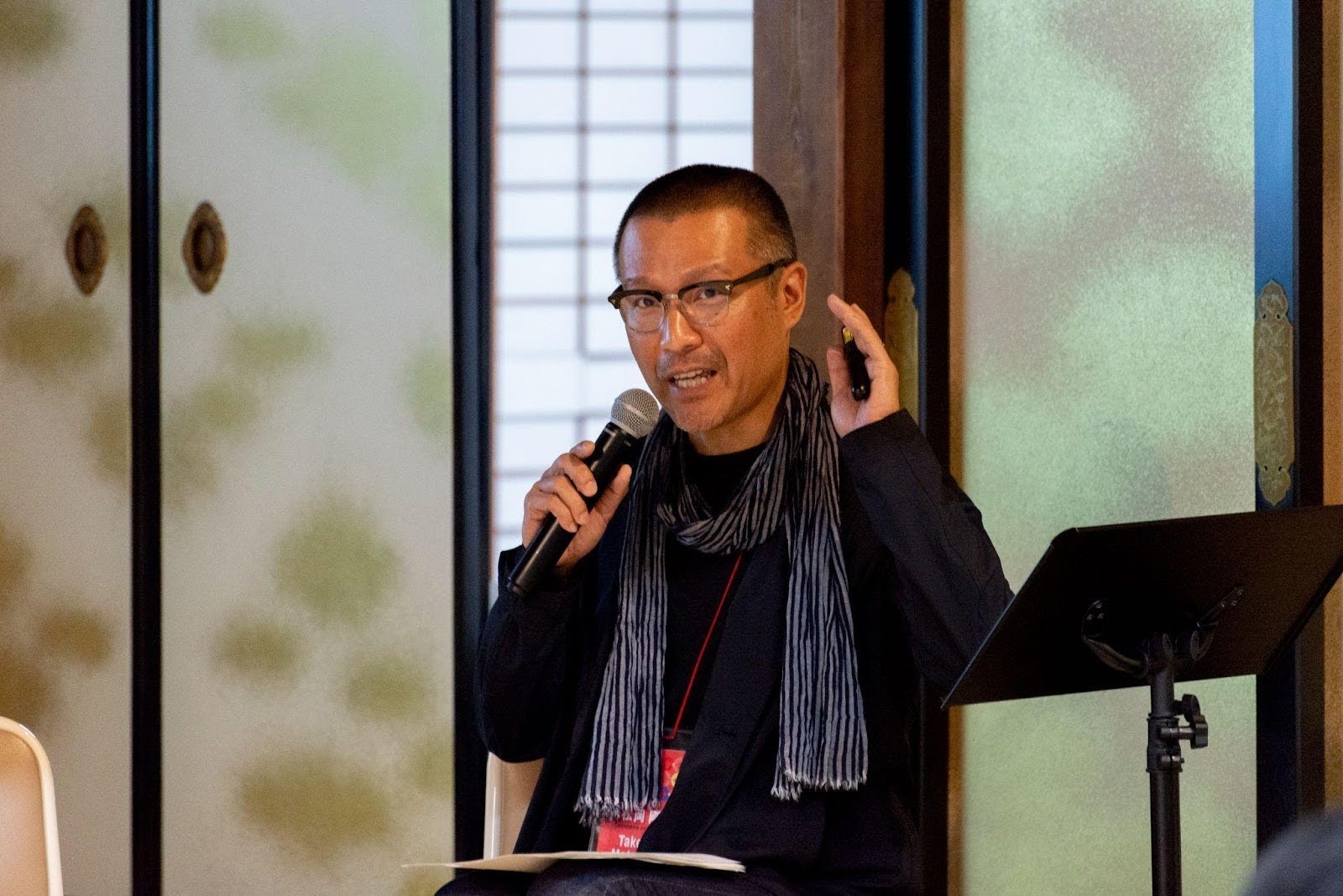
Matsuoka Takeshi (Hiroshima City Museum of Contemporary Art)
Heejung Park (Residency Manager, Changdong, National Museum of Modern and Contemporary Art, Korea (MMCA) [Seoul, Korea])
Korea’s international rise in contemporary art has been closely intertwined with its rapid development of artist-in-residence (AIR) programs that began in the nineties. Operated by the Gwangju Museum of Art, one of Korea’s first residency programs was launched at Palgakjeong Studio in 1995, the same year the first Gwangju Biennale took place. Even though the Asian financial crisis struck in 1997, the following year, Korea’s Ministry of Culture, Sports, and Tourism announced a master plan for the expansion of artist studios and residency programs through unused school buildings and old factories. AIR facilities and programs continued to increase exponentially through the 2000s and into the 2010s; by 2013, there were more than one hundred residencies operating domestically, thirty-seven of which were run by institutions in the public sector, such as museums.
MMCA Residency Changdong was one of the institutions founded during this formative period. Established in 2002 and operated by the public institution, the National Museum of Modern and Contemporary Art, Korea (MMCA), it has become one of the leading venues for international artists, along with the Asia Culture Center (ACC) in Gwangju. Park said that the residency has hosted over 900 artists so far, and between 2012 and 2025, 36.5% of Korean Art Prize recipients were graduates of the program, making it a stepping stone to the global art scene. 2
A distinct feature of MMCA Residency Changdong is that it limits applications from Korean artists to those aged forty years and older. This criterion is meant to complement a domestic art scene that tends to lean towards younger artists and to support mid-career artists who had to halt their careers for various reasons, thereby supporting activities across different generations and invigorating the entire scene. While Korean artists make up roughly the same percentage as international artists, analyzing the geographic distribution of the latter reveals a marked disparity where artists from Western Europe and East Asia are well represented, while those from the American and African continents are still small. As an initiative to address this disparity and strengthen its broad international network, the residency recently launched the International Artist Fellowship Program.
As ironically illustrated in Kim Mo’s The White Cube (2019), Korea has developed a unique art ecosystem that positions residencies as a launch pad for international careers. Within this context, MMCA Residency Changdong, having made significant contributions to the globalization of the Korean art scene, now faces a new set of challenges, such as developing an integrated, cyclical system within its operations, establishing a sustainable Korean art ecosystem, balancing social responsibility as a public institution, and supporting independent artistic expression.
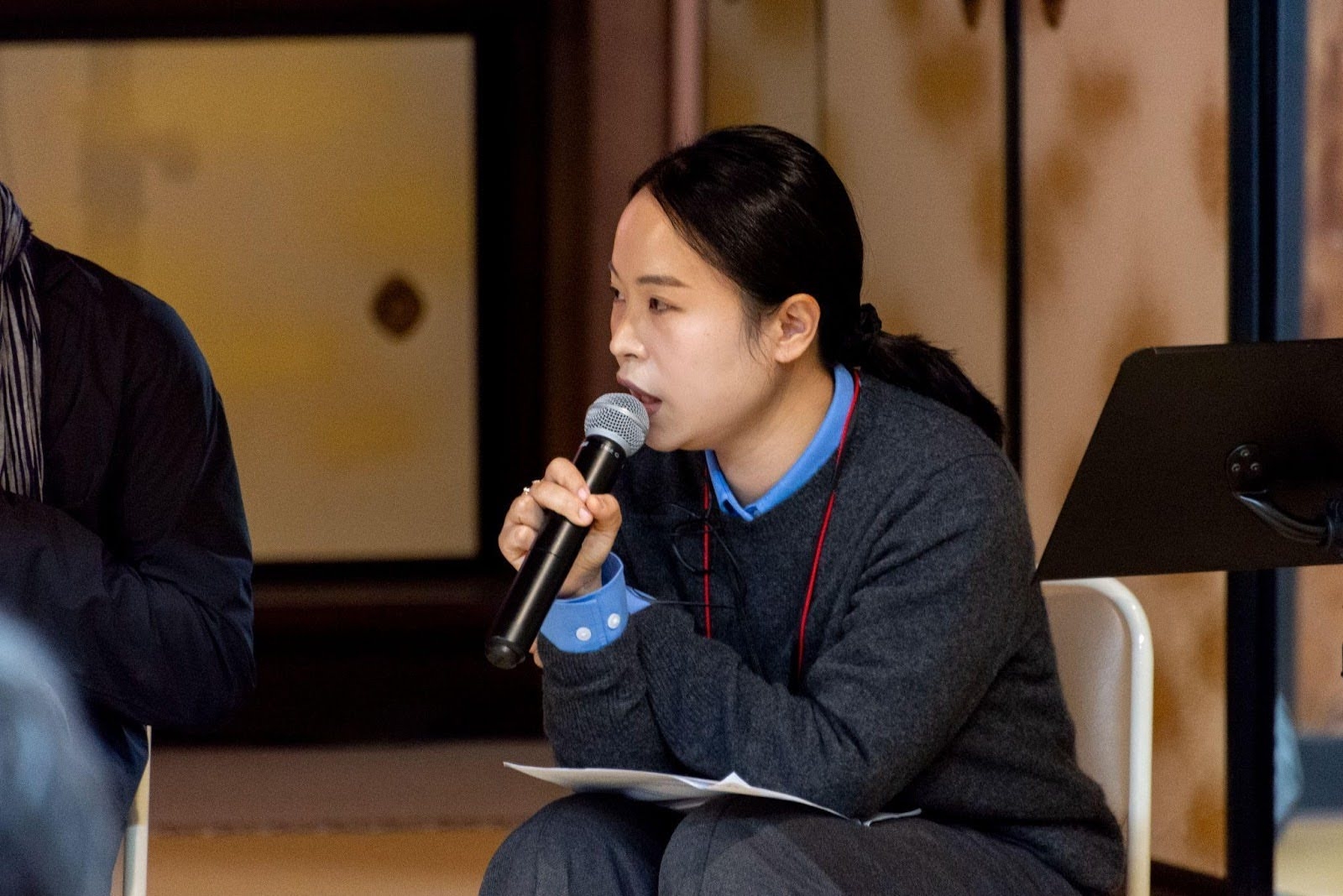
Heejung Park (Changdong, National Museum of Modern and Contemporary Art, Korea)
In the Cross talk with Kataoka as a moderator, the conversation focused on how museums can meaningfully engage with their local communities while expanding their international outreach. Hiroshima MoCA’s Matsuoka brought up the fact that within Hiroshima’s art ecosystem, the museum had been the only one that had not collaborated or interacted with other institutions. While the museum has built a relationship with Hiroshima City University, which has a thriving contemporary art program, he said that the museum needs to consider which communities or individuals are being overlooked as collaborative ties with other educational institutions remain limited. MoMAS’s Hosaka stated that core activities such as producing high-quality catalogs of local artists and collaborating with international galleries ultimately amount to building an international network. Park from MMCA acknowledged that, as an institution helmed by a national museum, MMCA Residency Changdong inevitably lacks flexibility regarding its operation. Looking ahead, however, she expressed her goals to strengthen ties with the Global South and further promote the dissemination of Korean art globally.
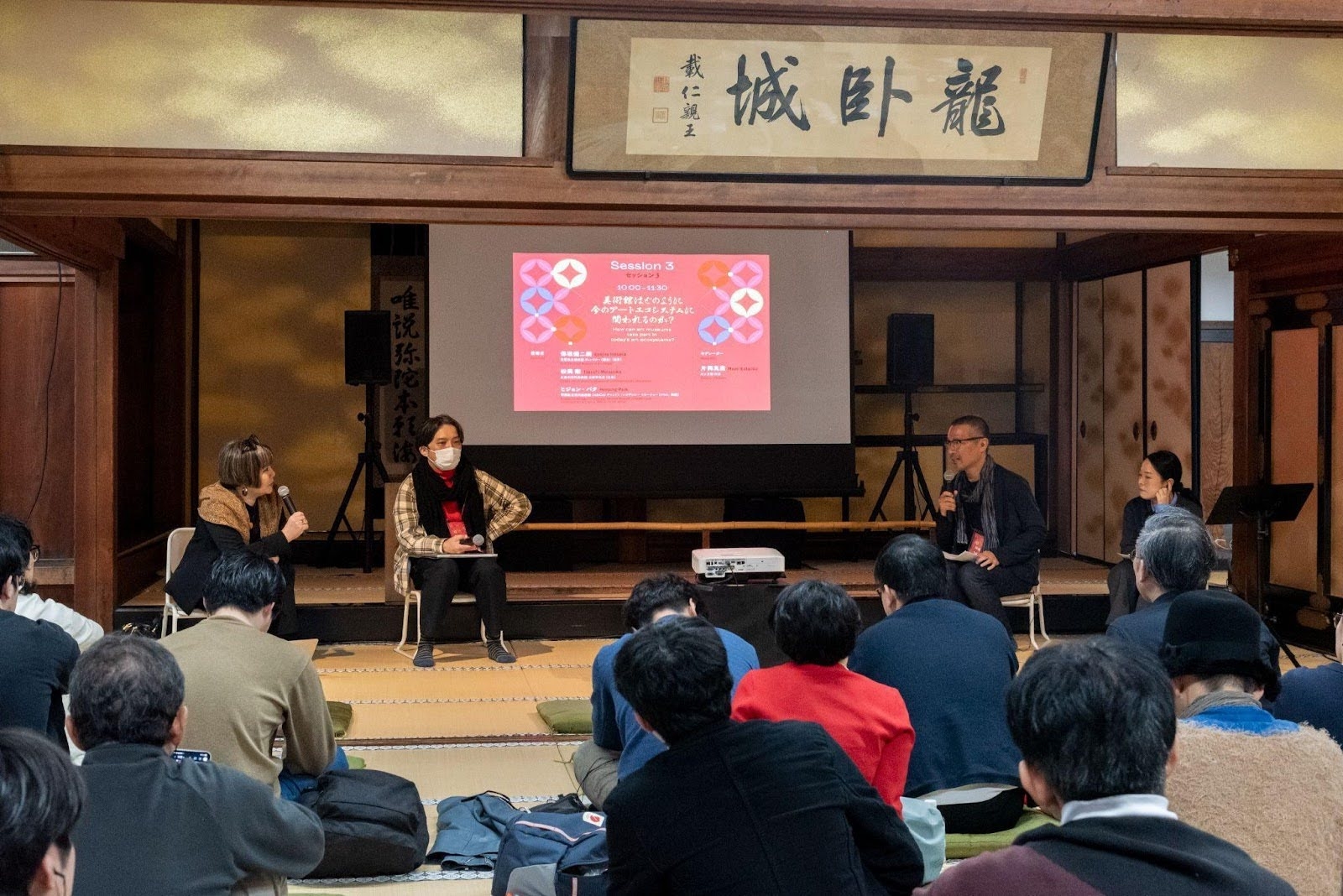
Cross talk from Session 3
Pitch presentations by local members in the Kansai region
In this session, Kanazawa Kodama, ICA Kyoto’s Special Project Director, served as facilitator while three groups based in Kansai gave pitch presentations. This was the only segment of the symposium where the civic and private sectors appeared alongside one another. According to the symposium’s website, the objective of this session was to introduce local practitioners to its international participants in order to foster new encounters and exchanges.3 The presenters’ various perspectives illustrated the depth and breadth of the Kansai art scene.
punto (Shared studio [Kyoto])
punto is a shared studio in Kyoto’s Minami Ward that was established in 2014. Located in a former bag factory, its members renovated the building themselves with the support of Higashiyama Artist Placement Service (HAPS), an organization in Kyoto that connects artists to vacant properties for studio spaces. The studio currently has seven members, including Shima and Moriyama.
One of the studio’s core programs is an open studio held every year. In opening their creative space to the public, this event allows members to interact directly with the studio’s supporters. Many of their initiatives create opportunities to present new work or generate revenue, as seen in punto annual, an annual report published since 2018 that archives and promotes what each member is up to, and an online store that was launched in response to the COVID-19 pandemic. The studio also organizes group exhibitions as “punto” and maintains an active presence on social media. But Shima and Moriyama insisted that punto was not a collective but a space that prioritized individual creative practices. With each member devoted to their own creative vision, the artists in this group have developed a solid foundation with each other where they can comfortably discuss a wide range of topics with each other.
These are my personal reflections, but punto’s practice—in which its members steadily work while staying connected to their own lives and to their local communities, such as universities or neighborhoods—may be unique to Kyoto, a city filled with art schools, artists, and shared studios. I recognize a strong sense of “Kyoto-ness” in the way that soda (from Session 1) and another space like Kuma, a home gallery in Kyoto’s Nishino Ward that operates only on the weekends and public holidays, continue their practice while maintaining a close connection between their creative expressions and daily lives. (This is also evident in the city’s restaurant scene, as many independent businesses choose to operate minimally in lieu of a healthy work-life balance.)
These practices may appear modest and even insular compared to the global and dynamic international art scene, and yet their ethos of fostering individual connections and forging their own paths to keep making and exhibiting work is undeniably powerful and inspiring. punto’s presentation seems to capture a facet of the art scene characteristic to Kyoto or even the greater Kansai region.
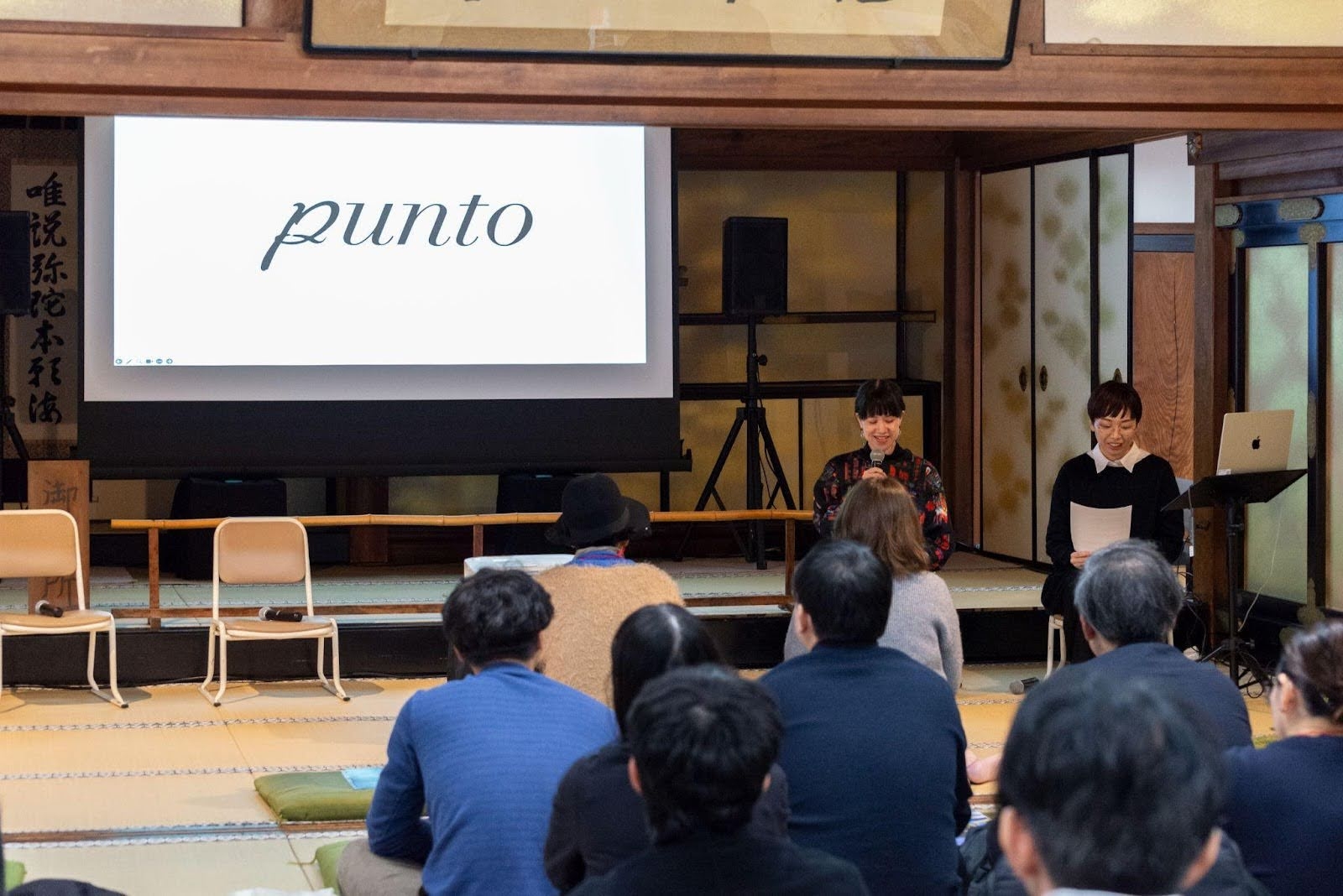
Shima Haruka and Moriyama Saki(punto)
Yukawa-Nakayasu (TRA-TRAVEL co-founder [Osaka])
Founded in 2019, TRA-TRAVEL is an art hub that organizes and manages a wide range of activities, from residencies, exhibitions, talks, workshops, art schools, and art tours.4 Co-founded by artist Yukawa-Nakayasu and Yoshida Qenji, the organization focuses on building an international network by inviting artists from a broad range of backgrounds within Japan and abroad.
Interestingly, TRA-TRAVEL is based in Osaka yet maintains no physical space of its own. Yukawa describes the operational model that sustains the hub as a “delta network of mutual support among three parties,” in which artists, venues, and TRA-TRAVEL contribute respective resources, ideas, and opportunities in response to each project. This innovative strategy minimizes facility maintenance costs and makes room for more spontaneous, experimental projects (while funding is drawn primarily from public grants). In 2025, TRA-TRAVEL also launched a further initiative called artXtention.
The project aims to circulate works, projects, and the people involved by recontextualizing them across national borders rather than confining them to the local context of a specific region (Yukawa refers to these situations where activities remain within a local context as “local production for local consumption”). Its long-term ambition is to create networks in the form of a decentralized autonomous organization (DAO), where creators can move fluidly between domestic and international art spaces and organize projects.
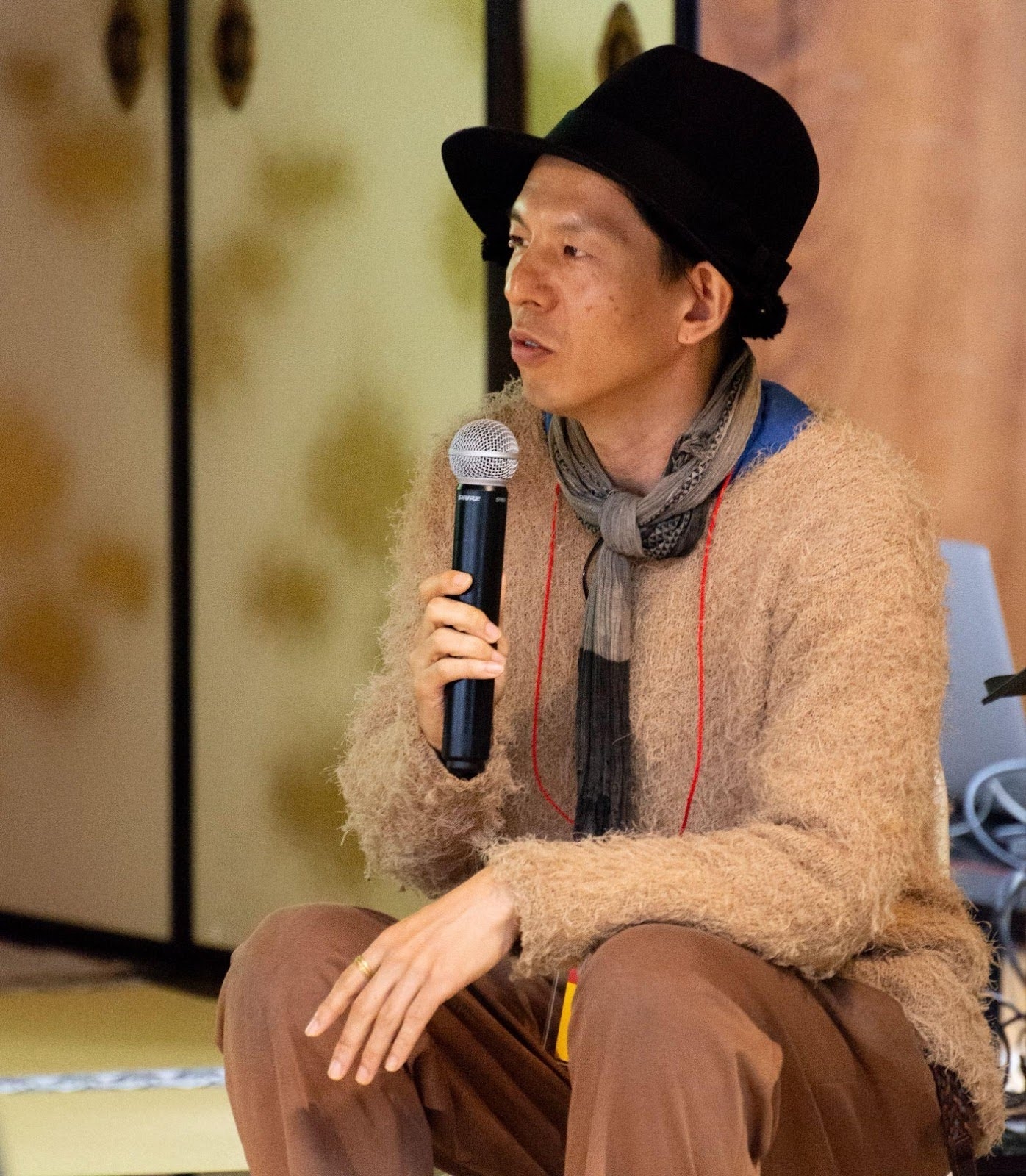
Yukawa-Nakayasu(TRA-TRAVEL)
MOMENT Contemporary Art Center (Contemporary Art Center [Nara])
MOMENT Contemporary Art Center (hereafter “MOMENT”) is a new gallery space that opened in Nara City in 2025 5, a joint partnership between the Mori Manufacturing Research and Technology Foundation, operated by DMG Mori Co., Ltd., one of Nara’s leading companies, and MUZ ART PRODUCE, a Kyoto-based organization that plans and manages cultural events in the Kansai region.
As its name “Art Center” suggests, MOMENT’s ambitions extend well beyond curating and presenting exhibitions. The organization’s goals are to create an art hub that encompasses artist residencies and education and outreach, all while encouraging community engagement and cultivating art enthusiasts.
Compared to Osaka and Kyoto, Nara offers limited facilities and opportunities for presenting and engaging with contemporary art. The prefecture has no four-year art universities and very few residency programs. Given the region’s unique characteristics, namely in its concentration of cultural heritage sites, Nara Prefecture inevitably prioritizes the preservation and restoration of cultural properties. MOMENT is currently the only gallery in Nara that offers a number of art-related initiatives that include exhibitions, residencies, and educational programs.
As part of its programming, MOMENT changes its exhibitions approximately every three months to introduce an eclectic range of domestic and international artists. The organization also operates an art residency modeled after Villa Kujoyama in Kyoto, providing a workspace where artists can stay for extended periods while experiencing Nara’s rich nature, history, and culture. Furthermore, MOMENT collaborates with prefectural and municipal governments, art museums, and educational institutions to promote regional partnerships and educational initiatives, seen through events that encourage an appreciation for the arts in Nara City’s middle and high school students, satellite programs for the Nara Prefectural Museum of Art, and sponsorship for the National Art Education Conference. Through these multifaceted programs, MOMENT seeks to facilitate a new generation of art audiences while helping to develop Nara’s contemporary art scene.
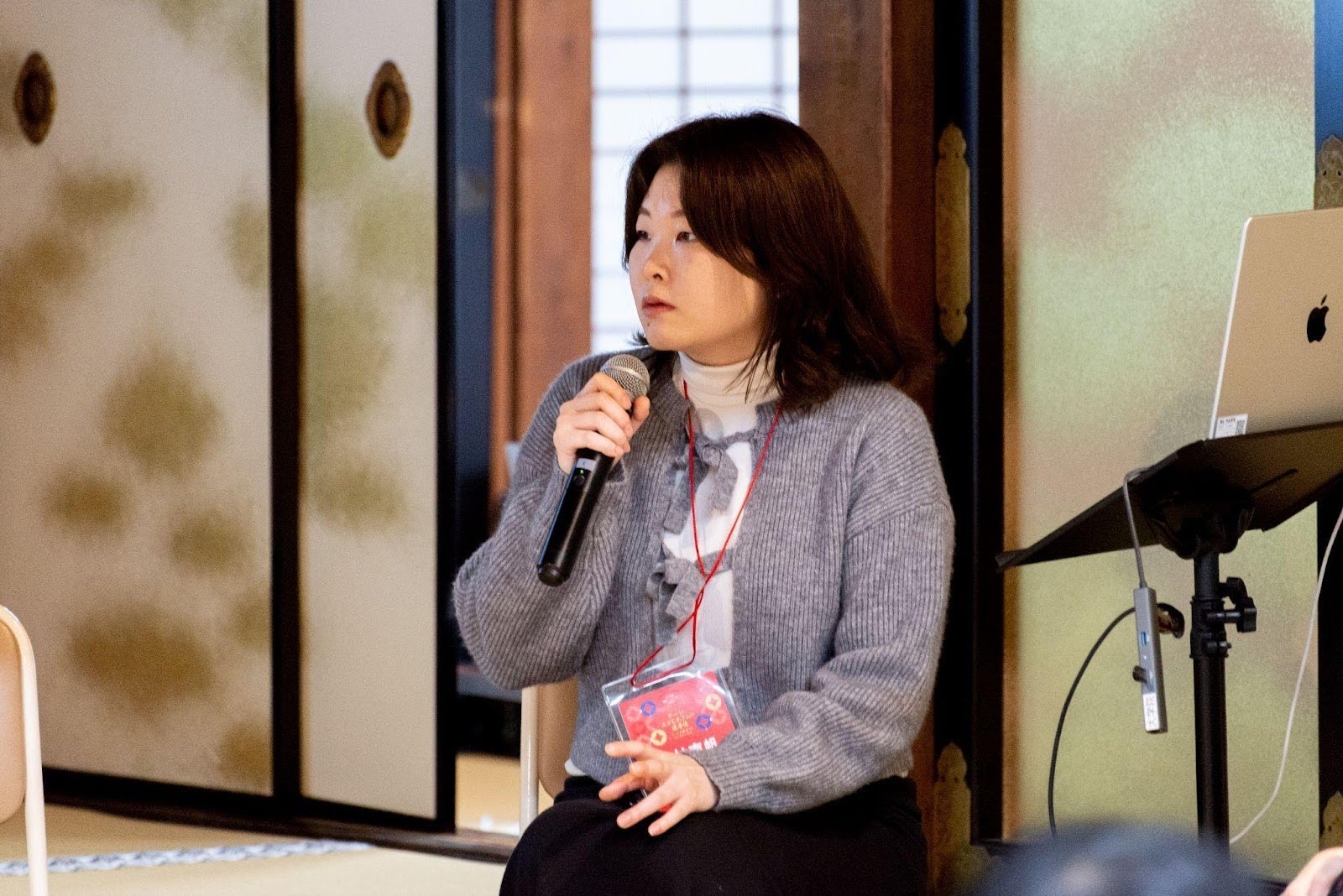
Fujimura Naho(MOMET Contemporary Art Center)
The end discussion with Kanazawa as a facilitator turned to the issue of maintaining a creative space. One of the biggest obstacles for any artist in continuing their practice is securing a studio space after art school. punto’s Shima and Moriyama stated that by keeping punto going, they hope to serve as a model for younger artists to keep working in Kyoto. On the other hand, Yukawa said that TRA-TRAVEL is not a project intended to continue indefinitely. Rather than the TRA-TRAVEL name remaining, he hoped the next generation would carry on its communities and ideas (a position that echoed Cemeti’s insights from Session 1). MOMENT’s Fujimura, speaking as part of a newly built organization, shared that her immediate goal was securing connections within Nara City to ensure its long-term survival.
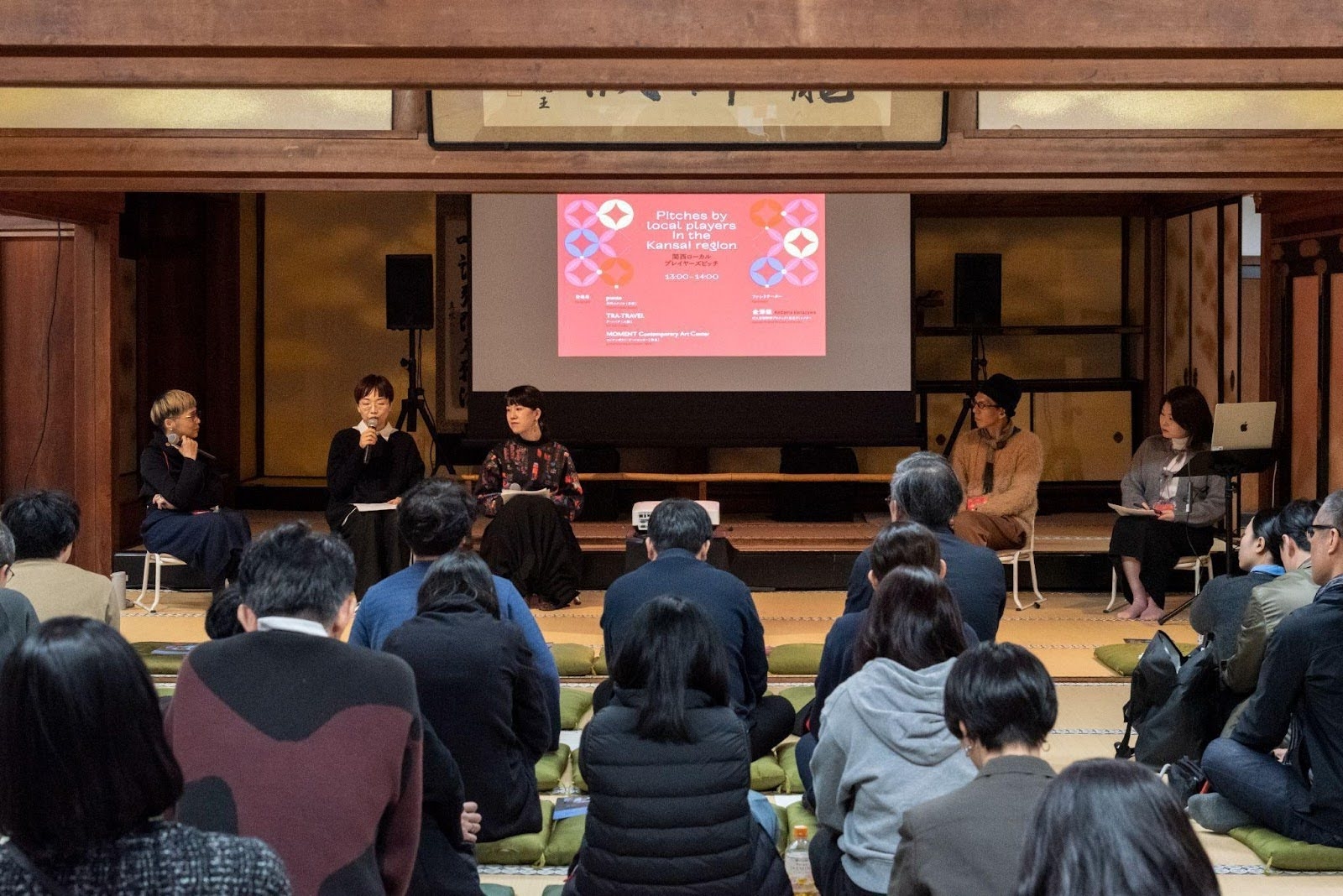
Cross talk between local members in the Kansai region
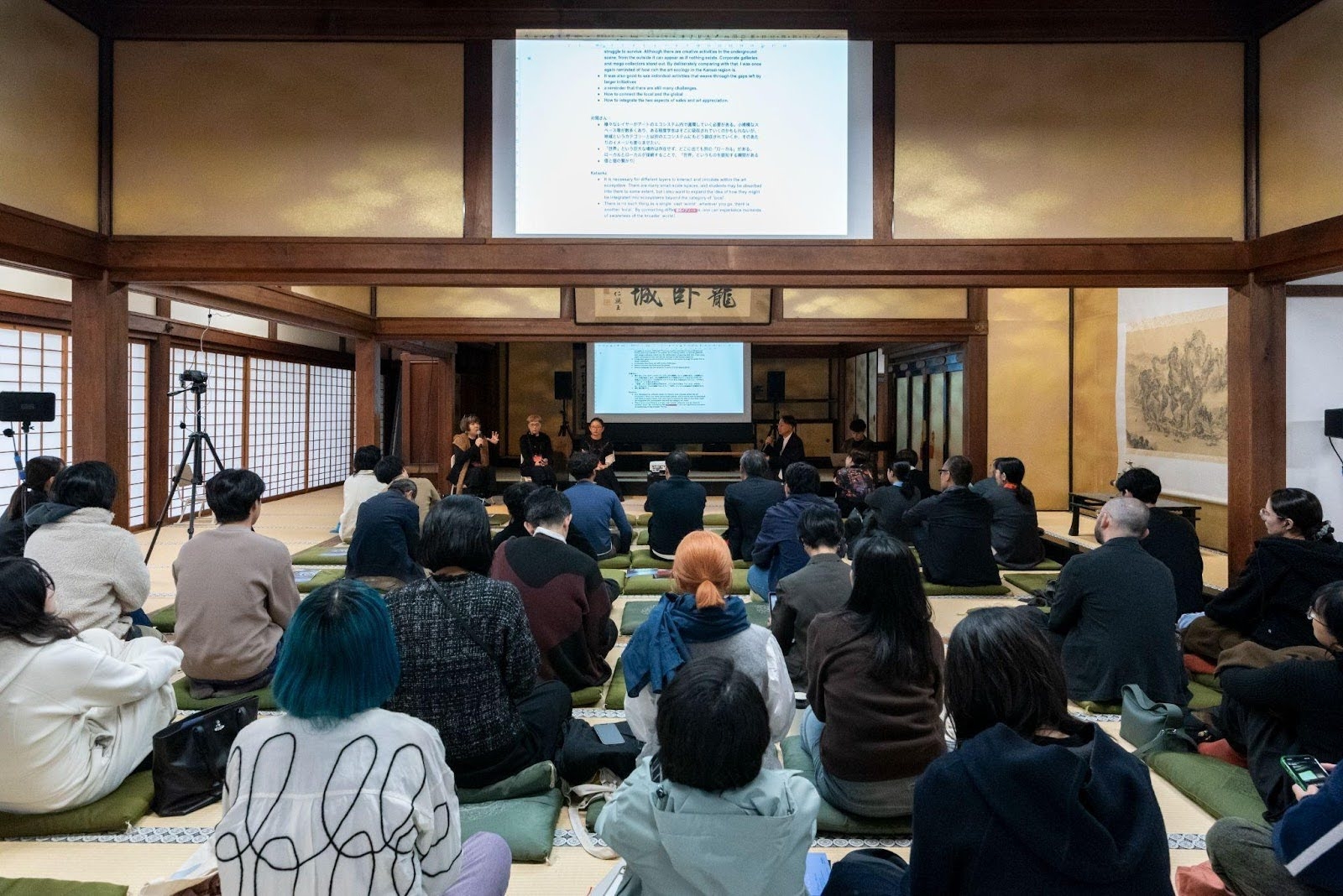
Overall review and discussion
In the final session, all four moderators reflected on the two-day symposium and discussed possibilities for the future with its organizers and participants. The following summary articulates several key themes that emerged.
The Local and “the World”
Kataoka brought up the fact that the term “the world” did not indicate one singular location 6. Instead, she explained, the term was more expansive, a place where local communities are endlessly connected to one another, and there are as many “worlds” as there are eight billion people on the planet. It was through the continuous interactions between individuals from different societies and cultures that one gains an understanding of the world.
On the other hand, it is also true that the art world is equipped with systems that are intended to support “internationalization.” Graduate students attending the symposium made it clear that they wanted to be a part of these institutions and communities that were connected to the world, if they existed. The key point here was that Japan’s systems need to change as they remain outdated in various respects. All parties involved in the arts, including younger artists, must continue to ask which parts of the system need to be updated and improved and advocate their views.
Developing a Career
Another topic of discussion was that fewer students and artists had attended the symposium than the organizers had anticipated. One factor Tsutsumi identified was that the options available to artists to keep developing their practice were becoming increasingly convoluted. What kind of career paths are available for artists today? If there were working methods, could that knowledge even be shared? Moreover, if the existing art ecosystem were understood as a kind of a structure, how could we encounter the artists and their practices that fall outside of it?
In response, Cemeti’s Astriningtiyas and Yuwono stated that it was essential to constantly learn and educate oneself about the “language of global art”—in the sense that art contains its own histories, concepts, and ideas that function as a language that can be shared between different regions and nations. They reiterated that consistently interacting with this language helps to imagine the bigger picture of the art ecosystem. It is through reflecting our positions within the scene that allows us to expand our individual actions.
Kanazawa asserted that the most important thing was to simply “keep moving.” Artists evolve through different stages only by consistently creating and exhibiting quality work. It was also important to encounter individuals who share similar values during this process. Kanazawa said “moving” also meant going abroad. Kobayashi pointed out that one of the biggest benefits of traveling to a different country is in discovering other realities outside of the roles or communities we inhabit at home, challenging our notions of what we assume is normal. Every country has different labor conditions and support structures for artists; even within Japan, the performing arts and the contemporary arts have divergent views on working conditions and artist rights. It served as a reminder that, for those pursuing careers abroad, it was essential to be aware of both ourselves and our surroundings.
Connecting Kyoto to the World
The symposium reiterated Kyoto’s extensive network of small studios and spaces and its rich environment conducive for artists to continue their practices. On the other hand, Kataoka pointed out that an art ecosystem is fundamentally a system in which people, elements, and resources across different communities, environments, and roles interact and circulate. How will agents within Kyoto’s unique art ecosystem interact with other communities beyond regional boundaries? Undoubtedly, it warrants further investigation and reflection to decide on whether these acts of interacting and circulating can transform the ecosystem and whether such changes are even necessary.
Overlooking the recent trends within the global art ecosystem, Kyoto has become a popular site for art professionals from around the world to see and purchase art works. Going forward, the question lies in how Kyoto will embrace this demand and how each of its members will choose to engage.
Overall review and discussion
Finally, I would like to briefly share my own reflections. True to ICA Kyoto’s mission statement as “an open platform connecting Kyoto with the world,” these two days were filled with stimulating and vibrant encounters from various scenes in Asia. It was also deeply moving to witness familiar faces from various museums and groups across Japan share a platform within the larger framework of Asia.
But since the symposium was based on a theme of “multiplicity” with a sizable number of panelists with diverse roles and positions, it felt like a missed opportunity where the presentations could have delved deeper beyond brief overviews. I found myself wondering what the reality was on the ground. After the symposium, Program Director Tsutsumi also acknowledged that there are still many voices that are yet to be heard. These voices likely include, for example, those with different positions within the organizations featured in this symposium (reflecting the multiplicity within institutions). The historian E. H. Carr once wrote that “facts speak only when the historian calls on them.” 7 Choosing which voice to call on may determine ICA Kyoto’s direction going forward.
As discussed in Session 4, it is important to be connected to the world, as well as feel nurtured by it. Knowing that nothing is self-evident in the world can shield us, or at times, allow us to rise to new heights and act. This knowledge is especially crucial for those who view such generative systems as someone else’s problem, regard their own closed worlds as special, and who generalize and blame anyone outside of their bubble. In the face of increasingly chaotic global affairs and challenging daily lives, it is imperative that we protect these spaces that embody how the world is still an expansive, rich, and sincere place. The symposium may have been one form of this creative resistance in a certain way.
1. For a detailed account of Hiroshima’s art scene: “LOCAL ART + (Local Art Plus) — Revisiting Regional Art Activity: Hiroshima Edition (Part One),” +5 (Plus Five)
「MISSION ICA京都とは」ICA KYOTO
2. MMCA currently operates two residency facilities: MMCA Residency Changdong in Seoul and MMCA Residency Goyang in Goyang City, on the outskirts of Seoul.
3. For reference: ICA Kyoto | International Symposium 2025
4. For more on TRA-TRAVEL’s activities and background:
“A Hub Based in Osaka That Reimagines Travel and Exchange from an Artist’s Perspective: TRA-TRAVEL,” +5 (Plus Five)
5. See also: “Sending Contemporary Art Out from Nara: What Is MOMENT Contemporary Art Center Aiming For?” Bijutsu Techo (web edition),
6. See also: Mami Kataoka, “Director’s Journal | Where Is the World? Vol. 001 — To All of You Who Will Live What Comes Next,” ICA KYOTO JOURNAL
7. E. H. Carr, What Is History? (new edition), trans. Kazuhiko Kondo, Iwanami Shoten, 2022, p. 12.
ICA Kyoto | International Symposium 2025 Layers of Art Ecosystems: Making Actors Visible in Local and Global Scenes
Dates:Saturday, November 8, 2025, 13:00–17:00(Casual Gathering: 17:30–20:00), Sunday, November 9, 2025, 10:00–16:00
Venue:Shiroshoin at Bukko-ji Temple, the head temple of the Bukko-ji sect of Shinshu Buddhism (397 Shinkai-cho, Shimogyo-ku, Kyoto)
Speakers
・Mary Pansanga (Director/Curator, STORAGE [Bangkok])
・Tanaka Kazuhito & Kan Kaoru (Director and Co-Founder, artist-run space soda [Kyoto])
・Mira Asriningtyas & Dito Yuwono (Directors, Cemeti – Institute for Art and Society [Yogyakarta])
・Huang Shaoan (Curator, Hong Foundation [Taipei])
・Inamura Taro (Program Director, The Saison Foundation [Tokyo])
・Hosaka Kenjiro (Director, Shiga Museum of Art, Shiga)
・Matsuoka Takeshi (Curator, Hiroshima City Museum of Contemporary Art, Hiroshima)
・Heejung Park (Manager, MMCA Residency Changdong, National Museum of Modern and Contemporary Art, Korea (MMCA) [Seoul])
・punto (Shared studio [Kyoto])
・TRA-TRAVEL (Art hub [Osaka])
・MOMENT Contemporary Art Center (Contemporary Art Center [Nara])
・Kobayashi Rune (Lecturer, The Professional College of Arts and Tourism)
・Kataoka Mami (Director, ICA Kyoto)
・Nakayama Kazuya (Deputy Director, ICA Kyoto)
・Tsutsumi Takuya (Program Director, ICA Kyoto)
・Kanazawa Kodama (Special Project Director, ICA Kyoto)
Organized by ICA Kyoto, Kyoto University of the Arts Graduate School
Supported by The Toshiaki Ogasawara Memorial Foundation
Sponsored by Jam Acuzar
In collaboration with Asian Art Roundtable organized by the Agency for Cultural Affairs, Government of Japan
In cooperation with BnA Alter Museum
Watanabe Ayumi
Watanabe is an assistant curator at the National Museum of Modern Art, Kyoto (MoMAK). She was previously a curator at the Shiga Museum of Art(SMoA) from 2014 to 2023. Notable exhibitions as a curator at SMoA include Signs of Life (Inochi no Shirushi) — The Works Originated in Shiga (2015); Time and Vision — Our Collections Toward Future (2016); Go Round! Connect! Colors and Forms. Our Cheerful Modernism (2017, co-organized with Seian University of Art and Design); and Voice Over — Reverberations of the Museum (2021). Her recent projects at MoMAK include 1st Collection Exhibition 2025: Sit and See (2025, co-organized with Saki Matsuyama and Tomoko Watarikawa) and Curatorial Studies 16: Yu Araki — Reorienting: Across the Pacific, a Century Apart (2025)