Differences: Shedding light on other cartographies in Korea
003 Seoul neighbor, Incheon
By Konno Yuki
- SHARE


https://www.diaff.org/eng/addon/10000001/page.asp?page_num=34317
1.Sea, air, land and history: A place of connections
The city of Incheon, familiar also from the airport name, is situated around an hour from Seoul by road or rail. While often considered merely a place to pass through when entering the country, Incheon actually covers a large area. Adjoining the capital Seoul and the Yellow Sea, it has long been pivotal to the movement of goods and people in the region, and a mainstay of the Korean economy from the late 19th century when the port and railway were built and telecommunications installed, up to opening of the airport in 2001. At the same time, periods under imperial Japanese control and during the Korean War have seen the city’s fortunes fluctuate according to the geopolitical climate. The signing of the Japan–Korea Treaty of Amity and opening up/incursion of 1876 were also sparked by an incident in Incheon, on Ganghwa Island, and the 1945 partition of the Korean Peninsula saw the city swept up in the tide of war, flung repeatedly between occupation and liberation.
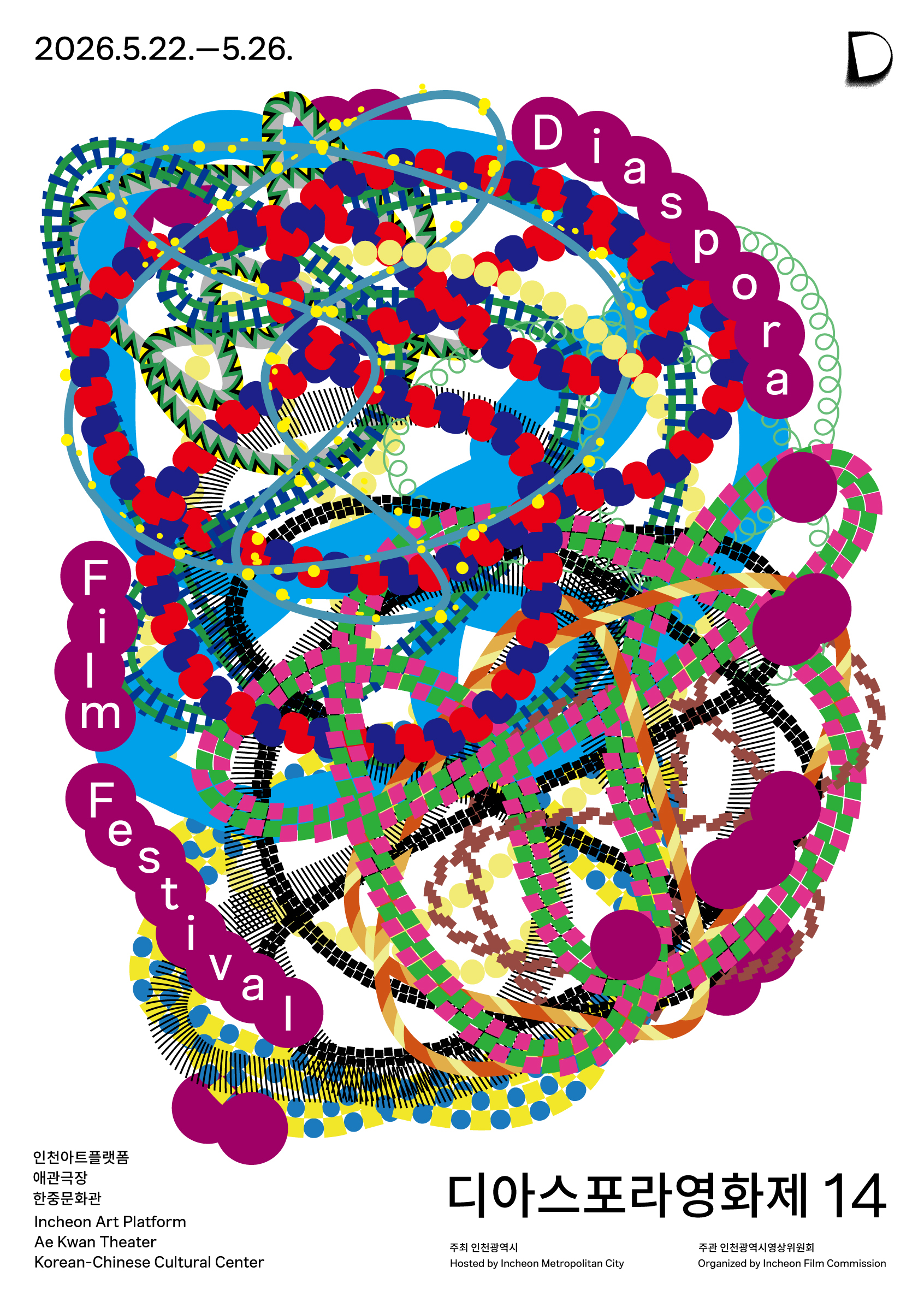
Incheon is also home to numerous museums dedicated to documenting and relaying such historical fact. There are also quite a number with a special focus on Incheon, starting with the Incheon Metropolitan City Museum1 and including the Memorial Hall for Incheon Landing Operation,2 Museum of Korea Emigration History,3 and Incheon Open Port Museum.4 Arts-related events include the Diaspora Film Festival, which brings together works dealing with migration and various cultural and ethnic diaspora around the world and has been held in Incheon since 2013. On the other hand, Incheon has long been recognized as the metropolitan city (gwangyeoksi) that lacks a municipal art museum. The gwangyeoksi is an administrative unit and designation given to Daejeon, Busan, Ulsan, Daegu, Gwangju and Incheon (the capital Seoul alone has a different title, that of special metropolitan city [teukbyeolsi]), but Incheon is the only one of these cities without its own art museum. As of 2026 work is finally underway onsite toward the 2028 opening of the new Incheon Museum Park, which will include an art museum for the city.5 That said, it is not as if Incheon is entirely devoid of spaces for art at present.
2.Art spaces in Incheon
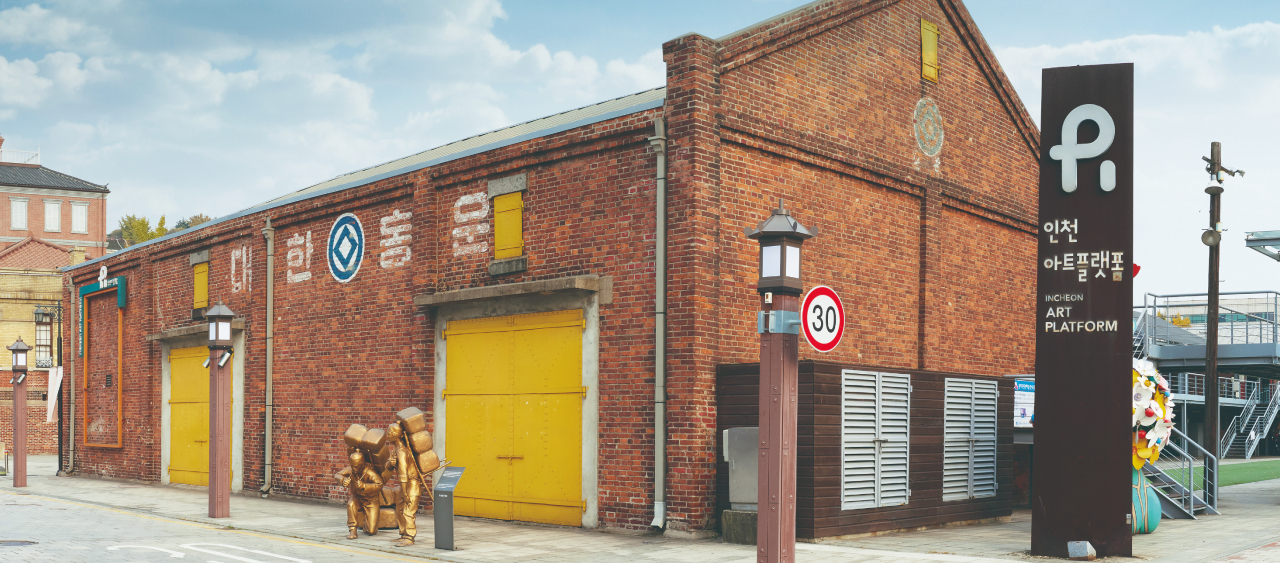
Mention the name Incheon in an art context, and likely it is the Incheon Art Platform that will come to mind. Since 2009, artists from Korea and beyond have undertaken residencies at this facility operated by the Incheon Foundation for Arts and Culture. Some well-known residency venues do exist in Korea, including in Seoul, in the form of facilities associated with the National Museum of Modern and Contemporary Art (MMCA) and Seoul Museum of Art (SeMA), widely recognized by artists as providing a guaranteed setting for art production, and a boost to their career. The fiercer competition in Seoul, and the convenience of everyday living in Incheon, do make the Incheon Art Platform an appealing location. Also setting it apart from other residency facilities was that people involved in the performing arts, as well as the visual arts, were able to pursue residencies there. Kuroda Daisuke and others from Japan also stayed and produced work at the Art Platform. In recent years the facility has been threatened with closure,6 and these days most artists selected are from Incheon or have extensive experience of Incheon. Yet this place continues to play a significant role in the Incheon art scene. In actual fact however, the Incheon Art Platform is not the only game in town: surrounding it, and further afield, are dotted a number of smaller art spaces and galleries.
Those looking for an overview of the Incheon art scene may, in recent years, find it in the book Incheon Misul: Gonggan-ui Gonggan (Incheon Art: Space of Space) (space imsi, 2022).7 This was undertaken as a research project of the “space imsi” project space that opened in September 2016, and sets out connections between the Incheon area and art from a translocal perspective, using statistical data gathered on people and spaces. In particular, the section on “(Im)possible maps and space(s)” introduces the names, features and locations of a total of 670 Incheon art scene spots, grouped by time period. Under the title “Diverse changes in contemporary art,” 292 spaces are mentioned for the ten years from 2011 to 2021. While including museums, and counting spaces such as bookshop and cafe galleries, the book also mentions growth during this period in the number of art spaces dealing solely in “visual arts.”8 It also notes that exhibition spaces formerly concentrated solely in the Jung-gu district of Incheon, home to space imsi and the Incheon Art Platform, had expanded to other areas.9 In Jung-gu, spaces like shhh (2021–), Buyeon (2020–), Cha Studio (2021–), and Project Space Kosmos (2024–) are also used for exhibitions. Art spaces such as Woonsol (2021–) in Dong-gu, space dum (2014–) in Michuhol-gu, Art Space Bullmoji (2022–) in Yeonsu-gu, and Art Space 103 (2024–) in Seo-gu, albeit relatively close to Jung-gu, stage frequent solo and other exhibitions.
The aforementioned book does not offer much detail regarding the reason for this spread to other areas, but the trend is one that could be said to resonate with a similar movement in Seoul. The 2010s were characterized by the sinsaeng gonggan (“new spaces”) movement initiated by the generation that had experienced the GFC in 2008 and decided to organize their own spaces and projects. The trend of emerging artists and aspiring curators with post-graduation careers thwarted by the barriers thrown up by museums and commercial galleries taking the initiative to develop their own ecosystems/art scenes doubtless also applied to Incheon. On the other hand, infrastructure development heading into 2010 definitely had an impact as well. The Jung-gu district of Incheon in particular, starting with Chinatown, is now a burgeoning tourist mecca. Momentum has been added by a number of transformative events, including staging of the Global Fair & Festival and advent of the Songdo International Business District Free Economic Zone in 2009, opening of the Incheon Bridge at the end of the same year; development around Incheon International Airport, which celebrated its tenth anniversary in 2010, and extension of the airport rail service to Seoul Station. 2016 then saw the opening of Incheon Subway Line 2, greatly improving the transit situation in the city. One may surmise that rising land values in Jung-gu due to development in the region and an increase in connections to Seoul and the rest of the surrounding area, combined with a growing number of people pursuing freer, independent art activities without being fixated on a central location, led to the geographical expansion in art spaces. That said, it is undeniable that such spaces are still largely concentrated in Jung-gu. Incheon as a whole may be more vital and dynamic than ever before, but Jung-gu retains its dominant position.
3. Where to now for Incheon art?
In recent years a growing number of artists in Incheon have been operating art spaces as an adjunct to their practices. The aforementioned space imsi, shhh, Project Space Kosmos, and Woonsol, among others, are also run by artists. One suspects that practitioners based in Incheon or with connections to the city also now find it easier to create opportunities to show their work, thanks to the presence of more people with an understanding of visual arts activities. Obviously it would hardly be strange if some of these people viewed their activities in Incheon as a step closer to their real aspiration of exhibiting in Seoul. In part this is due to a perception that Incheon itself offers few opportunities to interact with other artists and art world figures. Yet it is not that Incheon lacks universities with art associations: Incheon National University, Inha University, and Incheon Catholic University all offer fine arts degrees, but as the team running Bullmoji have commented, the idea that there are few places for them to gather persists.10 For their first exhibition, “KEEP GOING!” (2023), Bullmoji invited artists from the three universities, partly to help people make connections in Incheon. At Woonsol meanwhile, in a project organized jointly with young curator Shin Sang-Hyun, young artists based in Incheon were invited to meet regularly over a period of four months to talk about their production etc, culminating in the exhibition “Pas: Paz_layers site” (2025).11
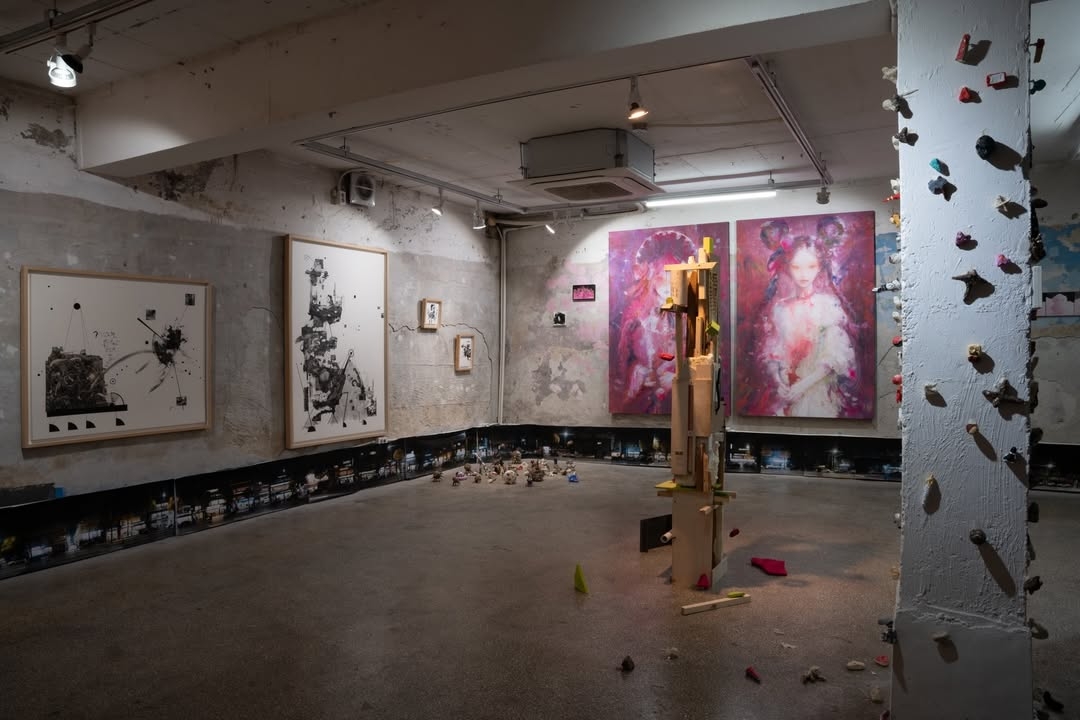
Installation view of “Pas : Paz_layers site” (2025, Space Woonsol). Photo: Song Jeong.
Despite the city’s role as a hub for trade and transport, art networking and exchange in Incheon may not flow as dynamically as in Seoul. But that does not mean that all its many artists, and aspiring artists, have decamped to the capital for good.
1. South Korea’s first public museum, opened in April 1946.
2. Opened September 15, 1984, on the site of the Incheon Landing, a pivotal military operation that reversed the course of the Korean War in 1950.
3. Opened in 2008, Korea’s first emigration museum traces the history the Korean diaspora, from the first Hawaii-bound pioneers to communities in Japan, Russia, Germany, and Central/South America.
4. Established in 2010 in the former First Bank of Japan building, the museum showcases modern cultural heritage related to the opening of Incheon’s port in 1883.
5. See articles posted on the Incheon Metropolitan City website. “열린 도시, 인천 – 열린 공간, 미술관 | 인천 뮤지엄파크” [Open City, Incheon – Open Space, Art Museum: Incheon Museum Park], January 31,2026.
“Mayor Yoo Jeong-bok of Incheon: City Sails Smoothly Toward 2028 Opening of Incheon Museum Park,” September 5, 2025.
See also, “Incheon Museum Park Breaks Ground, Set for 2028 Opening,” The Chosun Daily, March 16, 2026.
6. In autumn 2023, the city put forward a plan to repurpose the complex as a cultural facility for the general public.
・“참담한 인천시의 인천아트플랫폼 레지던시 종료 계획” [The City of Incheon’s disastrous plan to terminate the Incheon Art Platform residency], Incheonin.com, October 26, 2023.
・“인천아트플랫폼 ‘시민친화 문화공간’ 탈바꿈…내년 전면 개편” [Incheon Art Platform to transform into “community-oriented cultural space”… Complete revamp next year], Yonhap News, December 14, 2023.
And according to an article dated April 16, 2026, while parts of the complex will be opened for public use, the artist residency functions will apparently not be phased out in their entirety.
“인천시, 인천아트플랫폼을 열린 문화공간으로” [Incheon City to turn Incheon Art Platform into an open cultural space], Oh My News.
As the diagram indicates, Incheon Art Platform residency facilities, exhibition spaces, and theater are located within the same complex.
7. Incheon Misul: Gonggan-ui Gonggan [Incheon Art: Space of Space] (space imsi, 2022)
8. Incheon Misul: Gonggan-ui Gonggan [Incheon Art: Space of Space] (space imsi, 2022), 61.
9. Ibid.
10. “불모지’ 연수동에 심은 청년 예술의 희망” [Sowing seeds of hope for emerging art in the “wasteland” of Yeonsu-dong]. The term “bullmoji”(wasteland) aptly reflects the mindset of the artists living and working in Incheon.
11. See the introduction to the exhibition
(All websites cited above last accessed May 23, 2026)About the series
“Differences: Shedding light on other cartographies in Korea” is a series by Japan- and Korea-based art critic Konno Yuki. By deliberately shifting perspective from Seoul as center of Korean arts and culture, to take a fresh look at other parts of the country, the series aims to draw a line between alternative activities and art discussed in local contexts, in an attempt to redraw the contours of the Korean art scene.
Konno Yuki
Art critic active mainly in South Korea. Planner of “After 10.12” (Audio Visual Pavilion, 2018), “Kankokuga to Toyoga to” (gallery TOWED, FINCH ARTS, Jungganjijeom II, 2022) and other exhibitions. South Korean correspondent for the Padograph portal (https://padograph.com/ja)showcasing art exhibitions and event information from Japan and South Korea. Runner-up in the Gravity Effect 2019 art criticism competition.