
Out of Kyoto
006 Andy Warhol as Moriyama Daido
By Ozaki Tetsuya
- SHARE


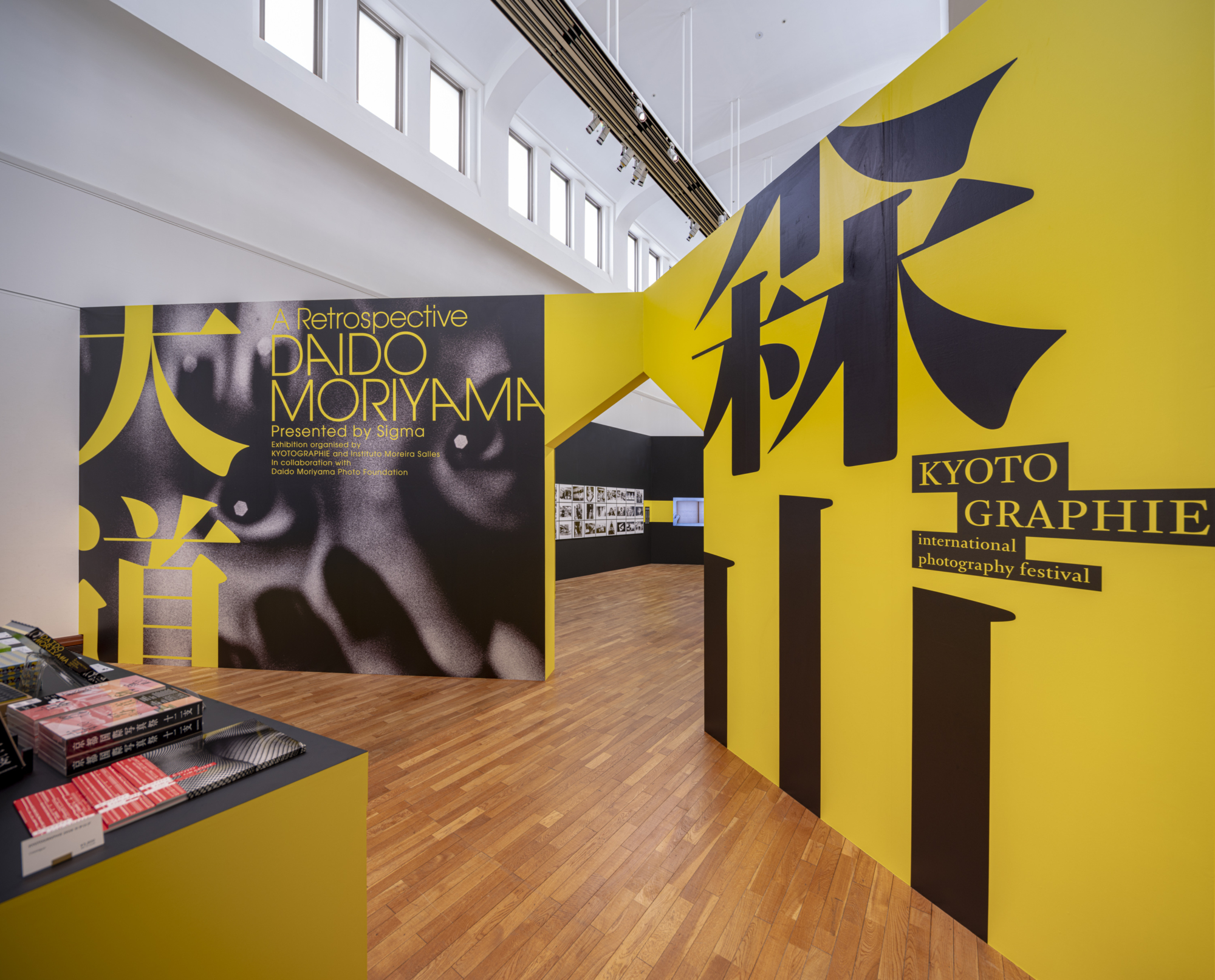
Presented by Sigma. Exhibition organized by KYOTOGRAPHIE and Instituto Moreira Salles, in collaboration with Daido Moriyama Photo Foundation. ©︎ Kenryou Gu-KYOTOGRAPHIE 2026
When it comes to themes for artistic expression, nothing is off limits. Expression is restricted only by physics, and the law. Amid the mixed bag of works that ensues, those artists high in aspiration have consistently been drawn to the thematic gold of “Where did we come from, what are we, and where are we going?” In short, “the world and me.” What is the world, what am I, what is my relationship to the world?
Artists like this can I believe be divided into two types: philosophers and collectors. That is, those on a quest to learn the ways of the universe, and those who prefer to gather its elements. No one can see the whole of the world; only grasp its laws, or imagine it via as many elements as possible. In contemporary art the former is typified by Marcel Duchamp, the latter, by Andy Warhol.
Naturally we are talking extremes here, and it is not the case at all that Duchamp had none of the collector in him. Warhol for his part wrote a book titled The Philosophy of Andy Warhol.1 Yet as the notes included in works such as The Green Box and A l’Infinitif tell us, Duchamp was a thinker who explored law and logic. Warhol’s “philosophy” meanwhile was little more than verbose (albeit entertaining) chat.
Warhol’s mania for collecting though, was rather more serious. From tickets and bills to hamburger wrappers; from newspapers and magazines to found photos; from shoes and clothes to cakes and other foodstuffs; from toys to antique art and even a taxidermied lion, he collected it all and packed it away in cardboard boxes that were never opened during his lifetime. Ultimately these boxes—over 600 of them—were dubbed the Time Capsules and stored at the Andy Warhol Museum in Pittsburgh.2
As a boy Warhol wrote fan letters to movie stars and famous novelists, and collected their replies and autographs. On moving to New York, he roamed the streets with a camera taking photos of celebrities and requesting autographs. The vast collection of portraits he produced—painted, silkscreened, photographic, on film and video—should probably be viewed as Warhol’s way of documenting/collecting the famous. The same goes for Interview, the magazine he founded, and the TV programs he hosted.
Oft described as holding a mirror up to the times, in reflecting his era perhaps what Warhol really wanted to do, was possess the world. Celebrities were delightful elements of his personal world, on a par with consumer goods such as Brillo boxes and Campbell’s Soup cans, characters like Popeye and Mickey Mouse, newspaper reports of accidents and photos of the electric chair. By collecting them physically, or virtually, the brilliant artist was satisfying his urge to possess.
*
Viewing the Moriyama Daido exhibition at this year’s KYOTOGRAPHIE international photography festival3 reconfirmed my belief that Moriyama is a collector of the world in the Warhol mold. The photographer of the street spoke publicly of his interest in the king of pop art,4 made screenprints, and contributed photos of canned goods and detergent on supermarket shelves to issue 3 of the avant-garde magazine Provoke in 1969. In doing so, he was not merely paying admiring homage to the American artist. In Warhol’s way of relating to the world, I think Moriyama caught a whiff of something akin to his own.5 From his description of Nakahira Takuma as “logical” and himself as “pre-logical”6 one may speculate that Moriyama perceived his friend and ally who aimed to create “illustrated botanical dictionaries”7 as Duchampian, and himself, more like Warhol. Yet in Shashin yo sayonara (Farewell Photography) (1972), which he says he made from an urge to “take photography as far as it could go, until reduced to nothing,”8 one is reminded of Duchamp asking himself, “Can one make works which are not works ‘of art,’” and hitting upon the notion of the readymade.
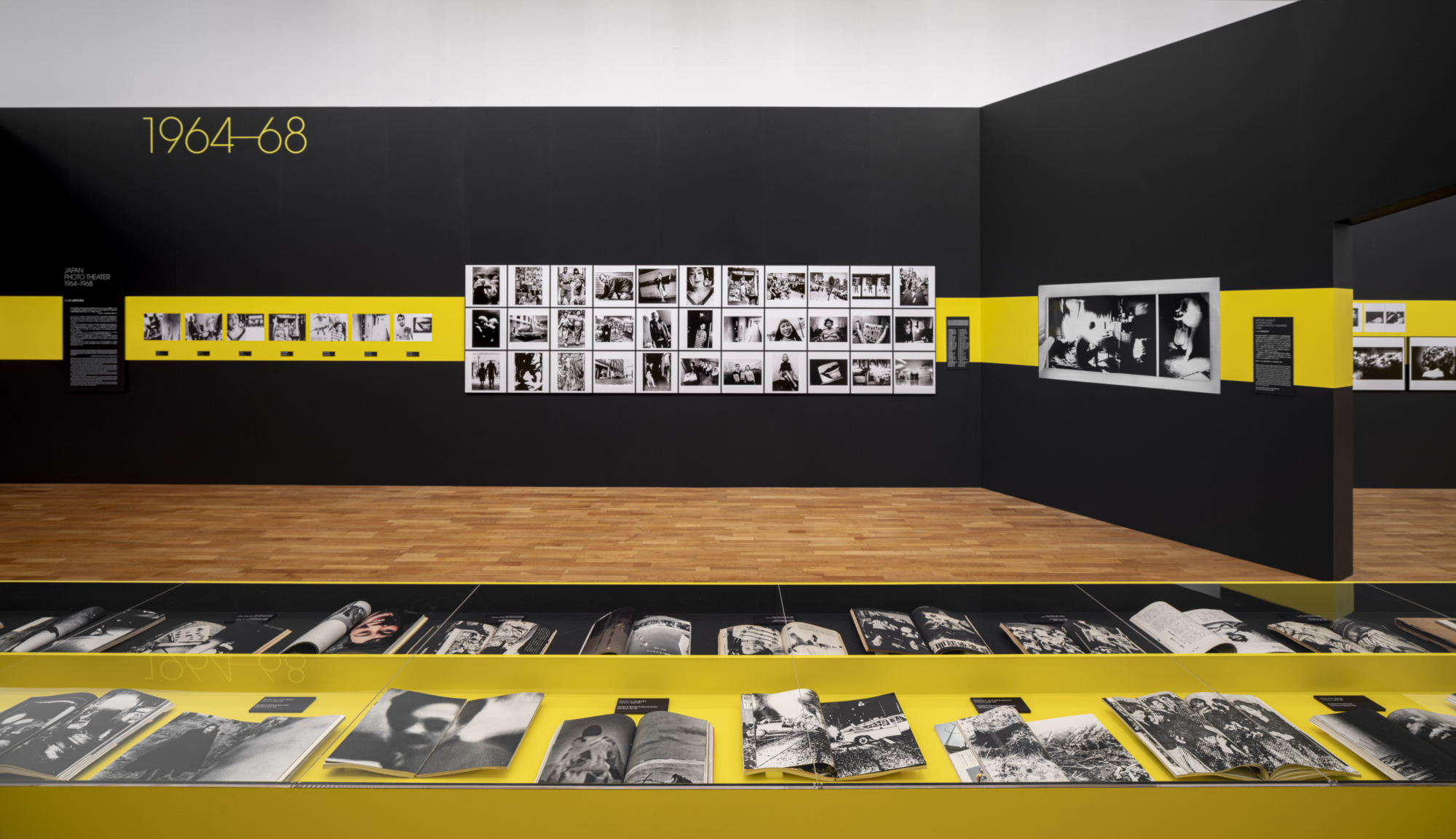
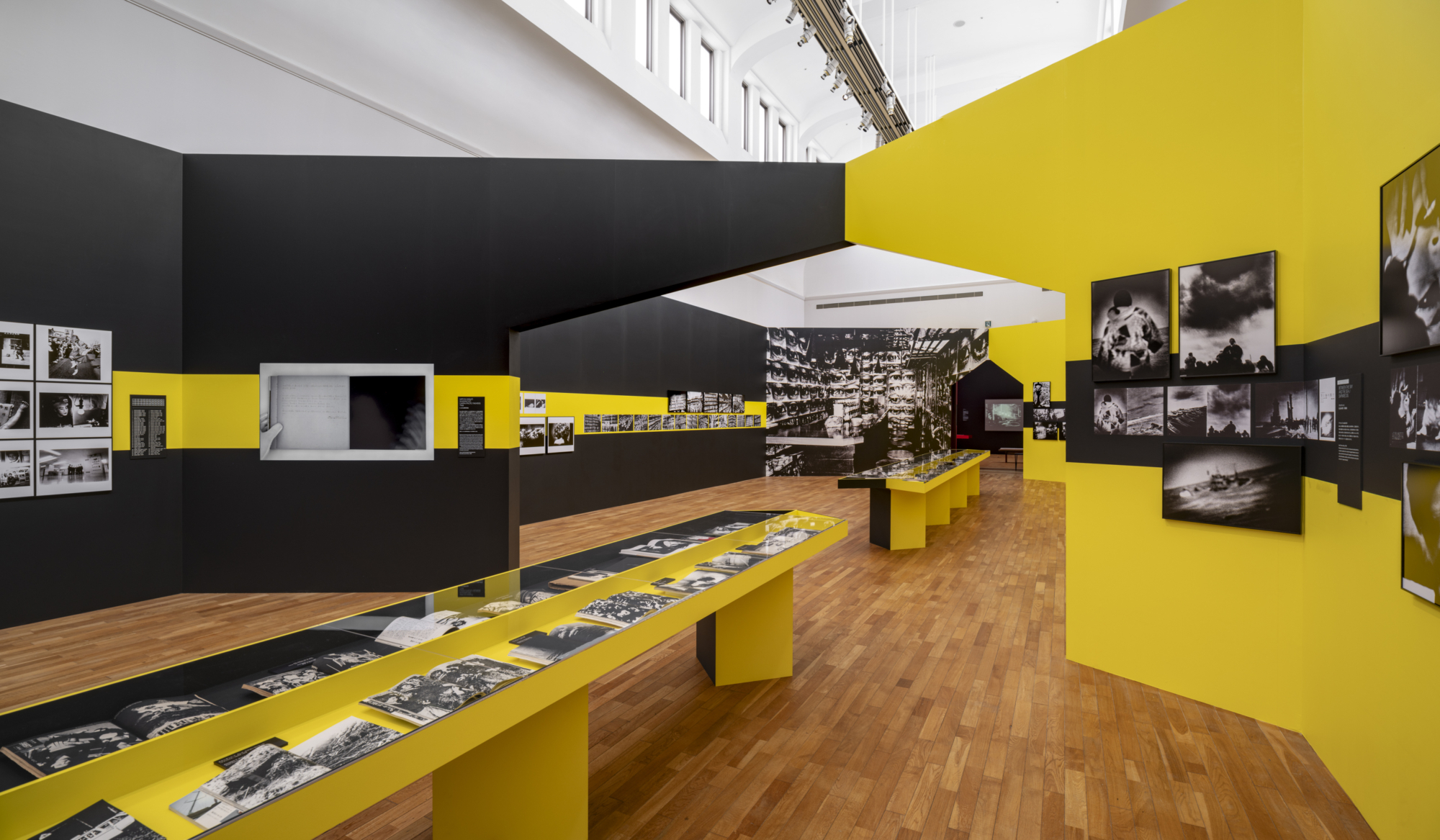
Moriyama opined that there could be “no quality without quantity,”9 and I have no idea how many photographs he took daily, but the camera is indubitably the finest tool available if one wants to visually collect the world. In his more than six decades as a photographer, Moriyama has kept this in mind as snaps what is around him. He has also said that he wanted to become an “accidental photographer” like Weegee,10 yet his subjects are not constrained by the accidental in the narrow sense. In a conversation with Nakahira for example, he said “A person leaves home in the morning, say, and by the time they return home at night, will have seen all sorts of things. I was consciously trying to draw all that out into the light of day. … I found myself wanting to turn everything that caught my eye into a photograph. In that sense for me, there is only one world. Or there is a world, therefore I am, and that very relationship, is the world.”11 When he wrote that “clicking the shutter is very simple, but taking a photograph is hard,”12 over the word shashin for photograph he added characters meaning “this world.”
New York and Hollywood remained Warhol’s world to his final years, but for Moriyama “this world” was the streets and cityscapes of places ranging from Yokosuka, Osaka and Shinjuku to Paris and Hawaii. Never one to be especially fixated on producing and selling original prints, Moriyama was “a poster child for the gravure printing era, when photos dominated by black circulated in vast numbers”13 and in offset-printed magazines and photobooks also, the intense contrast in the monochrome pages makes his black stand out. Moriyama approaches his work in the darkroom with a desire to see the world in that particular way, and in this sense his works are distinguished from the photographs that Rosalind E. Krauss described as “index”-like.14 To channel John Szarkowski, they are “taken” and yet also “made.”15
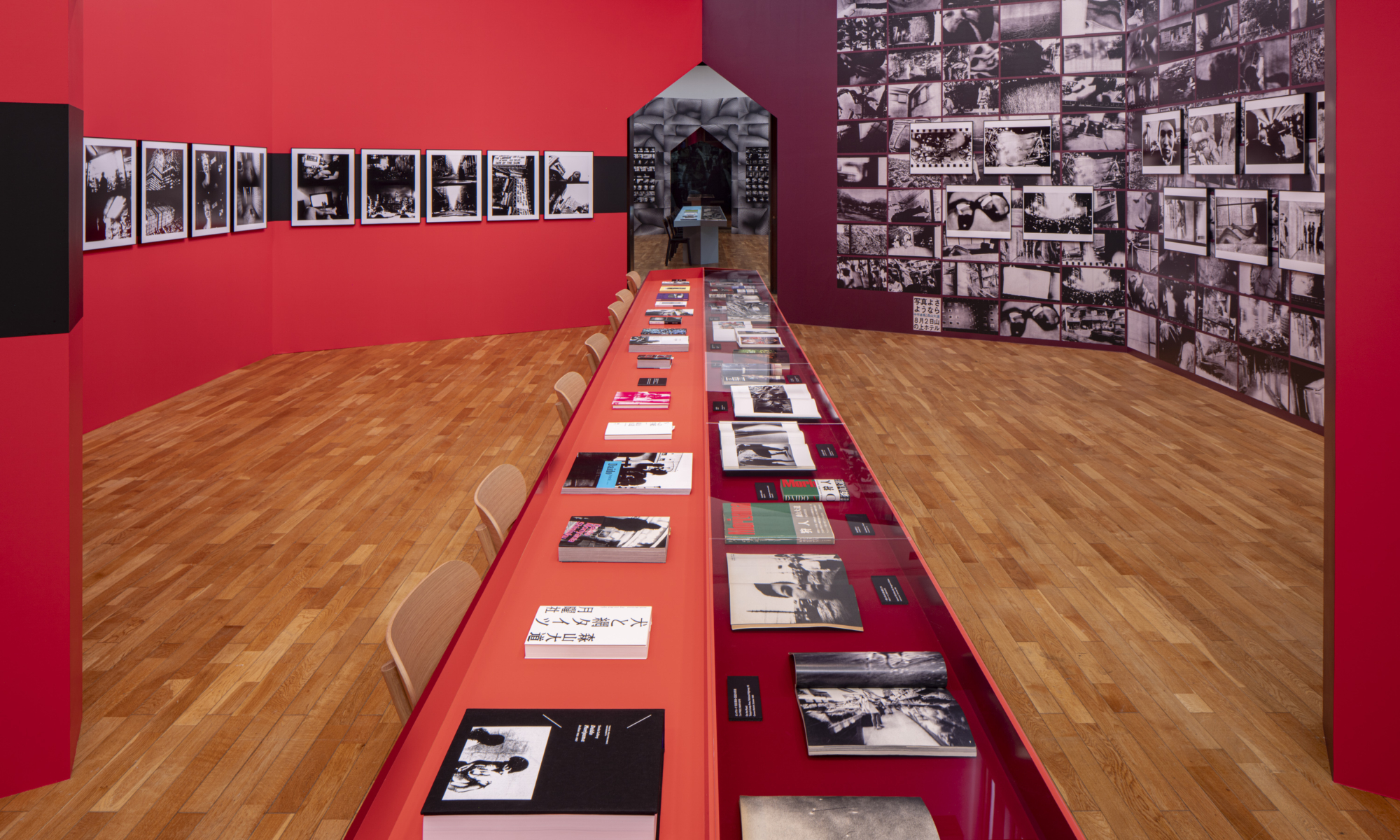
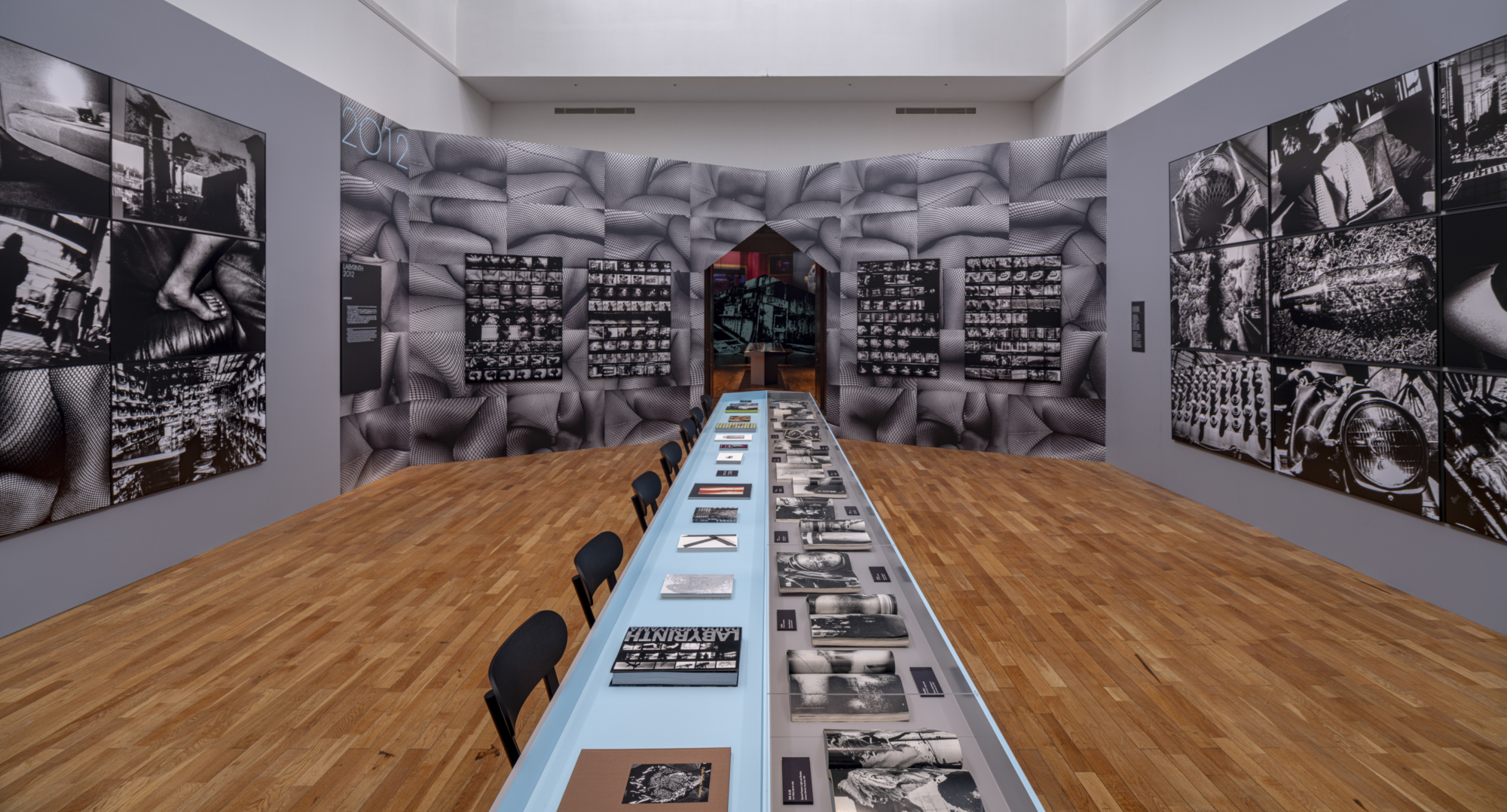
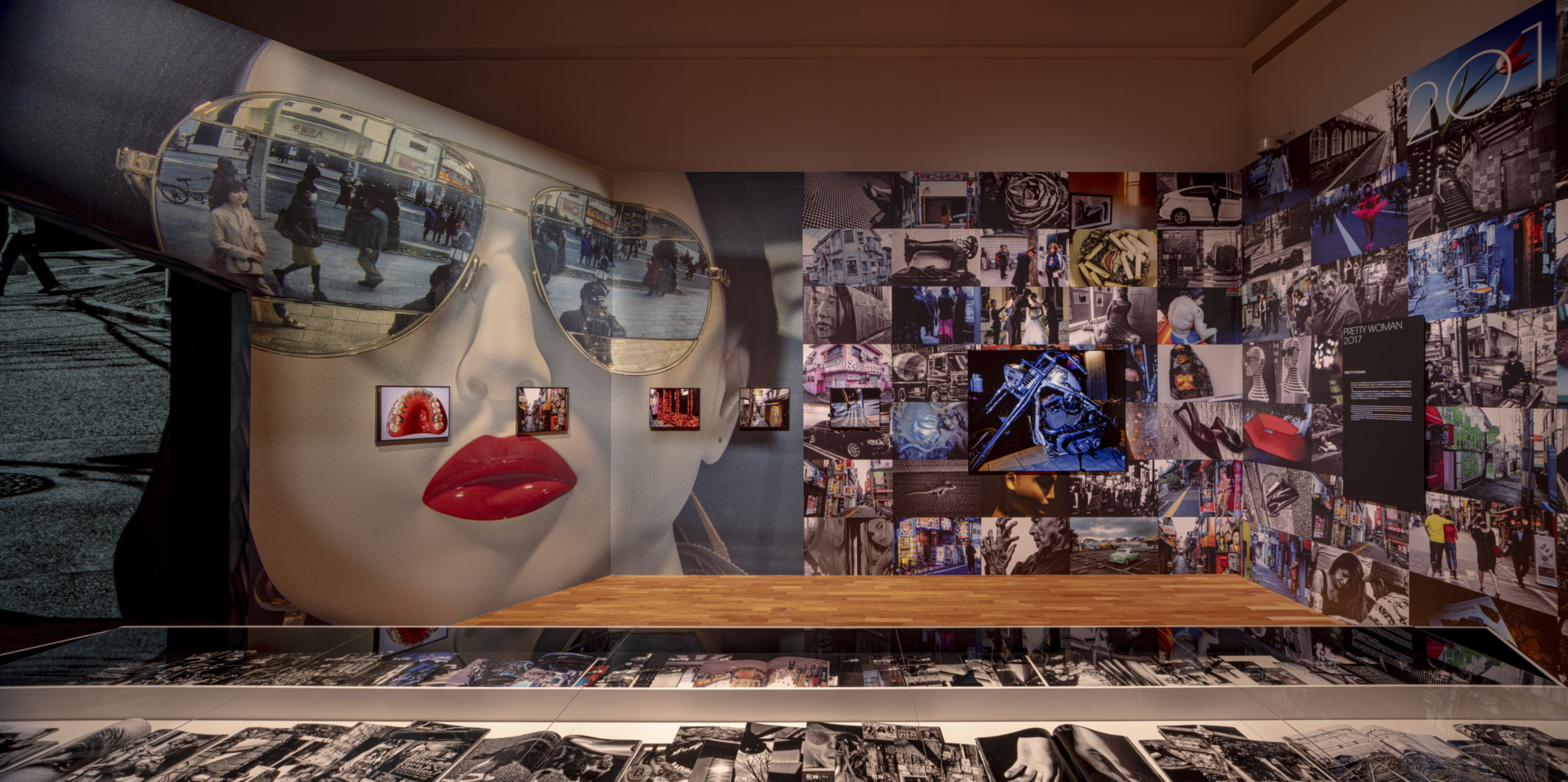
Moriyama has said that he approaches photography thinking “photos are only valuable when they are printed on paper or in magazines,”16 and accordingly has mainly presented his work in print media. The KYOTOGRAPHIE exhibition was crafted with this fact obviously in mind. According to the organizers, in addition to 180 framed prints, there were just over 400 large images on the wall, and 201 printed publications in display cases. Of these, 31 were able to be picked up and perused directly without donning white gloves or similar.17 It would have been marvelous to handle the magazines that Moriyama’s works first appeared in, but unsurprisingly, that was hoping for a little too much. All one can do is wish for more such exhibitions.
*
From the early 1980s Warhol expanded his interests to encompass social and political conditions, religion and myth, and death as a philosophical theme. In other words, his world grew larger. Much of this was doubtless due to the death of friends, acquaintances, and lovers from HIV. 129 Die in Jet! (1962) is a reproduction of a news report on a serious plane crash, but the accident here is something happening to others, strangers, and just another element of the world. Twenty years later AIDS carried the very real threat of something that could easily happen to Warhol himself.
The photobook AMERICA published in 1985, at the very end of Warhol’s career, contains snaps shot around the United States. Though including past photos of celebrities, it is dominated by images different to those Warhol took as a young man, such as a tank top-clad black man at work in the street, a disabled street performer, a political protest march, an elderly man with a board around his neck saying “Sotheby Cheats,” a racecourse in Kentucky, graveyards and gravestones. Turning its pages I was reminded of the words of Moriyama.
For me, first and foremost there is death. Around the clock, it never leaves my head. … There are moments for example, like here talking with you, or the fleeting instant when I click the shutter, that I am suddenly freed from the notion of it. Those moments are like gold. … All I can do is keep living for those precious nuggets.18
Moriyama’s idea to collect the world has its origins in death. Awareness of death was also necessary for Warhol to expand his own “world.” Hence the title of this piece.
*A conversation between Otake Akiko—author of Shashin ga atte yokatta. Moriyama Daido-den (Good thing there was photography. The life of Moriyama Daido) due for release by Shinchosha on June 24—and Ozaki Tetsuya, will be held at the Keibunsha bookshop in Ichijoji, Kyoto, on June 27. See below for details.
https://note.com/keibunshabooks/n/nacd6c5d390a3
1. Andy Warhol, The Philosophy of Andy Warhol: From A to B and Back Again (Harcourt Brace, 1975).
2. See The Andy Warhol Museum, “Time Capsules.”
3. “Daido Moriyama: A Retrospective” (April 18–May 17, 2026; Kyoto City KYOCERA Museum of Art, Main Building South Wing 2F) Curated by Thyago Nogueira, the exhibition has toured seven cities to date in South America and Europe. Exhibition design for the Kyoto show by Ouchi Osamu.
Meanwhile, the “Photo book! Photo-book! Photobook!” exhibition held at the Hachiku-an (former Kawasaki Residence), curated by Sean O’Toole, featured over 200 browsable photobooks related to South Africa.
4. In an interview conducted by the San Francisco Museum of Modern Art, for example.
5. The same year, critic Fujieda Teruo wrote, “His photographs in issue 3 of Provoke, it must be said, betray him not as an artist, but a photographer. That is, no matter what the intention was, ultimately the reality was that the art Warhol made is used, unmodified. Here Moriyama is no doubt consciously seeing reality in Warhol. This is a thing related to the expression of imagery in photographs. And I don’t think it is that important to see it as art.” (“Moriyama Daido: Sekai o tō kachi ni miru” [Valuing all in the world equally], The Photo Image 3, December 1969; reproduced in Art After Modernism: Selected Writings of Teruo Fujieda [Tokyo Shoseki, 2017], 483–88.) Though due to space restrictions perhaps, there is an inescapable sense that more could have been said, Fujieda’s comments can also be seen to cast critical doubt on how pop art had turned reality into art which had then itself become part of reality, and in turn criticizes Moriyama’s choice of subjects. A valid critique maybe, but Moriyama would probably have found a tad presumptuous.
6. Moriyama Daido, Inu no kioku / Memories of a Dog (Kawade Bunko, 1984/2001), 238.
7. Nakahira Takuma, Naze, shokubutsu zukan ka / Why an Illustrated Botanical Dictionary? (1973).
8. Moriyama Daido, Bye Bye Photography, originally published as Shashin yo sayonara [Farewell photography] (1972; reissue, Kodansha, 2012) .
9. In, for instance, the following interview published in Eikoku News Digest.
10. “August 2, Yamanoue Hotel conversation: Nakahira Takuma + Moriyama Daido,” in Bye Bye Photography.
11. Nakahira Takuma + Moriyama Daido, “Shashin to iu kotoba o nakuse!” [Get rid of the word photography!], Design, April 1969; reprinted in Nakahira Takuma: Kitaru beki shashinka [The photographer to come] (Shashasha, 2009), 102–7.
12. Moriyama Daido, “Jikoaiteki shashinjutsu” [The art of narcissistic photography], Shashin sōchi 3 (1981), 87.
13. Otake Akiko, Shashin ga atte yokatta. Moriyama Daido-den [Good thing there was photography. The life of Moriyama Daido] (Shinchosha, 2026), 64.
14. Rosalind E. Krauss, “Notes on the Index: Part 1” (1976), in The Originality of the Avant-Garde and Other Modern Myths (1985/1987), 196–209.
15. The original text being “Paintings were made—constructed from a storehouse of traditional schemes and skills and attitudes—but photographs, as the man on the street put it, were taken.” John Szarkowski, The Photographer’s Eye (Museum of Modern Art, 1966/1980), 6.
16. Canon, “PRO-G1 Special Interview: N e no tegami [A letter to N] Moriyama Daido” (October 2, 2023).
17. Numerous magazines were also exhibited in the 2024 exhibition “Nakahira Takuma: Burn—Overflow” at the National Museum of Modern Art, Tokyo; however, they were not available for handling.
18. “August 2, Yamanoue Hotel.”
(All accessed June 17, 2026)About the series
In “Out of Kyoto” writer and art producer Ozaki Tetsuya covers topical issues in the arts and wider culture, exploring the state of artistic expression today, from an historically-informed perspective.
・All articles in this series can be found here
Ozaki Tetsuya
Writer/arts producer. Launched the online culture magazine REALTOKYO in 2000, and the contemporary art magazine ART iT in 2003. General producer of the performing arts program for Aichi Triennale 2013. Served from September 2012 through December 2020 as publisher and editor-in-chief of the online culture magazine REALKYOTO, and from February 2021 through March 2025 as editor-in-chief of REALKYOTO FORUM. Editor and author of the photo books One Hundred Years of Idiocy and its sequel One Hundred Years of Lunacy >911>311; author of Gendai āto to wa nani ka (What is contemporary art?) and Gendai āto o korosanai tame ni (So as to not kill contemporary art). Awarded the Chevalier of the Order of Arts and Letters by the French Government in 2019.